
Category: Uncategorized

  • Working Papers Series – Call for Papers


    Call for Papers – Issue #3

    Architecture, Colonialism and East Asian Labour

    Guest Editor: Jingliang Du (University of Hong Kong)

    This issue invites contributions that examine how architectural labour sustained, mediated, and contested colonial and imperial power, with a focus on East Asian contexts through the twentieth century. The call asks what becomes visible when buildings, infrastructures, and urban spaces are approached through the labour that produced them. Who recruited, trained, and supervised those who built? How were skills transmitted, tools adapted, and materials handled across local, colonial, and imperial systems? How did subcontracting practices and everyday negotiations shape relations of authority on building sites? Taken together, what forms of knowledge, dependency, conflict, and resistance emerge when construction is treated as a social and political process?

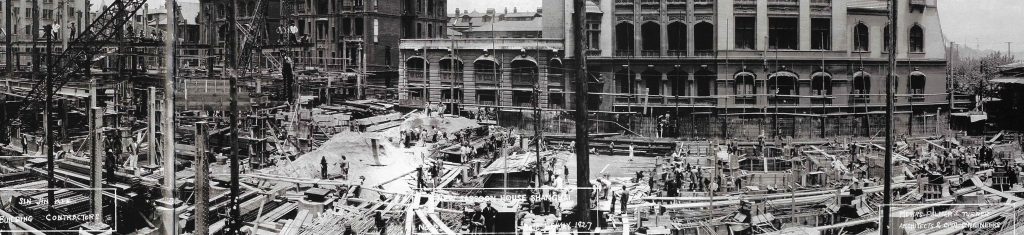
    Labour has emerged as a generative lens for architectural and urban history, reorienting attention from completed objects toward the conditions and relations of their making. Recent work on Chinese workers on the Yunnan–Indochina Railway (Selda Altan, 2024) and initiatives such as the Stanford Chinese Railroad Workers in North America have demonstrated how historical narratives shift when builders, craft workers, and migrant labourers are moved from the margins to the centre of historical inquiry. Attending to labour extends and complicates histories of colonial architecture that have often centred on representation, planning, institutional power, and stylistic transfer. On colonial and imperial building sites, architectural authority was rarely stable: it was made and remade through encounters between supervisors and workers, local knowledge and imported technique, formal contracts and informal arrangements. By foregrounding sources such as wage records, apprenticeship documents, accident reports, subcontracting agreements, and related sources, this issue aims to open new lines of inquiry and prompt different questions about familiar structures, figures, and histories.

    East Asia provides a rich but open-ended regional frame. This issue welcomes contributions in two overlapping directions. The first concerns sites of colonial and imperial encounter within the region, including treaty ports, concessions, occupied territories, and colonial cities such as Shanghai, Macau, Taipei, Incheon, and Hanoi, where labour organisation, skill transfer, and building authority unfolded under conditions of contested sovereignty. The second follows East Asian labourers into broader global built environments, examining the material and social traces they left in construction sites, infrastructure projects, and urban landscapes worldwide. Cross-regional perspectives are especially encouraged.

    The issue is open to historical, empirical, theoretical, and critical approaches, including archival case studies, quantitative or systematic research, labour history, postcolonial theory, urban history, construction history, material culture studies, and digital methods. Contributions may address the nineteenth and twentieth centuries, as well as earlier periods. The working paper format is intended to support focused findings, methodological experiments, and exploratory arguments rather than exhaustive, fully resolved journal articles. Submissions from early-career researchers, independent scholars, and established academics are all warmly welcomed.

    Please send your 300-word abstract to dujl22@connect.hku.hk by 8 June 2026. All submissions should include a biography (max. 100 words) and contact information for each author. Text submissions should be sent as .doc files. Where applicable, images should be submitted at 72 dpi as uncompressed .tif files. All accepted authors will be asked to submit a 6,000-word article in British English that will be subject to a double-blind peer review. Final publication is expected by November 2026.

    CALENDAR

    Submission of abstracts: 8 June 2026

    Decision from editor: late June 2026

    Submission of papers: early September 2026

    Revisions: late September 2026

    Publication: November 2026

  • Working Papers Series – Guidelines for Authors


    Guidelines for authors

    Submission and general criteria        
    Selected authors are required to submit a draft paper in British English. The paper should not exceed 6000 words (including footnotes).
     
    Figures   
    If the paper includes any figures, they should be numbered sequentially from 1 onwards. The author should indicate the location of each image in the text, and provide captions and sources. The images should have one of the following extensions: JPEG, TIFF, XLS (Excel) or EPS.
    Maximum number of figures: 10 figures in high resolution.
    Selected authors must provide a cover image for the article:
     
    Reference norms
    References should use the “Notes and Bibliography” citation system of the Chicago Manual of Style.
    All bibliographic references must be cited in the footnotes. Bibliography list at the end of the article is not accepted.
    Quotations and foreign words should come in italic.
    References to archival sources should be included in the footnotes, starting with the country location and institution’s acronym, followed by the archival units in descending order.
    Example: PT/AHU, volume 1665.1
    – Government of Angola, SNI, Minute no. 136, 02/01/1935. Acronyms should be written out in full.
     
    Biographical note
    A short biographical note of the author(s), maximum 100 words, is required.

  • Working Papers Series – Previous Issues


    A+I Working Papers previous issues


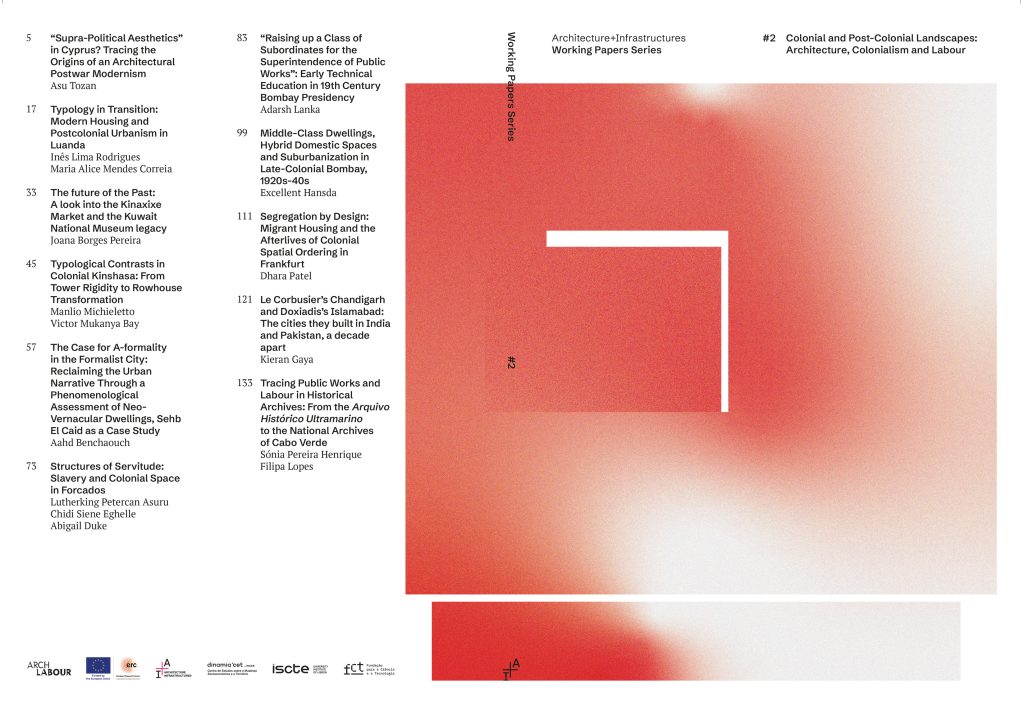
    Architecture + Infrastructures Working Paper Series 2: Colonial and Post-Colonial Landscapes: Architecture, Cities and Labour

    Authors: Aahd Benchaouch; Abigail Duke; Adarsh Lanka; Adarsh Lanka; Asu Tozan; Chidi Siene Eghelle; Dhara Patel; Excellent Hansda; Filipa Lopes; Inês Lima Rodrigues; Joana Borges Pereira; Kieran Gaya; Lutherking Petercan Asuru; Manlio Michieletto; Maria Alice Correia; Sónia Pereira Henrique; Victor Mukanya Bay


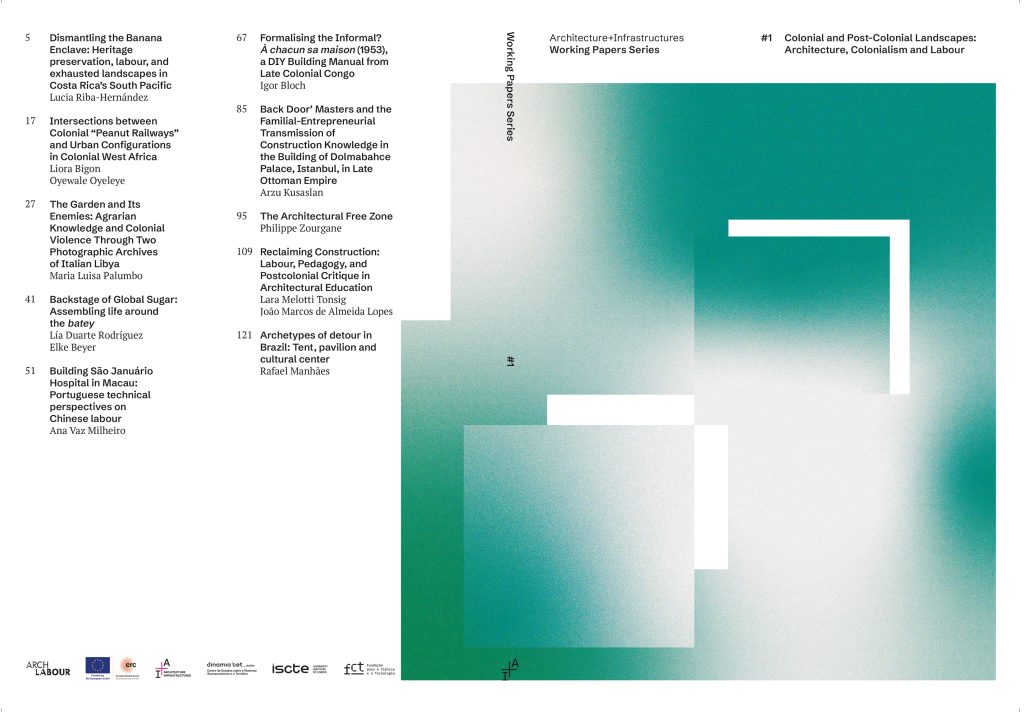
    Architecture + Infrastructures Working Paper Series 1: Colonial and Post-Colonial Landscapes: Architecture, Cities and Labour

    Authors: Ana Vaz Milheiro, Arzu Kusaslan, Elke Beyer, Igor Bloch, João Marcos de Almeida Lopes, Lara Melotti Tonsig, Lía Duarte Rodríguez, Liora Bigon, Lucia Riba-Hernández, Maria Luisa Palumbo, Oyewale Oyeleye, Philippe Zourgane, Rafael Manhães

  • Working Papers Series 2


    Architecture + Infrastructures Working Paper Series 2: Colonial and Post-Colonial Landscapes: Architecture, Cities and Labour

    Editors: Beatriz Serrazina and Francesca Vita

    Series Coordinator: Ana Vaz Milheiro

    Design: vivóeusébio

    Edition: 1st Edition

    Editor: Dinâmia’CET-Iscte, 2026

    Format: Printed and Digital 


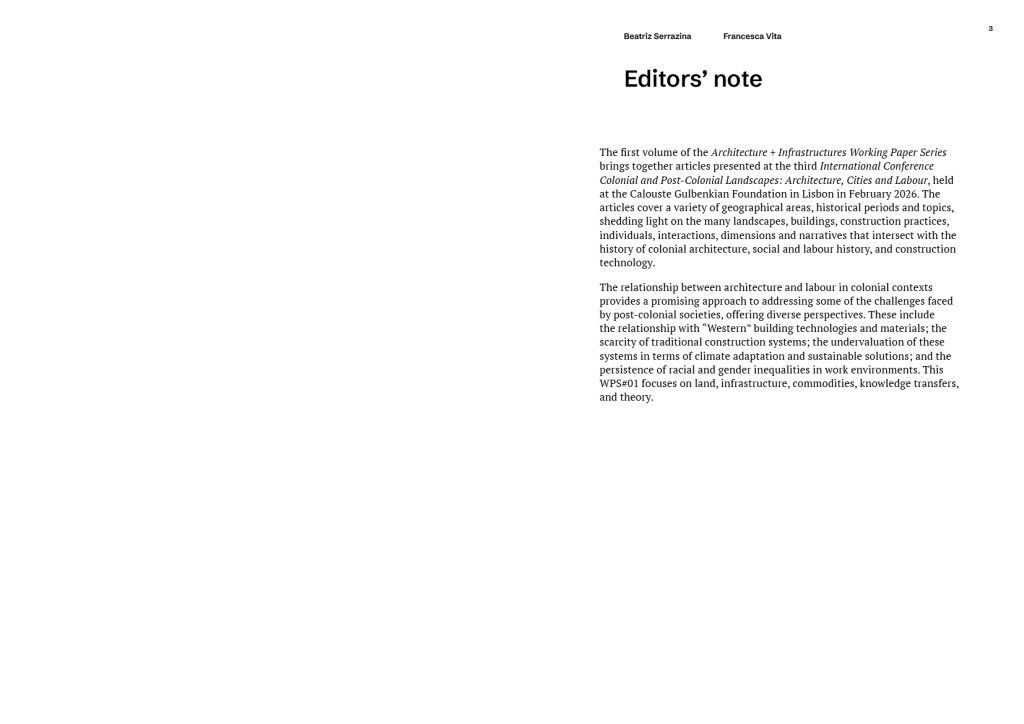
    Editor’s note

    Beatriz Serrazina, Francesca Vita

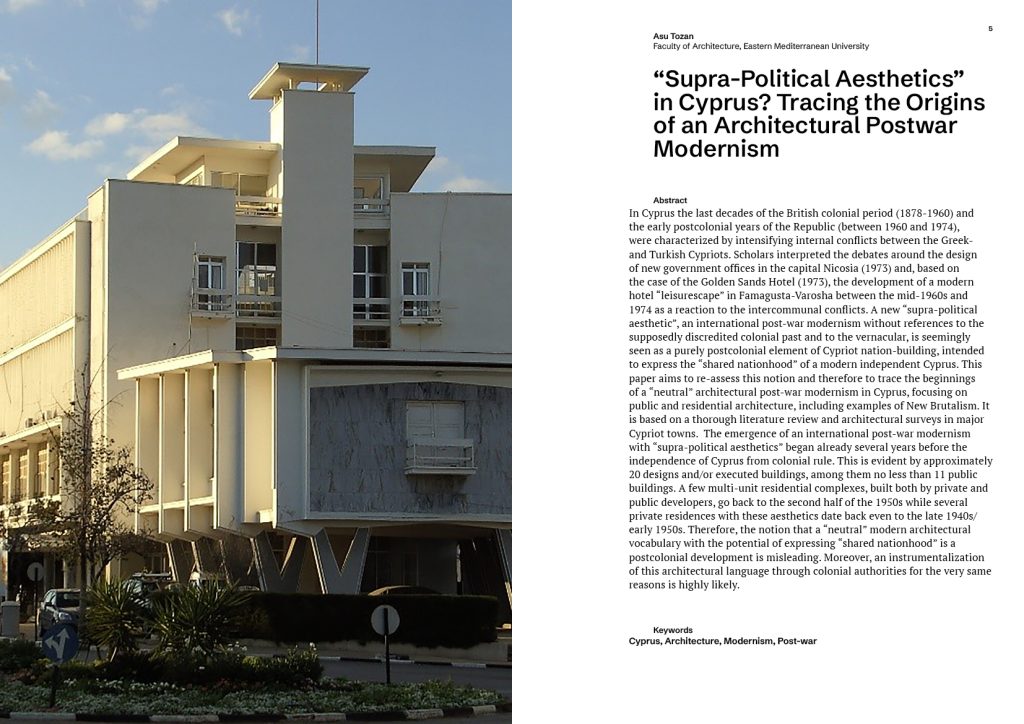
    “Supra-Political Aesthetics” in Cyprus? Tracing the Origins of an Architectural Postwar Modernism 

    Asu Tozan

    [>]

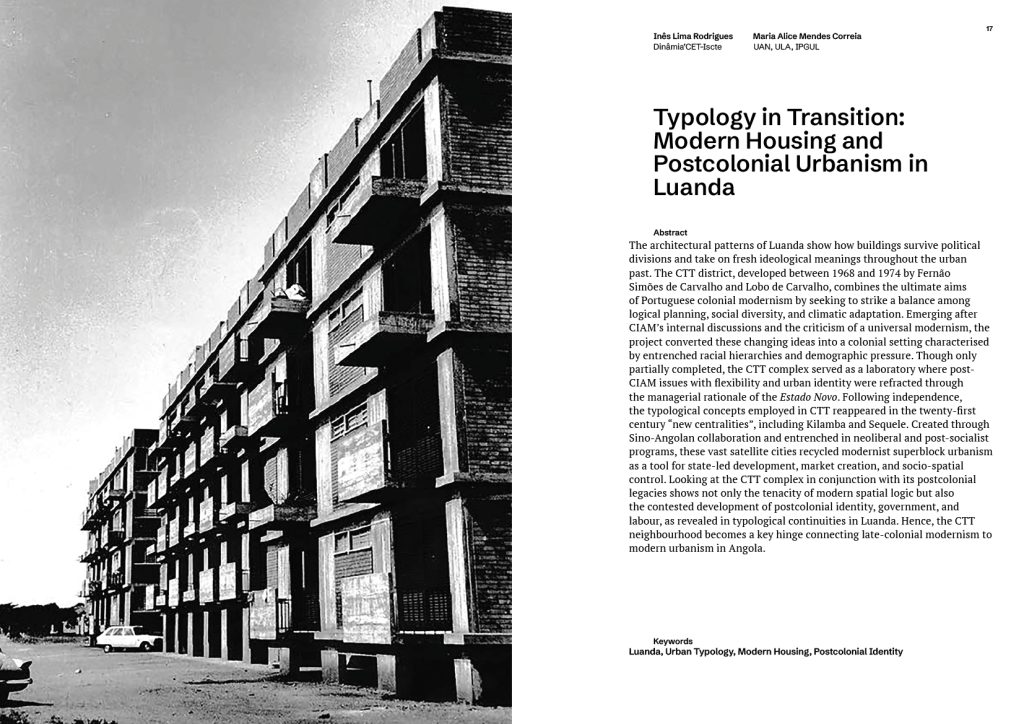
    Typology in Transition: Modern Housing and Postcolonial Urbanism in Luanda

    Inês Lima Rodrigues 

    Maria Alice Mendes Correia

    [>]

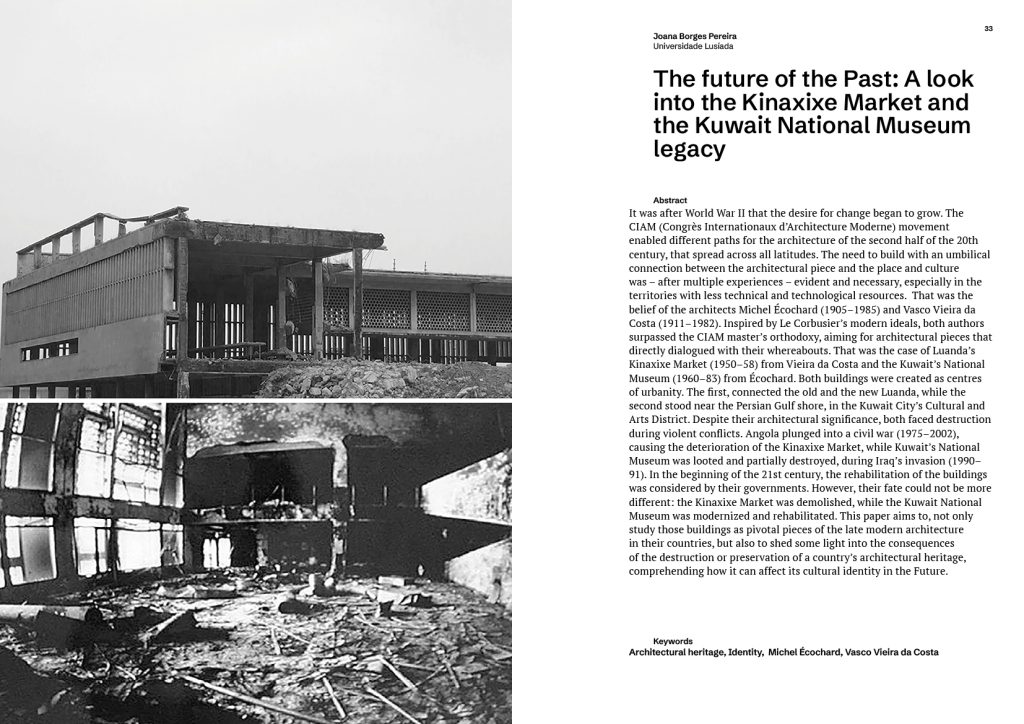
    The future of the Past: A look into the Kinaxixe Market and the Kuwait National Museum legacy

    Joana Borges Pereira

    [>]

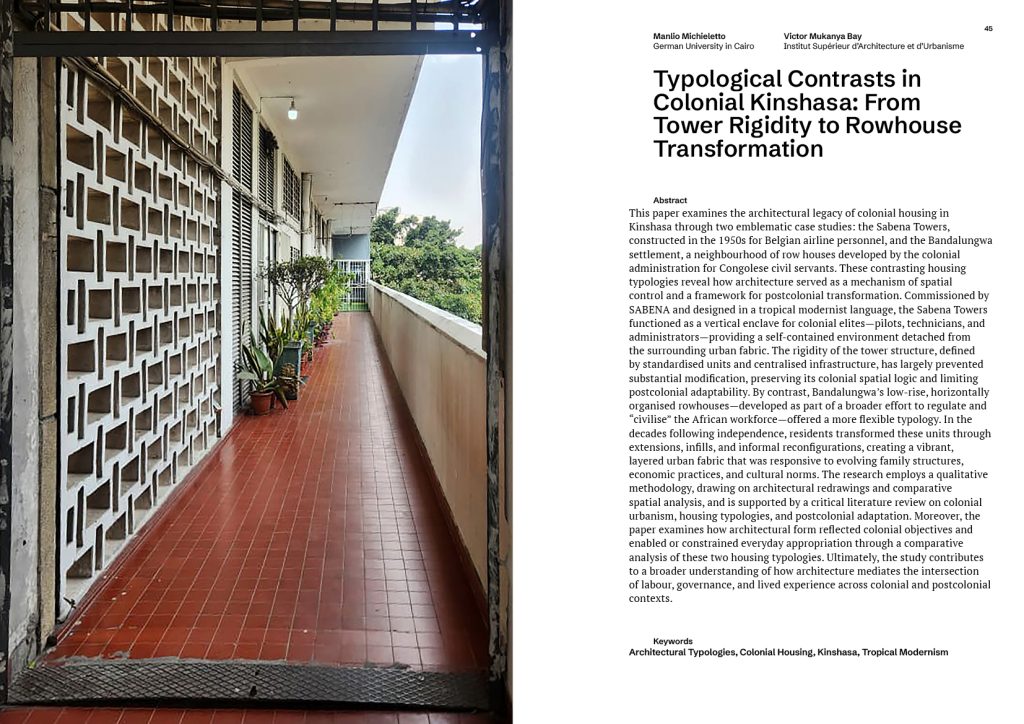
    Typological Contrasts in Colonial Kinshasa: From Tower Rigidity to Rowhouse Transformation

    Manlio Michieletto

    Victor Mukanya Bay

    [>]

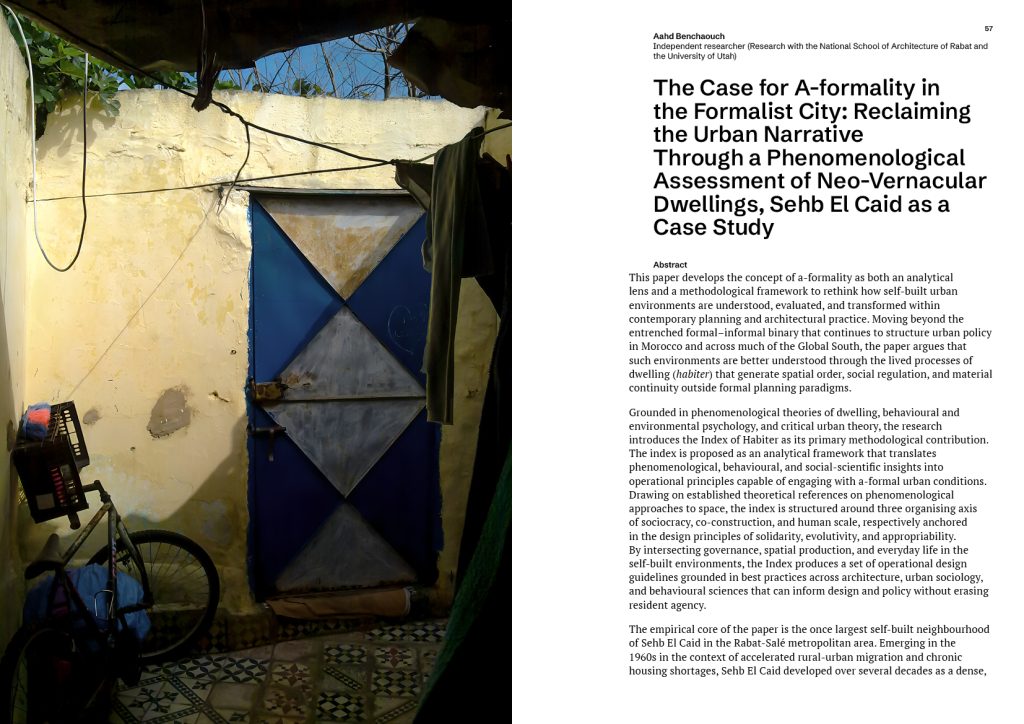
    The Case for A-formality in the Formalist City: Reclaiming the Urban Narrative Through a Phenomenological Assessment of Neo-Vernacular Dwellings, Sehb El Caid as a Case Study

    Aahd Benchaouch

    [>]

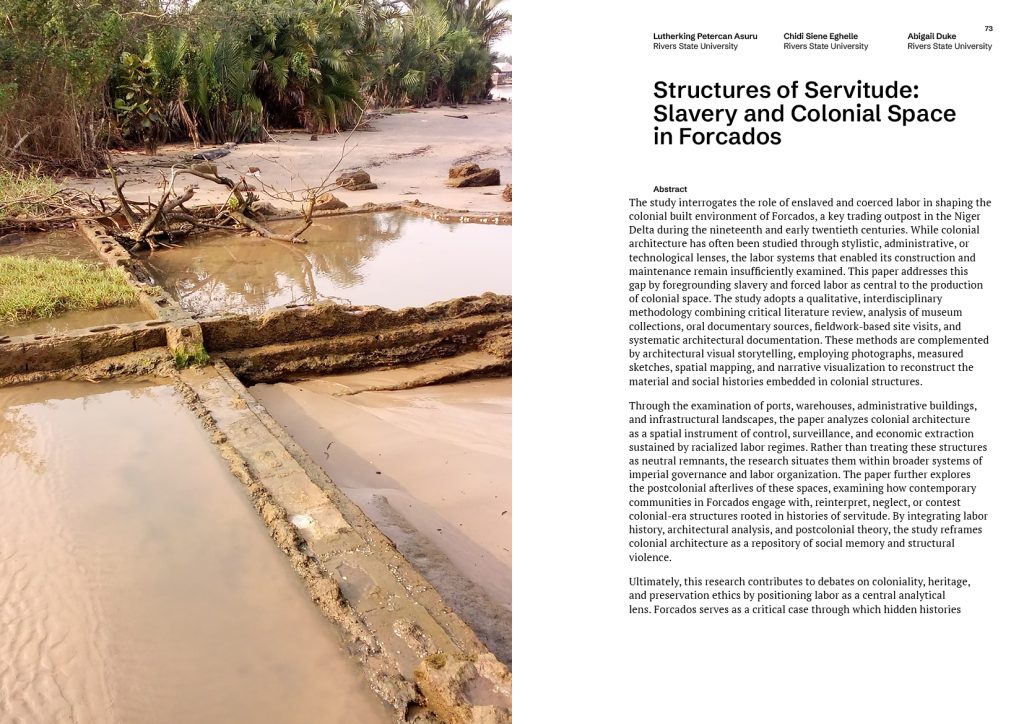
    Structures of Servitude: Slavery and Colonial Space in Forcados 

    Lutherking Petercan Asuru

    Chidi Siene Eghelle

    Abigail Duke

    [>]

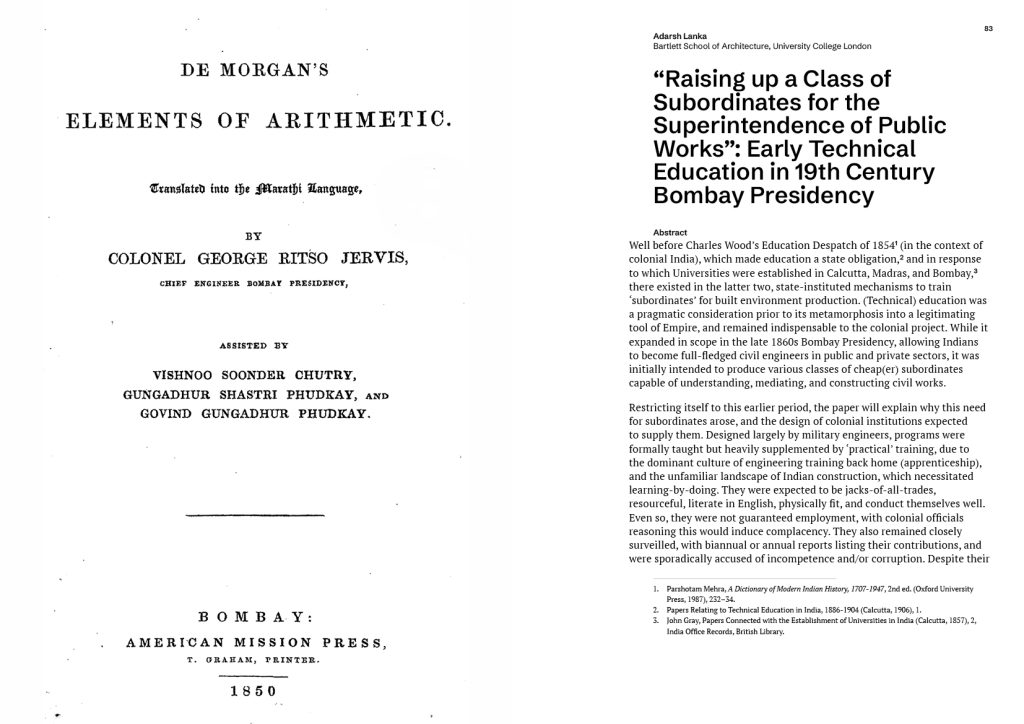
    “Raising up a Class of Subordinates for the Superintendence of Public Works”: Early Technical Education in 19th Century Bombay Presidency

    Adarsh Lanka

    [>]

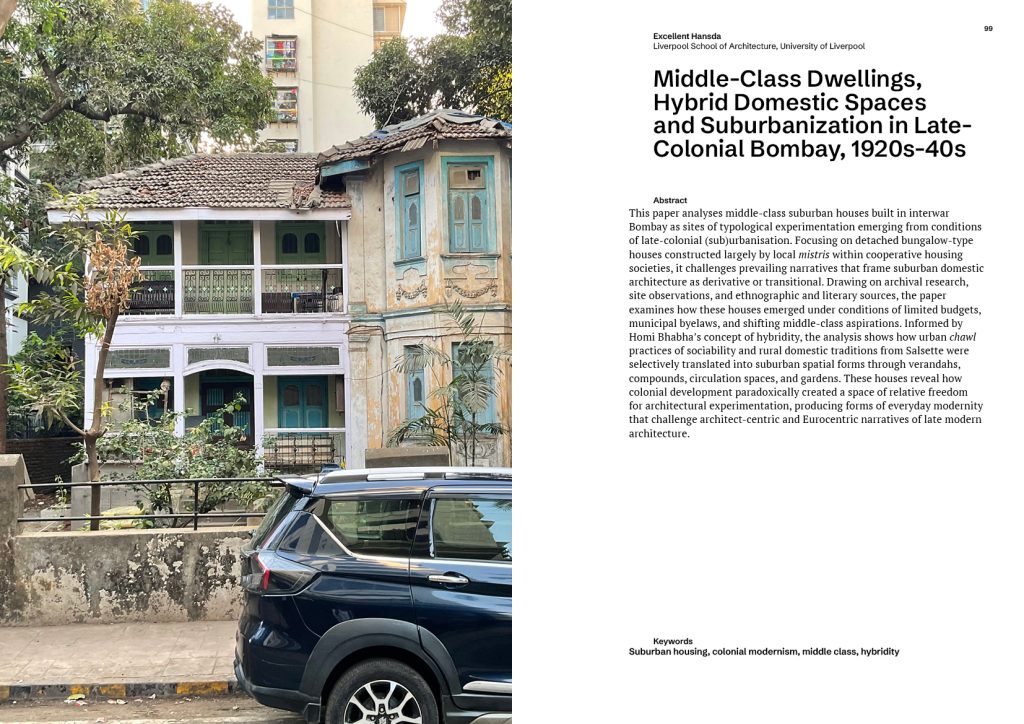
    Middle-Class Dwellings, Hybrid Domestic Spaces and Suburbanization in Late-Colonial Bombay, 1920s-40s

    Excellent Hansda

    [>]

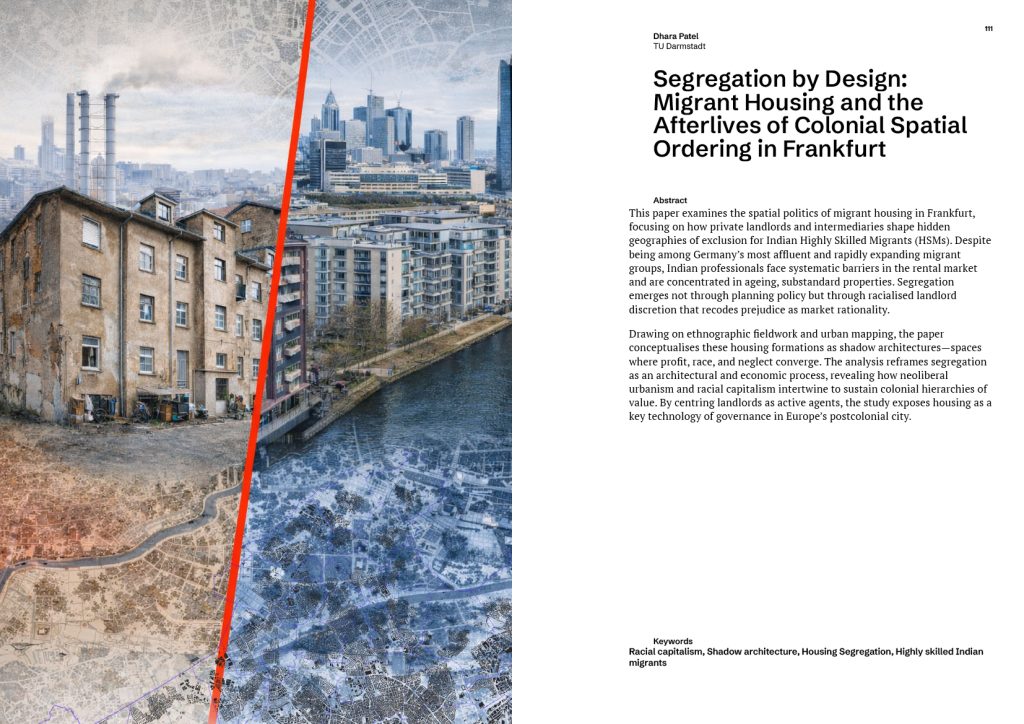
    Segregation by Design: Migrant Housing and the Afterlives of Colonial Spatial Ordering in Frankfurt

    Dhara Patel

    [>]

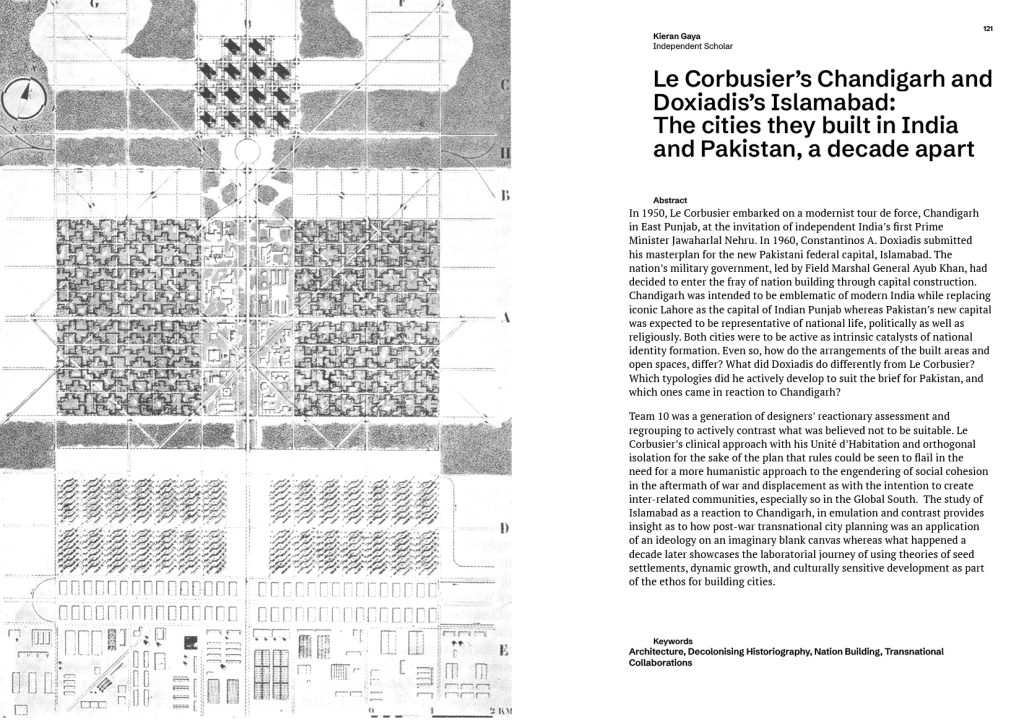
    Le Corbusier’s Chandigarh and Doxiadis’s Islamabad: The cities they built in India and Pakistan, a decade apart

    Kieran Gaya

    [>]

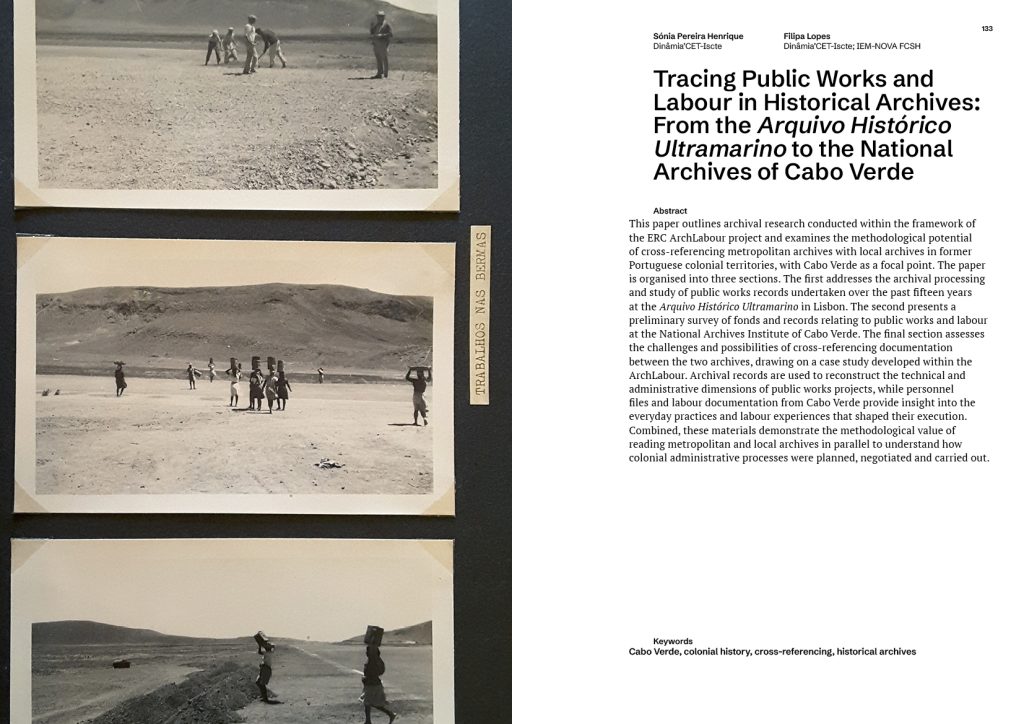
    Tracing Public Works and Labour in Historical Archives: From the Arquivo Histórico Ultramarino to the National Archives of Cabo Verde

    Sónia Pereira Henrique  and

    Filipa Lopes

    [>]

  • Working Papers Series 1


    Architecture + Infrastructures Working Paper Series 1: Colonial and Post-Colonial Landscapes: Architecture, Cities and Labour

    Editors: Beatriz Serrazina and Francesca Vita

    Series Coordinator: Ana Vaz Milheiro

    Design: vivóeusébio

    Edition: 1st Edition

    Editor: Dinâmia’CET-Iscte, 2026

    Format: Printed and Digital 


    Editor’s note

    Beatriz Serrazina, Francesca Vita

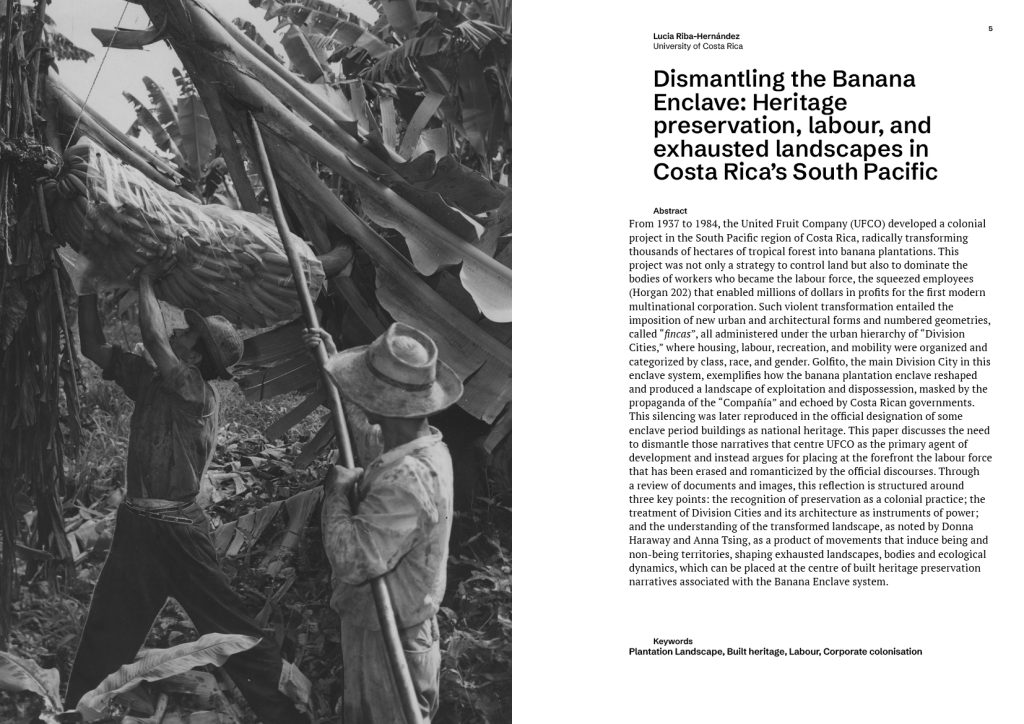
    Dismantling the Banana Enclave: Heritage preservation, labour, and exhausted landscapes in Costa Rica’s South Pacific

    Lucia Riba-Hernández

    [>]

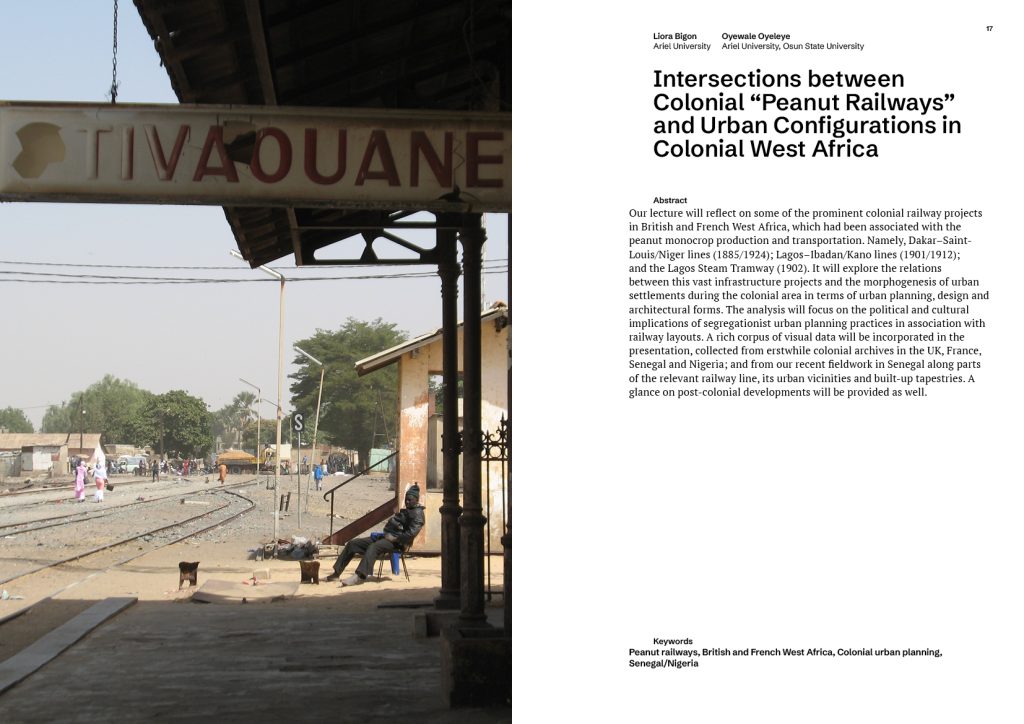
    Intersections between Colonial “Peanut Railways” and Urban Configurations
    in Colonial West Africa

    Liora Bigon and Oyewale Oyeleye

    [>]

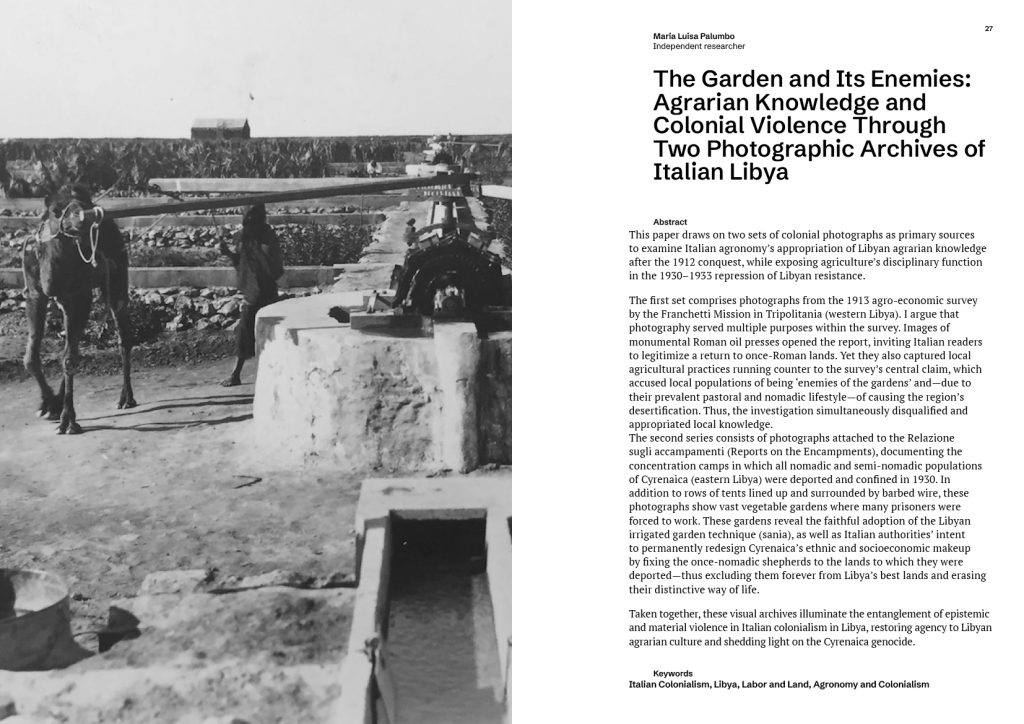
    The Garden and Its Enemies: Agrarian Knowledge and Colonial Violence Through Two Photographic Archives
    of Italian Libya

    Maria Luisa Palumbo

    [>]

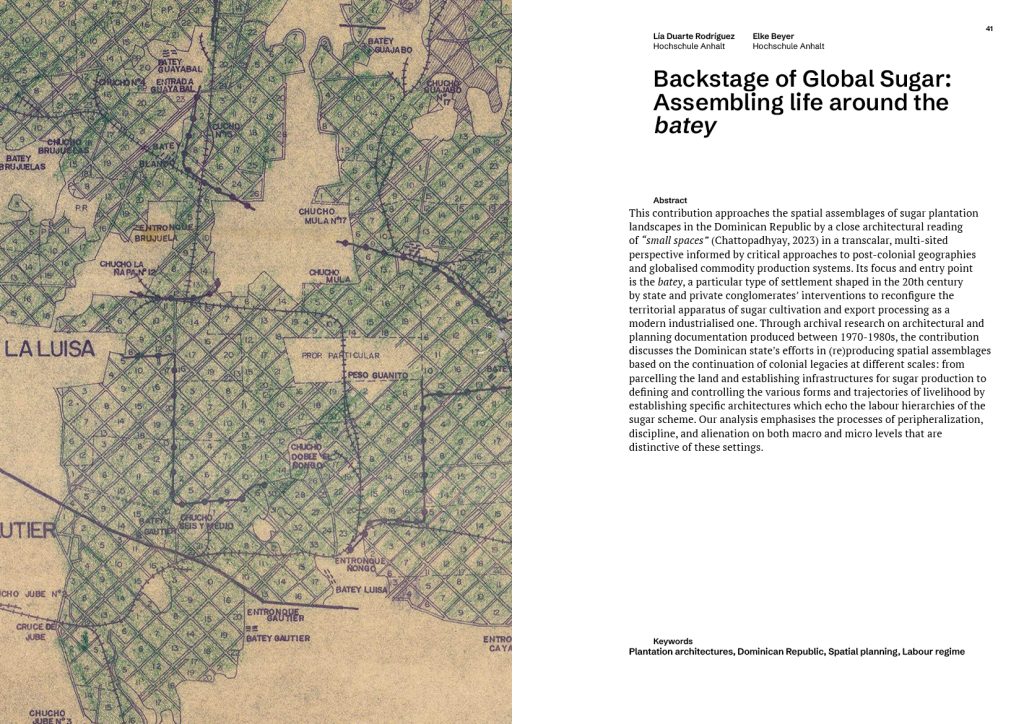
    Backstage of Global Sugar: Assembling life around the batey

    Lía Duarte Rodríguez and
    Elke Beyer

    [>]

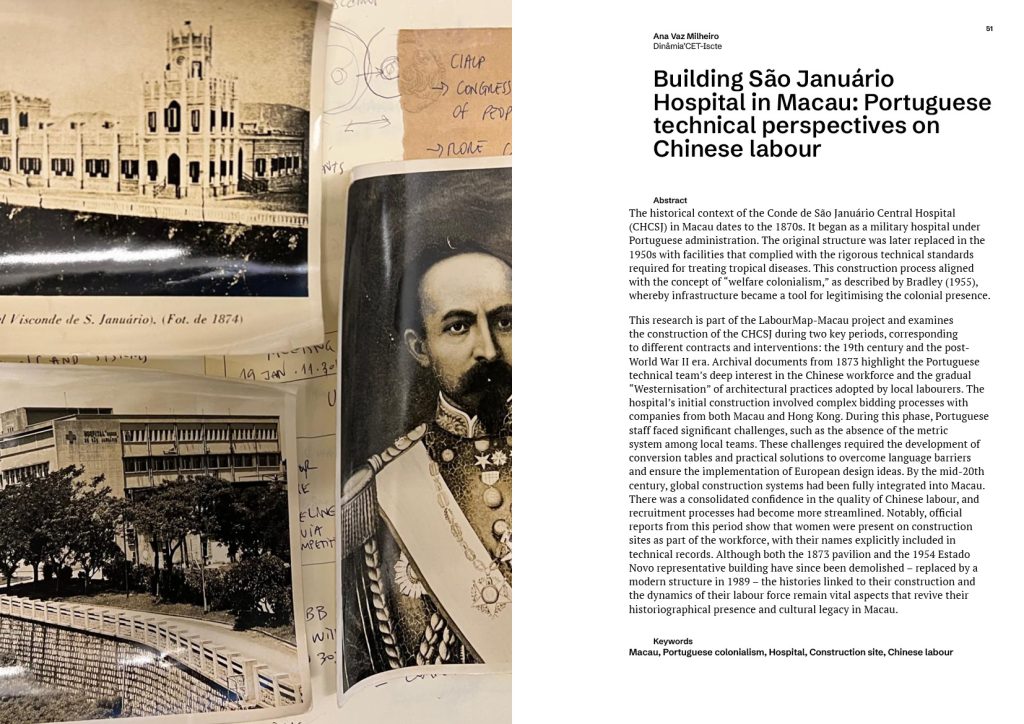
    Building São Januário Hospital in Macau: Portuguese technical perspectives on Chinese labour

    Ana Vaz Milheiro

    [>]

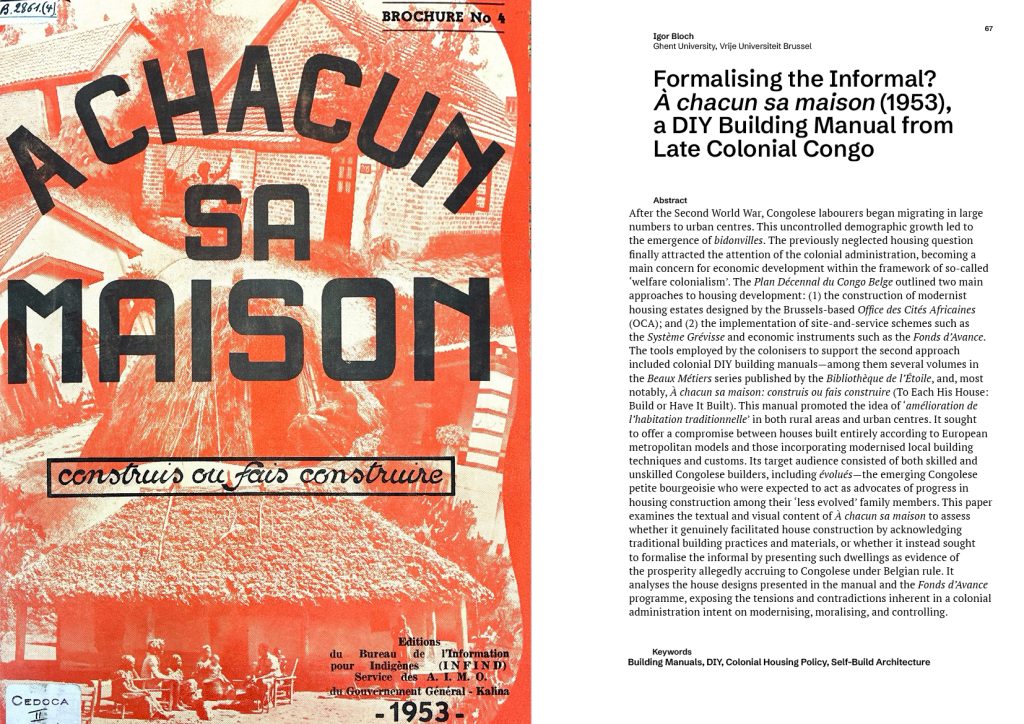
    Formalising the Informal?
    À chacun sa maison (1953),
    a DIY Building Manual from Late Colonial Congo

    Igor Bloch

    [>]

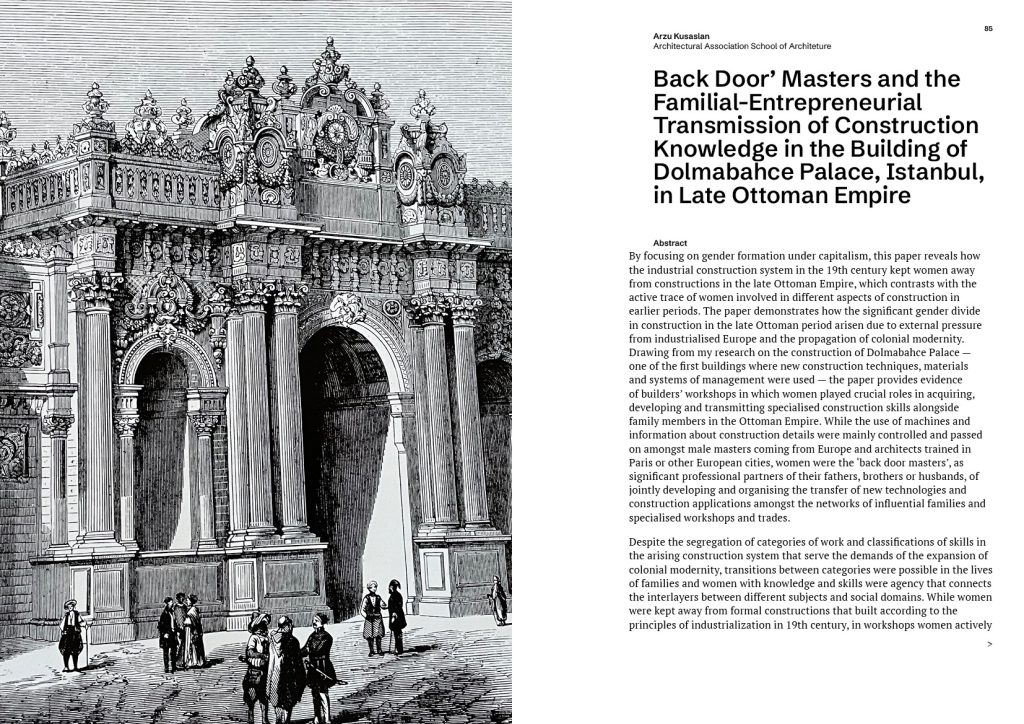
    Back Door’ Masters and the Familial-Entrepreneurial Transmission of Construction Knowledge in the Building of Dolmabahce Palace, Istanbul, in Late Ottoman Empire

    Arzu Kusaslan

    [>]

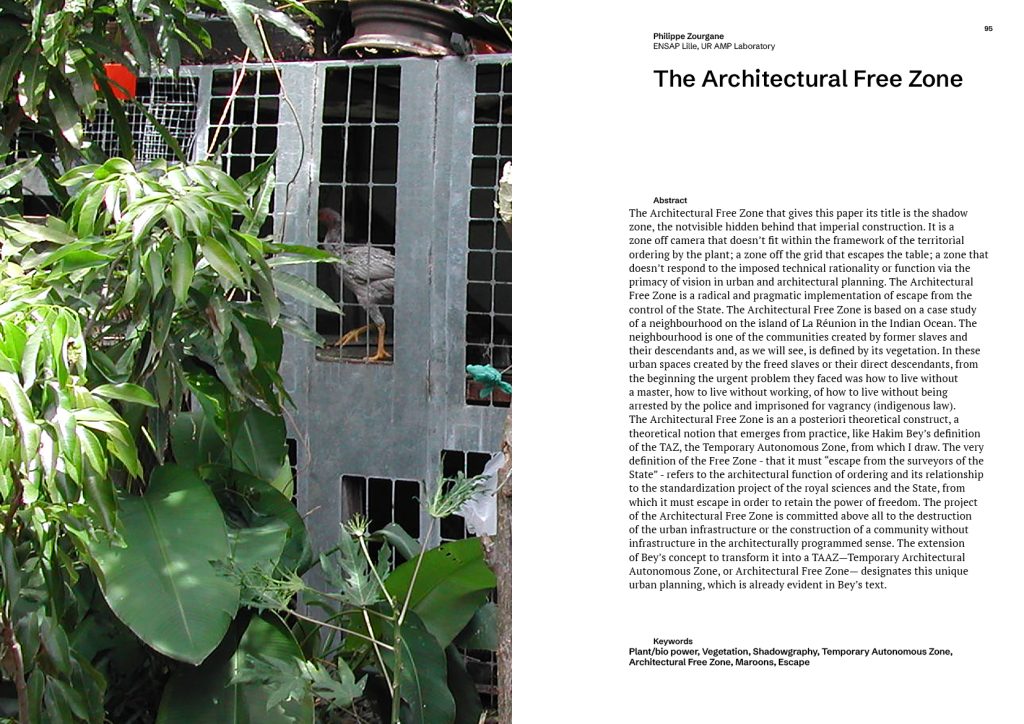
    The Architectural Free Zone

    Philippe Zourgane

    [>]

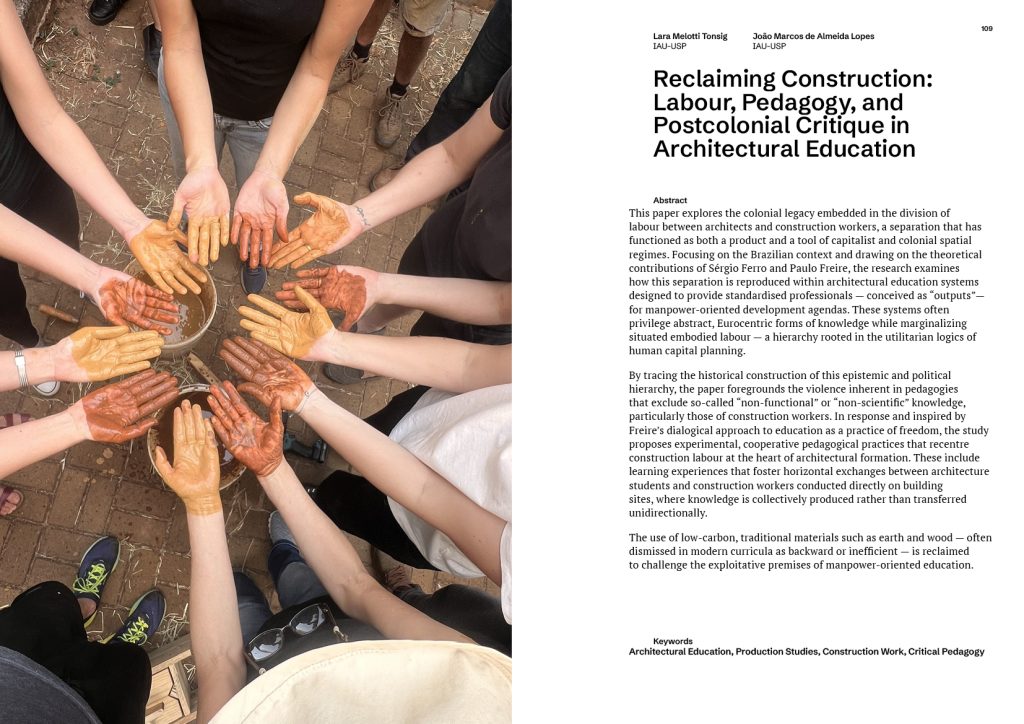
    Reclaiming Construction: Labour, Pedagogy, and Postcolonial Critique in Architectural Education

    Lara Melotti Tonsig  and João Marcos de Almeida Lopes

    [>]

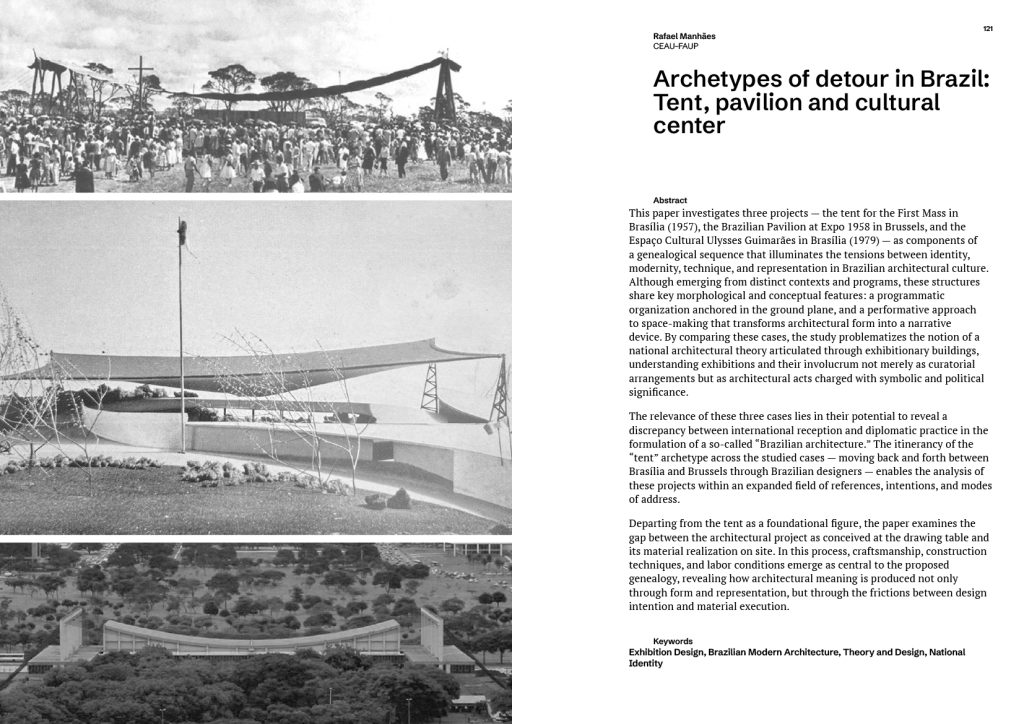
    Archetypes of detour in Brazil: Tent, pavilion and cultural center

    Rafael Manhães

    [>]

  • Working Papers Series – About the Journal


    A+I Working Papers Series

    The Architecture + Infrastructures Working Papers Series (A+I WPS) is an academic journal in the field of architecture. It was established in 2025 by the A+I research collective, a team of researchers from Dinâmia’CET-Iscte coordinated by Professor Ana Vaz Milheiro. The journal consolidates over twenty years of scientific research and academic work.

    The project was initiated by the research project ArchLabour: Architecture, Colonialism and Labour, with the aim of creating an innovative and fruitful platform for scholarly debate. The journal welcomes contributions from a variety of geographical, disciplinary and chronological backgrounds, aiming to promote wide-ranging and thought-provoking debates at the intersection of colonial architecture, labour, social history and construction technology.

    A+I WPS publishes original research articles, and the editorial committee and/or guest editors for each volume are exclusively responsible for selecting materials for publication. Articles are selected according to scope and publication guidelines to promote high-quality work. No restrictions are imposed on the basis of academic qualification, institutional affiliation, or geographical origin. All research articles are selected and evaluated through a double-blind peer review process.

    A+I WPS is published online twice yearly, and is available in open access on the journal’s website. The journal is supported by Dinâmia’CET-Iscte and the European Research Council (ArchLabour, 101096606).

    Please submit any questions to archlabour@iscte-iul.pt.

    _

    Editoral Team

    Series Coordinator: Ana Vaz Milheiro

    Editors: Beatriz Serrazina; Francesca Vita

    Editorial Committee

    Fernando Pires

    Filipa Fiúza

    Filipa Lopes

    Inês Lima Rodrigues

    Leonor Matos Silva

    Sónia Henrique

    ISSN 3051-8555

  • CPCL Working Papers


    Working Papers

    Colonial and Post-Colonial Landscapes Working Paper Series is a new online publication series from our research group. The first volume will be published and launched in February 2026 during the congress.

    Editors: Beatriz Serrazina; Francesca Vita

    Series Coordinator: Ana Vaz Milheiro

    Design: vivóeusébio

    Edition: 1st Edition

    Editor: Dinâmia’CET-Iscte, 2026

    Format: Printed and Digital 

    Architecture + Infrastructures Working Paper Series 1: Colonial and Post-Colonial Landscapes: Architecture, Cities and Labour

    Authors: Ana Vaz Milheiro; Arzu Kusaslan; Elke Beyer; Igor Bloch; João Marcos de Almeida Lopes; Lara Melotti Tonsig; Lía Duarte Rodríguez; Liora Bigon; Lucia Riba-Hernández; Maria Luisa Palumbo; Oyewale Oyeleye; Philippe Zourgane; Rafael Manhães

    Architecture + Infrastructures Working Paper Series 2: Colonial and Post-Colonial Landscapes: Architecture, Cities and Labour

    Authors: Aahd Benchaouch; Abigail Duke; Adarsh Lanka; Adarsh Lanka; Asu Tozan; Chidi Siene Eghelle; Dhara Patel; Excellent Hansda; Filipa Lopes; Inês Lima Rodrigues; Joana Borges Pereira; Kieran Gaya; Lutherking Petercan Asuru; Manlio Michieletto; Maria Alice Correia; Sónia Pereira Henrique; Victor Mukanya Bay

    Please submit any questions to cpclcongress@gmail.com

  • CPCL Registration and Info


    Registration & Practical Info

    Registration fees

    Participants with communication: 275€*

    PhD students with communication: 175€*

    A+I past collaborators with communication: 175€*

    Session chairs with communication: 75€*

    Session chairs without communication: 0€*

    General attendees: 75€* (lunches and coffee breaks included); 40€ (without lunches and coffee breaks)

    *Registration includes physical access to all lectures, coffee breaks and lunch during the Conference.

    How to register

    In order to register at the conference:

    1. Follow the link above and create a new user;

    2. Then log into the platform;

    3. Fill the form, choosing the registration fee that corresponds to your participation;

    4. Submit and proceed with the payment.

    Please submit any questions to cpclcongress@gmail.com

    Location

    Calouste Gulbenkian Foundation, Av. de Berna 45A, 1067-001 Lisbon

  • CPCL Keynote Speakers


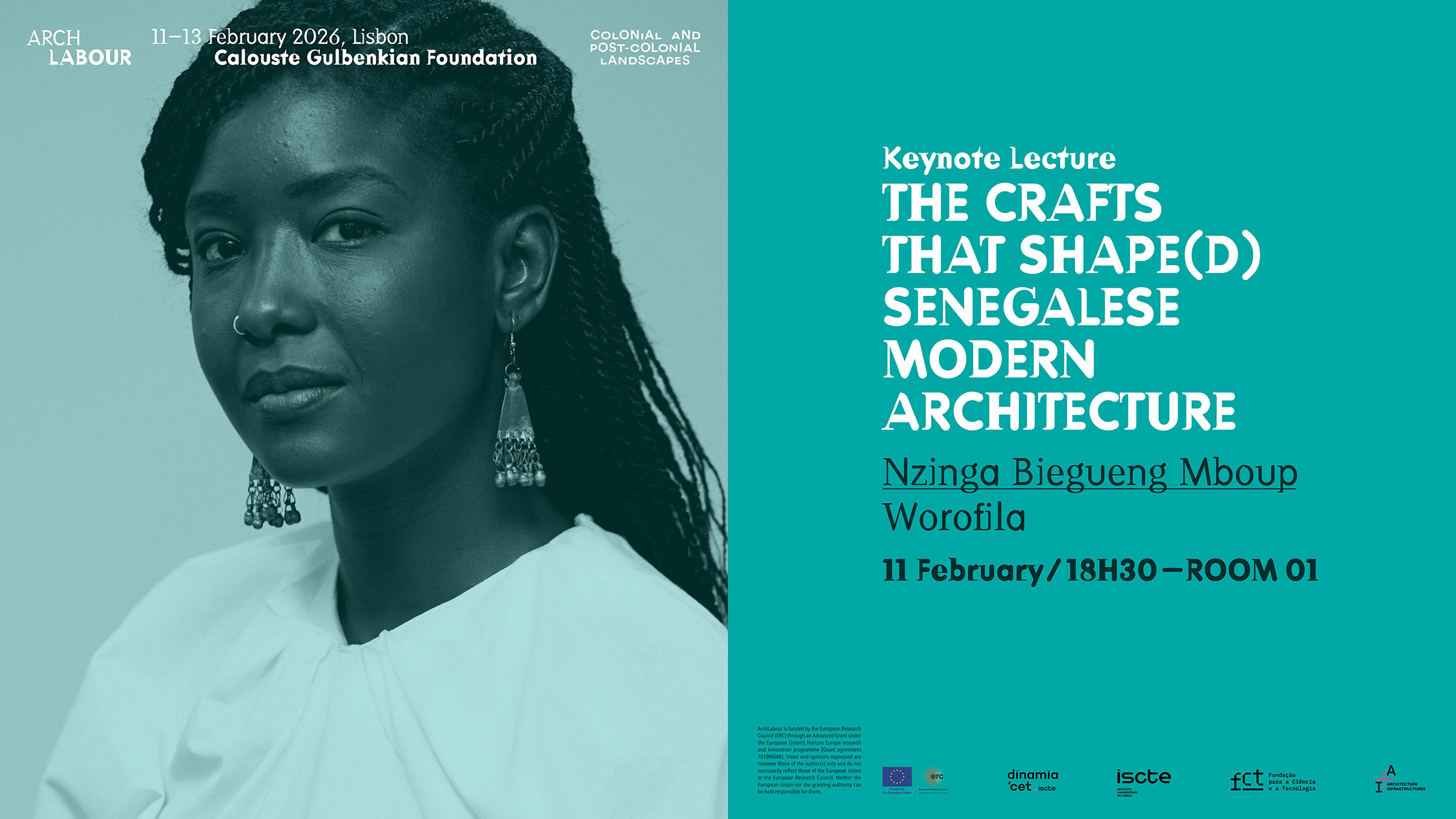
    THE CRAFTS THAT SHAPE(D) SENEGALESE MODERN ARCHITECTURE 

    Nzinga Biegueng Mboup

    Worofila

    Nzinga Biegueng Mboup is a Senegalese architect and co-founder of Worofila, a Dakar-based practice that specializes in bioclimatic architecture and construction using earth and other local natural materials. Some of her most notable projects include the Ngor Vertical house and the upcoming Rainforest Gallery of the MOWAA Campus in Nigeria. She is also active as a researcher and has made significant contributions to urban and cultural heritages studies in Dakar. Since 2023, Mboup has been collaborating with the Canadian Centre for Architecture as the leader of CCA c/o Dakar, a 3-year research program investigating Senegal’s unarchived architectural heritage. She has been appointed to teach an Advanced Architecture Design Studio over the 2025 summer at Columbia University focusing on “Assessing Endogenous Building Practices”.

    Opening Lecture

    11 February, 2026 | 18H30 | Room 1

    Calouste Gulbenkian Foundation

    *free entry


    THE SPACES AND MOVEMENTS OF COLONIAL FORCED LABOUR: AN “ECOSYSTEM OF RUNNING”, A REALITY OF EVERYDAY LIFE, 1918–1962 

    Alexander Keese

    Université de Genève

    Full professor of Sub-Saharan African history since 2019. He joined the University of Geneva as an SNSF scholarship professor in 2015, after leading the ForcedLabourAfrica research group (ERC Starting Grant) at the Centro de Estudos Africanos da Universidade do Porto in Portugal (2010–2011) and then at Humboldt University in Berlin (2011–2015). He defended his doctoral thesis in modern and contemporary history in 2004 at the University of Freiburg im Breisgau and his habilitation thesis in 2010 at the University of Bern. Alexander Keese was a visiting researcher at the Centre of European and International Studies and Research (CEISR) at the University of Portsmouth in the United Kingdom and a visiting professor at the École des Hautes Études en Sciences Sociales (EHESS). A specialist in the comparative history of decolonisation in West and Central Africa, the history of forced labour and ethnic mobilisation in the context of conflict, he is also interested in several global issues, including a global history of forced labour and a comparative perspective on plantation systems (African and non-African; he has conducted research in Suriname and Brazil, where he has several research collaborations).

    Keynote Lecture

    12 February, 2026 | 11H30 | Room 1

    Calouste Gulbenkian Foundation

    *general attendees fee


    PROMISING FORMS AND PEOPLE: NARRATING THE “GOLDEN AGE OF CONSTRUCTION” IN COLONIAL HONG KONG 

    Cecilia L. Chu

    Chinese University of Hong Kong

    Cecilia L. Chu is an Associate Professor in the School of Architecture at the Chinese University of Hong Kong. Trained as an urban historian with a background in design and conservation, her work focuses on the intersection of professional and popular knowledge of architecture and the built environment. She is the author of Building Colonial Hong Kong: Speculative Development and Segregation in the City, which received the 2023 Best Book Award from the Urban History Association and the 2024 International Planning History Society Book Prize. Chu is a co-founder and past president of DOCOMOMO Hong Kong and an editorial board member of the Journal of Urban History, Journal of the Royal Asiatic Society Hong Kong, Surveying and Environment, and Built Environment. She received her PhD in Architecture from the University of California, Berkeley.

    Keynote Lecture

    13 February, 2026 | 18H30 | Room 1

    Calouste Gulbenkian Foundation

    *general attendees fee