
Category: News

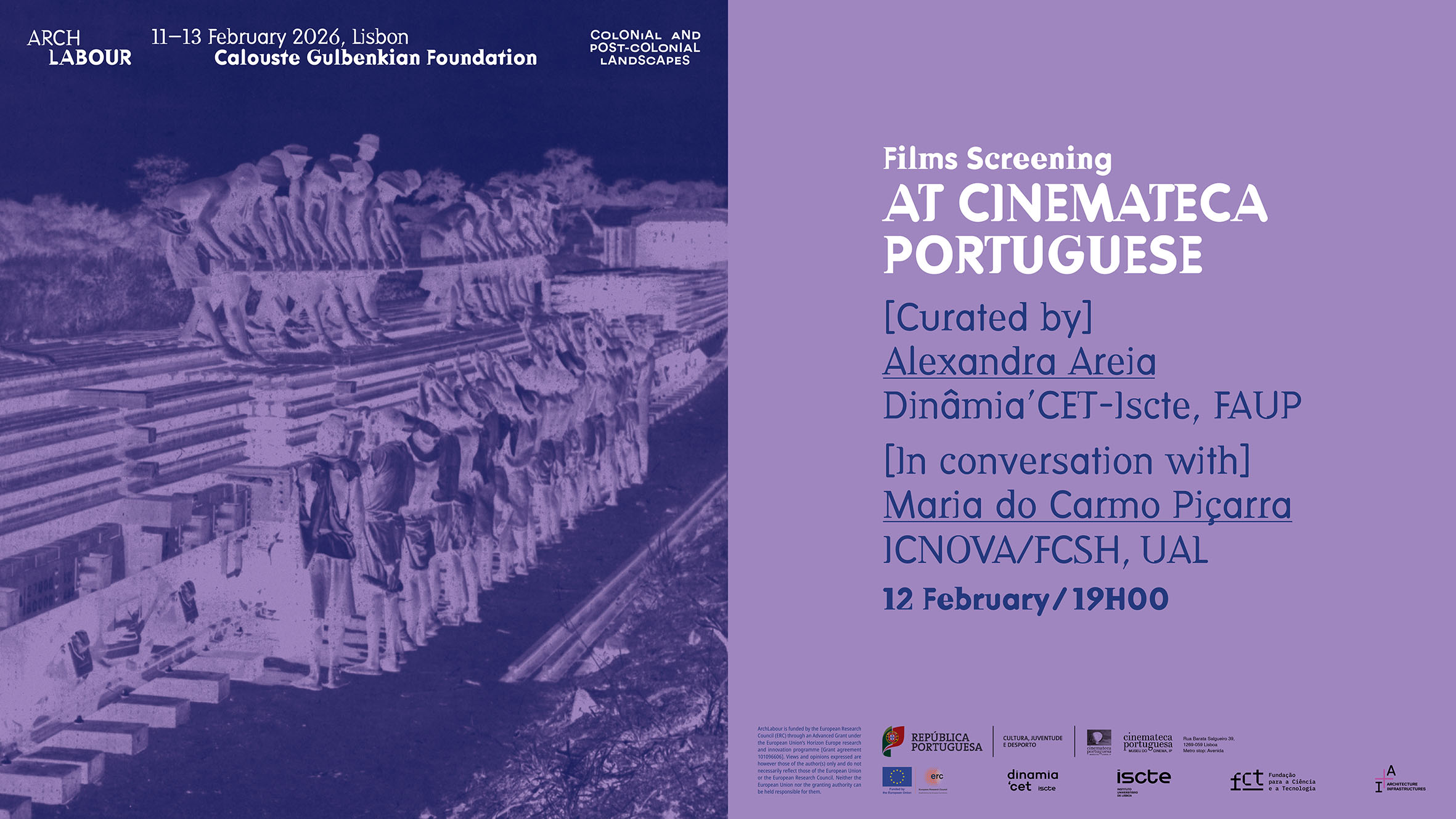
  • Films Screening at Cinemateca Portuguesa

    Films Screening at Cinemateca Portuguesa

    Event: Colonial and Post-Colonial Landscapes. Architecture, Cities, Labour
    Authors: Alexandra Areia, Dinâmia’CET-Iscte, FAUP 
    Date: 12 February 2026
    Location: Cinemateca Portuguesa, Lisbon

    Summary

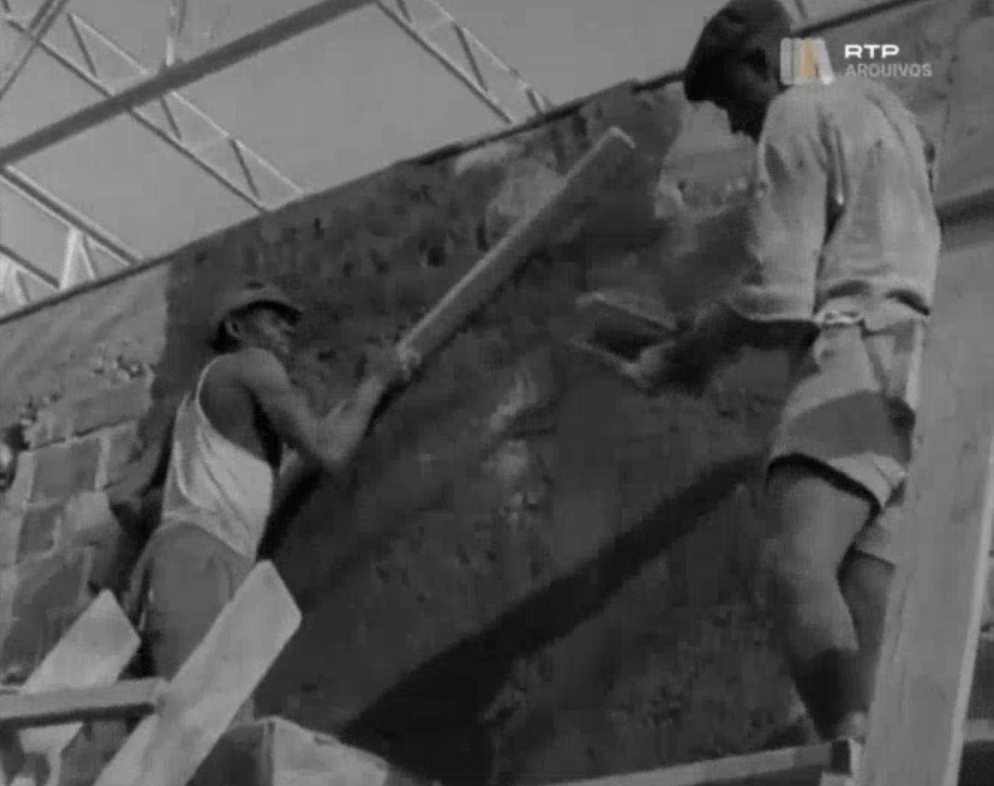
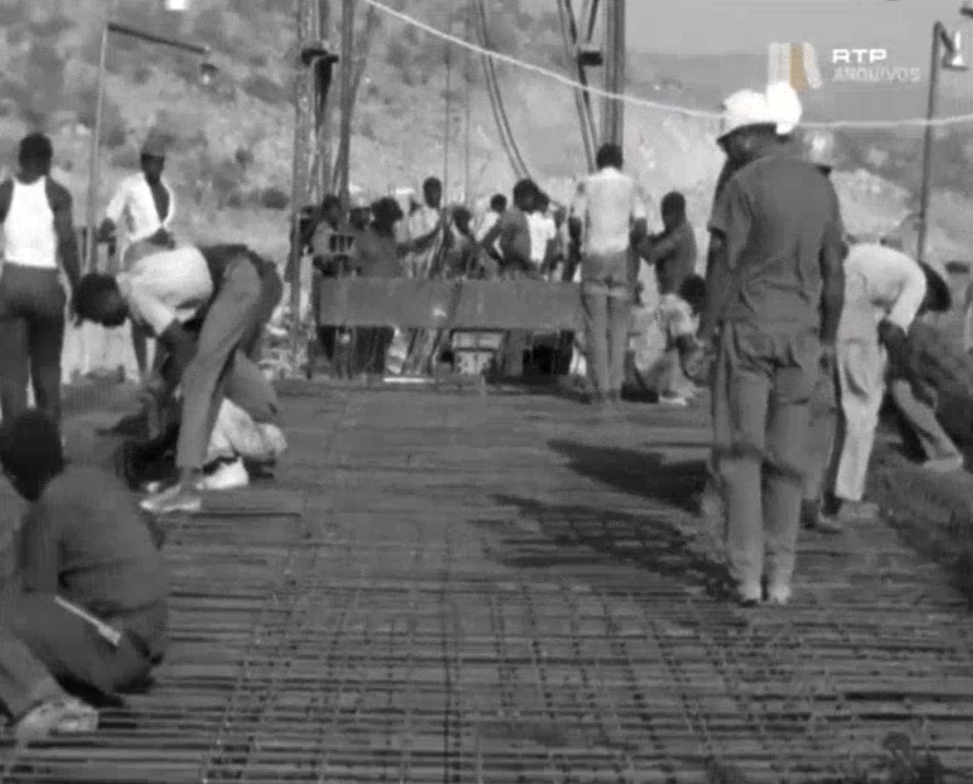
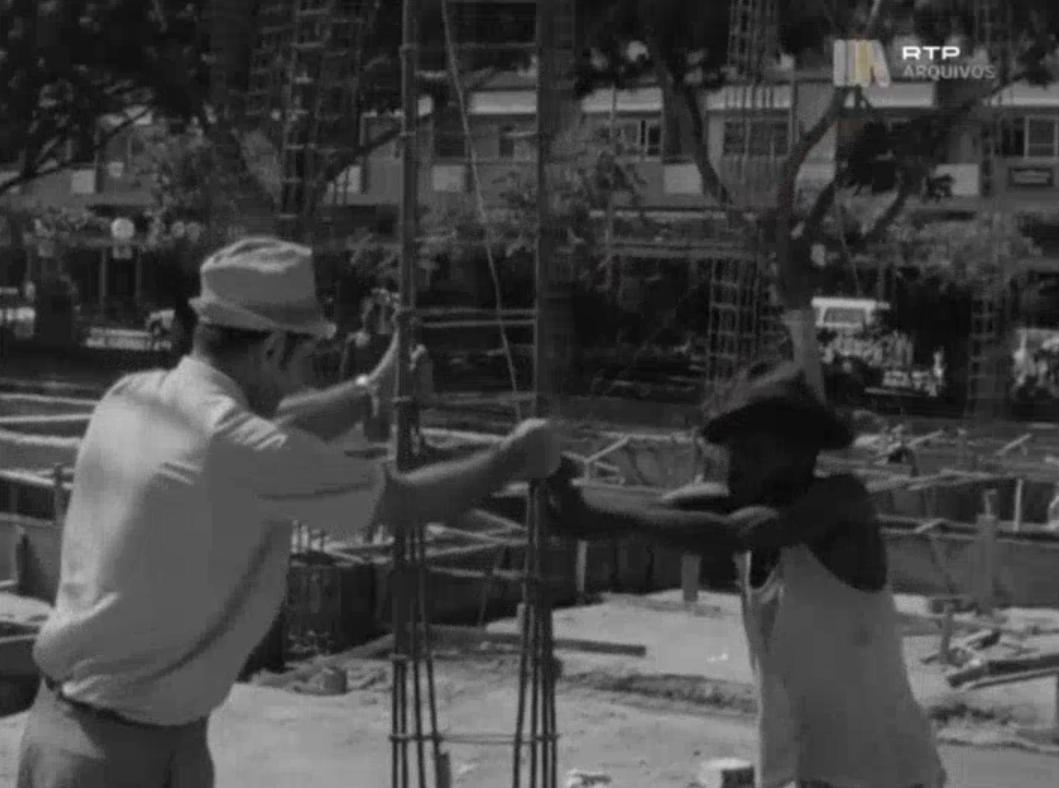
    The session Landscapes of labour and construction in colonial films. A glimpse into the archival collection of the Portuguese Cinemateca will screen a curated selection of six films from Cinemateca Portuguesa’s archival collection, illustrating a wide range of provenances, purposes, geographic locations, and historical circumstances. The films will be presented chronologically, from the 1920s to 1969, and will cover different sites in Angola, Mozambique, and Cape Verde. Rooted in propagandistic agenda and in underlying narratives of dominance and oppression, which must be critically assessed and acknowledged, the films produced under Portuguese colonial system provide vivid, nuanced and multidimensional insights into the topic of labour within Portugal’s territorial activities in Africa during the 20th century. Considering the political and ideological framework of Portuguese colonialism, this collection of moving images invites reflection on the labour strategies and mechanisms employed by the colonizers in their exploration of African land, nature, and human resources.

  • Archlabour: Architecture, Colonialism and Labour in Portuguese Colonial Rule

    Archlabour: Architecture, Colonialism and Labour in Portuguese Colonial Rule

    Event: Colonial and Post-Colonial Landscapes: Architecture, Cities, Labour
    Chairs: Fernando Pires, Leonor Matos Silva
    Date: 12 February 2026

    Location: Calouste Gulbenkian Foundation, Lisbon (PT)


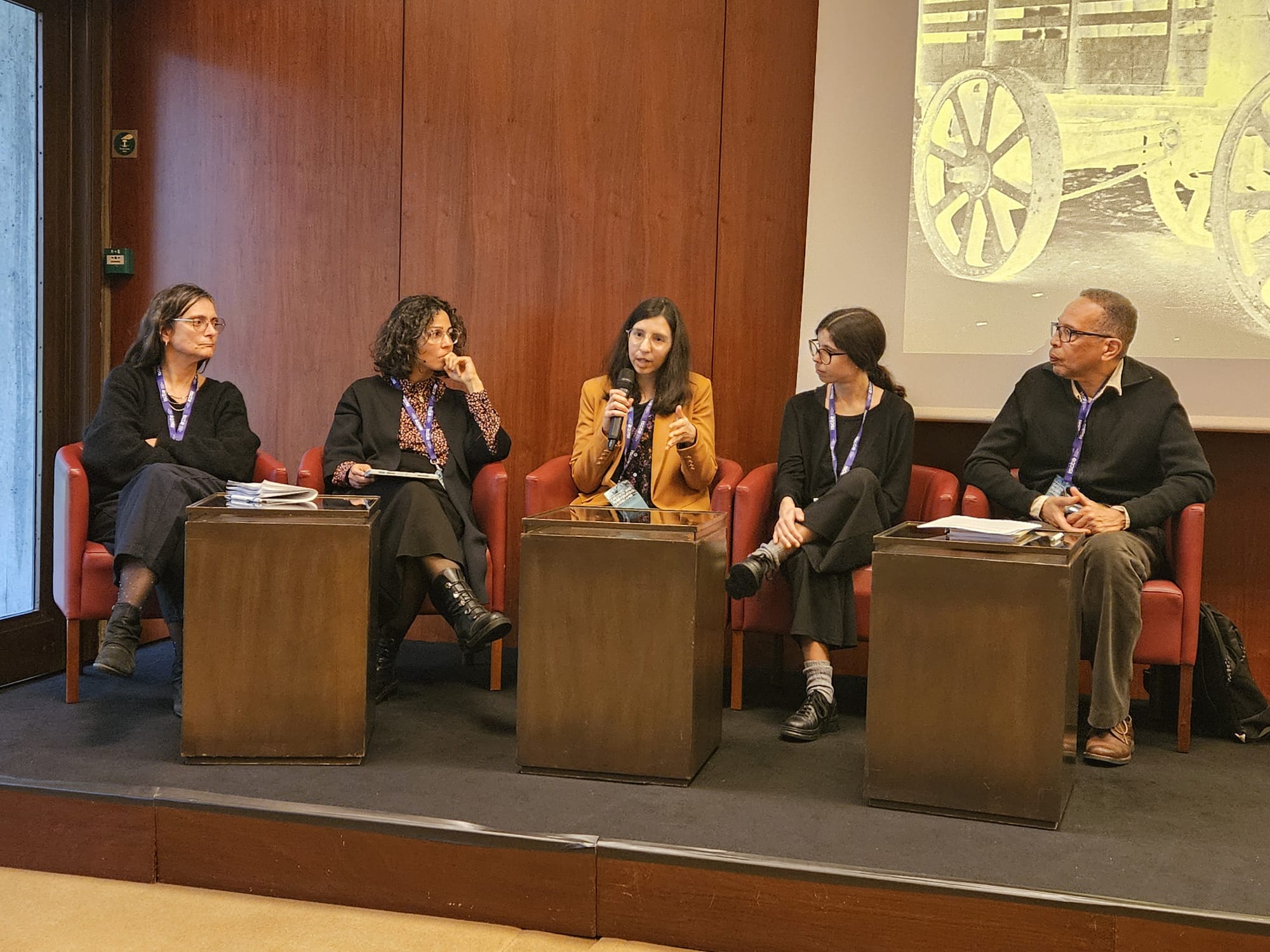
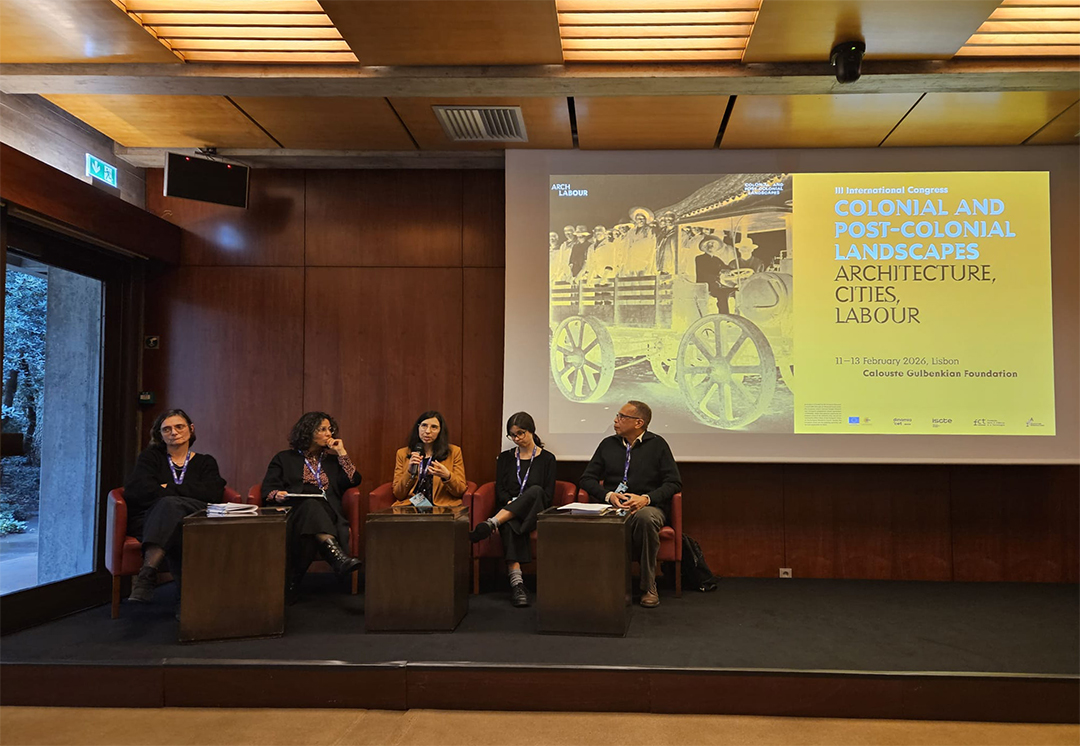
    Session Speakers (from the right): Ana Vaz Milheiro, Francesca Vita, Filipa Lopes and Beatriz Serrazina. Session chair Fernando Pires on the left.
    Session Speaker: Ana Vaz Milheiro.

    Summary

    Who were the workers involved in architecture and construction works in Portuguese colonial territories in Africa? Where did they come from? How were they recruited? What were their expectations? How were they paid? What were their skills and tasks? What materials and construction systems did they work with? What training did they receive? How did they resist and collaborate? What were the repercussions of these (often compulsory) work experiences? How should this legacy be dealt with? Where to find and how to examine construction workers in archives and sources?

    In this session, researchers from the ArchLabour project will present their ongoing research and discuss some of the project’s questions. The presentations will cover a variety of topics, time frames, geographies and building typologies, ranging from large-scale infrastructure to archival research. The spotlight will be on ArchLabour case studies, main sources and methodologies, including an analysis of construction work on railways, dams, housing and settlements in Angola, Mozambique, Guinea-Bissau, Cape Verde and São Tomé e Príncipe in the 20th century. Key concepts such as subalternity, policies, race, gender, conflict and resilience will be examined in relation to construction materials and systems, the production of localised knowledge and labour skills and categories.


    Presentations

  • The spaces and movements of colonial forced labour: an “ecosystem of running”, a reality of everyday life, 1918–1962

    The spaces and movements of colonial forced labour: an “ecosystem of running”, a reality of everyday life, 1918–1962

    The spaces and movements of colonial forced labour: an “ecosystem of running”, a reality of everyday life, 1918–1962

    Event: Colonial and Post-Colonial Landscapes. Architecture, Cities, Labour
    Authors: Alexander Keese, Université de Genève 
    Date: 12 Feb 2026
    Location: Calouste Gulbenkian Foundation, Lisbon

    Biographical note

    Full professor of Sub-Saharan African history since 2019. He joined the University of Geneva as an SNSF scholarship professor in 2015, after leading the ForcedLabourAfrica research group (ERC Starting Grant) at the Centro de Estudos Africanos da Universidade do Porto in Portugal (2010–2011) and then at Humboldt University in Berlin (2011–2015). He defended his doctoral thesis in modern and contemporary history in 2004 at the University of Freiburg im Breisgau and his habilitation thesis in 2010 at the University of Bern. Alexander Keese was a visiting researcher at the Centre of European and International Studies and Research (CEISR) at the University of Portsmouth in the United Kingdom and a visiting professor at the École des Hautes Études en Sciences Sociales (EHESS). A specialist in the comparative history of decolonisation in West and Central Africa, the history of forced labour and ethnic mobilisation in the context of conflict, he is also interested in several global issues, including a global history of forced labour and a comparative perspective on plantation systems (African and non-African; he has conducted research in Suriname and Brazil, where he has several research collaborations).

  • The Crafts that shape(d) Senegalese Modern Architecture

    The Crafts that shape(d) Senegalese Modern Architecture

    The Crafts that shape(d) Senegalese Modern Architecture

    Event: Colonial and Post-Colonial Landscapes. Architecture, Cities, Labour
    Authors: Nzinga B. Mboup
    Date: 11 Feb 2026
    Location: Calouste Gulbenkian Foundation, Lisbon

    Biographical note

    Nzinga Biegueng Mboup is a Senegalese architect and co-founder of Worofila, a Dakar-based practice that specializes in bioclimatic architecture and construction using earth and other local natural materials. Some of her most notable projects include the Ngor Vertical house and the upcoming Rainforest Gallery of the MOWAA Campus in Nigeria. She is also active as a researcher and has made significant contributions to urban and cultural heritages studies in Dakar. Since 2023, Mboup has been collaborating with the Canadian Centre for Architecture as the leader of CCA c/o Dakar, a 3-year research program investigating Senegal’s unarchived architectural heritage. She has been appointed to teach an Advanced Architecture Design Studio over the 2025 summer at Columbia University focusing on “Assessing Endogenous Building Practices”.

  • Colonial and Post-colonial Landscapes International Congress 11-13 February 2026

    Colonial and Post-colonial Landscapes International Congress 11-13 February 2026

  • Gendered work in former Portuguese colonial Africa: Mass labor and public works

    Gendered work in former Portuguese colonial Africa: Mass labor and public works

    Journal: The Journal Modern Craft, 18
    Author: Ana Vaz Milheiro

    Author: 2025


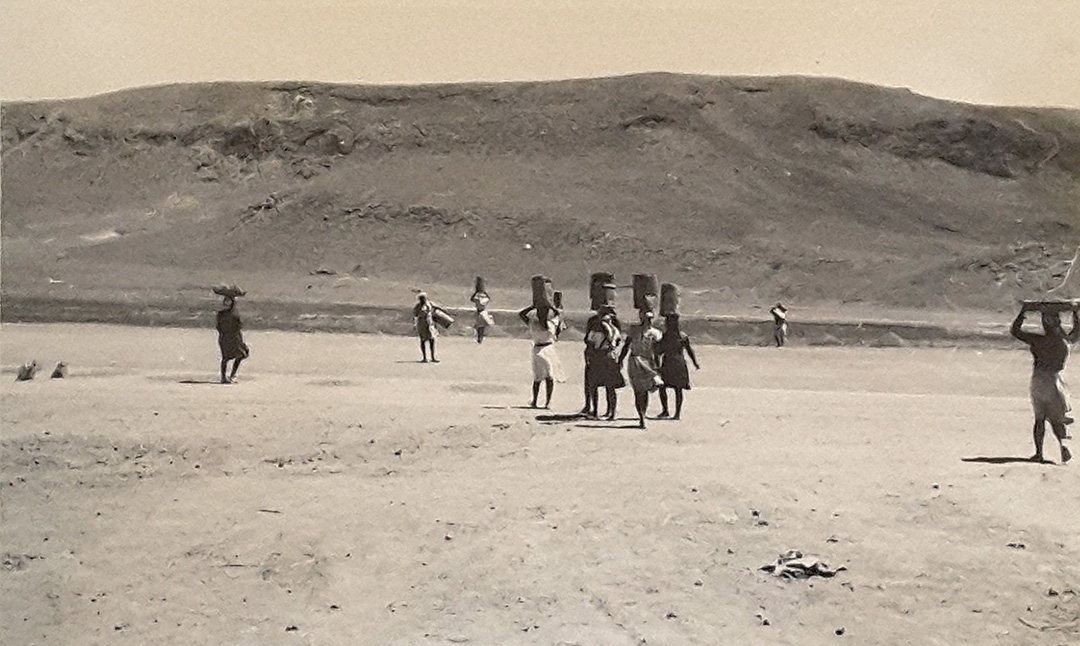
    “Ilha do Fogo. Girl carrying boulders to the water abstraction at Praia do Ladrao beach. Salary: 3$00 daily.” Antonio de Almeida (1948).
    “Santiago. Women working to repair a street in Praia, next to two bullies…” Antonio de Almeida (1948).

    Summary

    References to the existence of women in Portuguese Colonial Public Works can be found on payrolls since the turn of the nineteenth century. Their work was subordinated to men’s work and they consistently earned lower wages. After World War II, their presence in quarries, or dealing with small pavement repairs, would endure in economically precarious geographies. One of these locations was Cape Verde, where positions for carpenters, bricklayers, and construction helpers were left vacant after the emigration of men. This situation was not very different from that in rural Portugal, where women, mostly illiterate, also constituted a cheap workforce. Examining gendered labor in colonial Cape Verde, this article analyzes the complex coexistence of subalternity, race, and extreme poverty in an understudied context. Women workers were generally associated with unskilled labor and high demands on a large scale. In light of their apparent invisibility in colonial records, this paper considers whether and how the characteristics of this group impacted design projects. It also explores whether working in Public Works meant the emancipation of women who were heads of single-parent families or only represented the perpetuation of inequality.

    Click here to access the article.

  • Building the Fringes of Empire: Mining Companies, Transnational Experts, Race and Space in Colonial Africa

    Building the Fringes of Empire: Mining Companies, Transnational Experts, Race and Space in Colonial Africa

    Book: Routledge Critical Companion to Race and Architecture
    Author: Beatriz Serrazina

    Editors: Felipe Hernández and Itohan Osayimwese

    Print: Routledge, 2025


     Workers’ camp at Union Minière, Katanga (Ern. Thill, Bruxelles)
    Village for Cape Verdean workers, Lunda, Angola (Diamang’s archives, DCV-UC/AD)

    Summary

    Mining company towns and workers’ villages in Central Africa, inhabited by thousands of mine‐ workers and families, insightfully picture how difference between race, class and gender was spatialised through various building politics, protocols and materials. This chapter aims to highlight the complex and diverse ways the concept of ‘race’ was deployed and impacted in spatial planning. It explores company settlements and policies as apparatuses of layered trans‐imperial connections and circulations that turned cross‐fertilised expertise in space and architectural design into key tools for consolidating power. The multi‐scalar networks participating in these concessions are here examined to surpass the still dominant state‐centred frames of analysis which fail to disclose the strength of transnational connections, while allowing to assess the role of other experts in empire building. Located in‐between borderland areas, private enterprises became significant fields of experience and translation for architectural models and construction techniques, thus pushing research to move beyond dichotomic approaches towards more polyhedral perspectives.

  • Archival research stay at the National Archives of Cabo Verde

    Archival research stay at the National Archives of Cabo Verde

    Type of fieldwork: Archival research
    Author: Filipa Lopes
    Period: 6-17 October 2025

    Location: National Archives Institute of Cabo Verde (IANCV). Praia, Cabo Verde


    Boxes containing MIT catalogue sheets and archival documents from IANCV fonds being consulted during the research stay
    Cover of the 2004 numerical repertory of
    the ITPAS fonds

    Summary

    The archival research stay at the IANCV was carried out within the framework of the ArchLabour project, with the aim of gathering documentation on public works, labour history, and the technical infrastructures developed across the Cabo Verde archipelago during the late colonial period. The research combined systematic consultation of catalogues and finding aids with the identification of key archival materials.

    Research began with the examination of handwritten catalogue sheets from the Ministry of Infrastructure and Transport (MIT) fonds, alongside other finding aids held at the IANCV. This initial survey enabled the identification of relevant fonds and records, with particular attention given to documentation relating to major infrastructures such as Sal Airport, the Praia Seminary designed by architect Silva e Castro, lyceums and schools, road networks, workers’ settlements, and water-supply systems. A central objective of the research was also to locate records concerning public works labour in Cabo Verde, including information on workers’ origins, training, wages, technical staff, construction materials, and transport logistics.

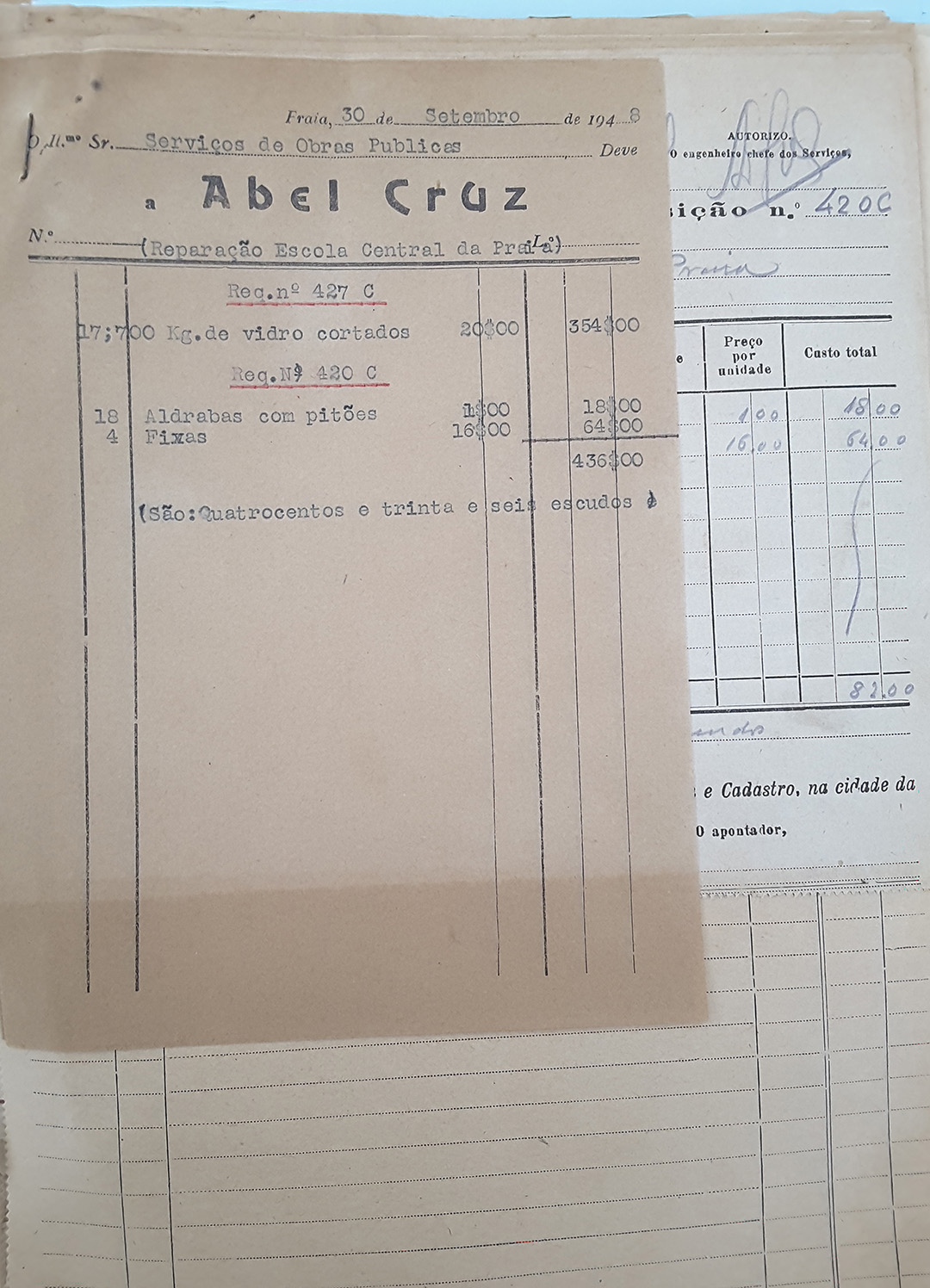
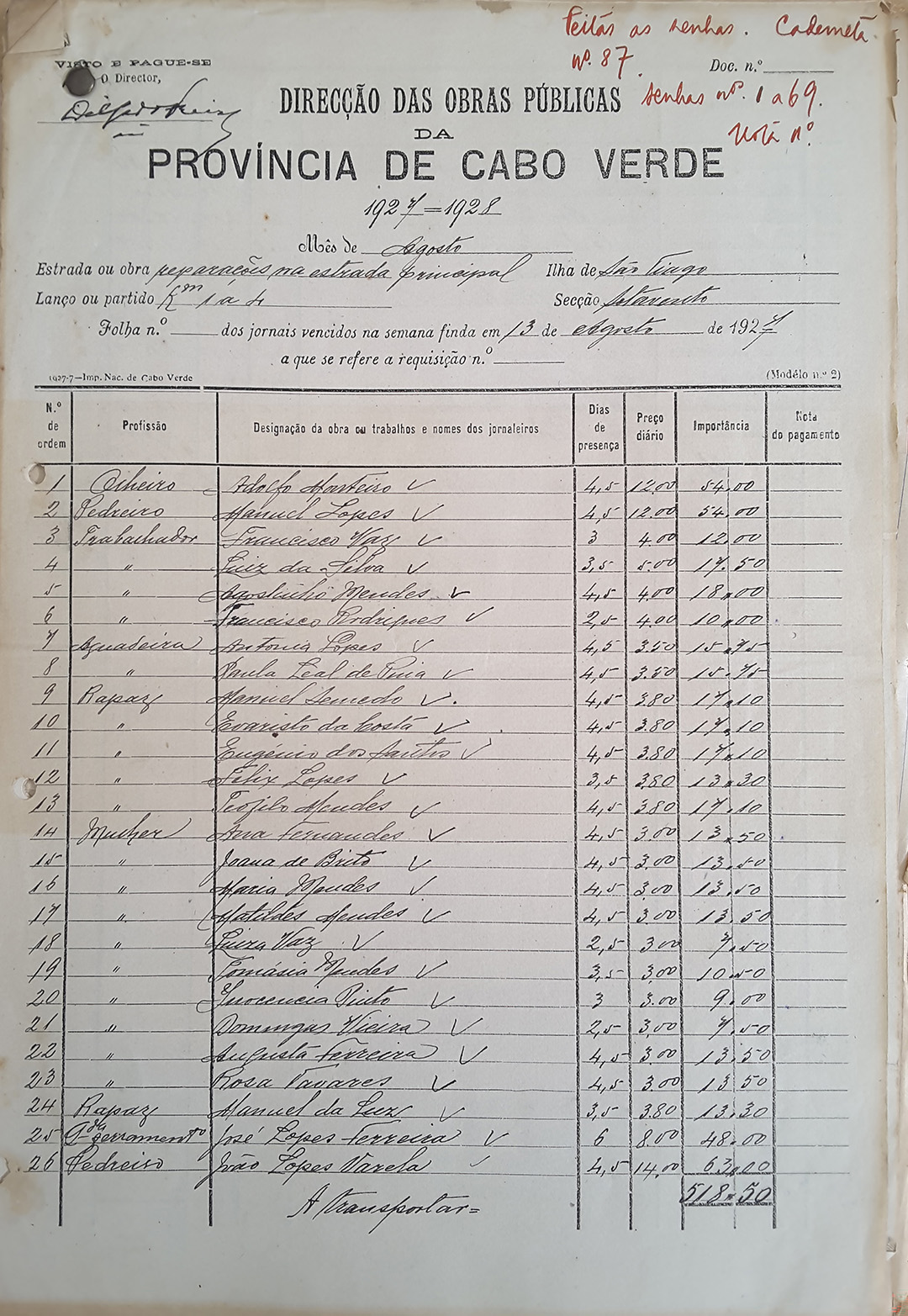
    This research produced substantial results. Thousands of MIT catalogue sheets were examined, covering areas such as hydraulics, ports, aerodromes, urban planning, and education. Of particular significance was the identification of documentation produced by technical brigades responsible for hydraulic and road construction, as well as by other colonial technical departments overseeing public works. Labourrelated materials were also located, including worksite diaries, nominal lists of labourers, wage tables, and invoices for construction materials.

    Beyond the MIT fonds, relevant documentation was also found in the Institute of Labour, Welfare and Social Action (ITPAS) fonds, particularly records relating to labour recruitment, mobility, trade union activity, unemployment lists, and intercolonial transfers. The fonds of the SecretariatGeneral of Government, the Customs Services, the Praia Municipal Administration, and other municipal fonds were similarly surveyed, providing additional insight into the local implementation of public works. The research further identified photographic and postcard collections held at the Museum, which visually document infrastructure across the archipelago.

    All collected material is currently being organised into Excel datasets and PDF files to support the ongoing research activities of the ArchLabour team.


  • On What Material Do You Want It to be Made…? Negotiations and Colonial Building Sites in African Territories Under Late Portuguese Rule (Working Paper)

    On What Material Do You Want It to be Made…? Negotiations and Colonial Building Sites in African Territories Under Late Portuguese Rule (Working Paper)

    Journal: TRADITIONAL DWELLINGS AND SETTLEMENTS WORKING PAPER SERIES, vol. 343
    Authors: Ana Vaz Milheiro
    Date: 2025


    Population and soldiers involved in the construction of Nhabijões, Bambadinca Sector, Guinea-Bissau. c. 1970
    Construction of Casa Axiluanda: framing the roof with coconut tree slats, Island of Luanda, Angola, c. 1965

    Summary

    This paper examines the concept of “community development” in the construction of single-family homes in former Portuguese colonial territories in Africa during the Cold War to gain insight into the strategies of self-production housing. It traces a narrative of the colonial building sites of these residential landscapes through three processes of optimization: how technicians described the core tasks of domestic scale works, identifying local agents with the “right skills”; how they tested the capacity for self-construction; how they managed the interplay between local labor, traditional techniques and industrialized materials. Finally, the paper questions how the building sites’ dynamics impacted project design.

  • Mining Labor, Housing, and Building Sites Across Central Africa (Working Paper)

    Mining Labor, Housing, and Building Sites Across Central Africa (Working Paper)

    Journal: TRADITIONAL DWELLINGS AND SETTLEMENTS WORKING PAPER SERIES, vol. 343
    Authors: Beatriz Serrazina
    Date: 2025


     “Experiments with earth blocks in the village of Chilupuca”, Lunda, 1954
    “This brickmaker has already filled and scraped one half of his mold”, Belgian Congo; “Dundo brickworks [Lunda]. Brick molding using quadruple forms”, 1955

    Summary

    This paper will critically analyze the intersections and interactions between African labor, skills, tasks, building materials and methods in the construction of mining camps in Angola and the Belgian Congo during the 20th century. It argues that camps are a fruitful environment in which to explore multiple dimensions of cosmopolitanism within the colonial context. The construction processes and the influence of construction methods and training are examined. The paper concludes that workers played a pivotal role in shaping their dwellings and camps, and their involvement in construction resulted in cosmopolitan relations and spaces.