

Proceedings
Conhecer os trabalhadores e os processos de construção através de registos fotográficos de obras em Macau (1938-1973)
Publication: Arquipélagos em Diálogo, VI Seminário Internacional AEAULP
Authors: Ana Vaz Milheiro
Editors: Pedro Rodrigues, Ljijana Čavić and Hugo L. Farias
Date: 2026
Summary
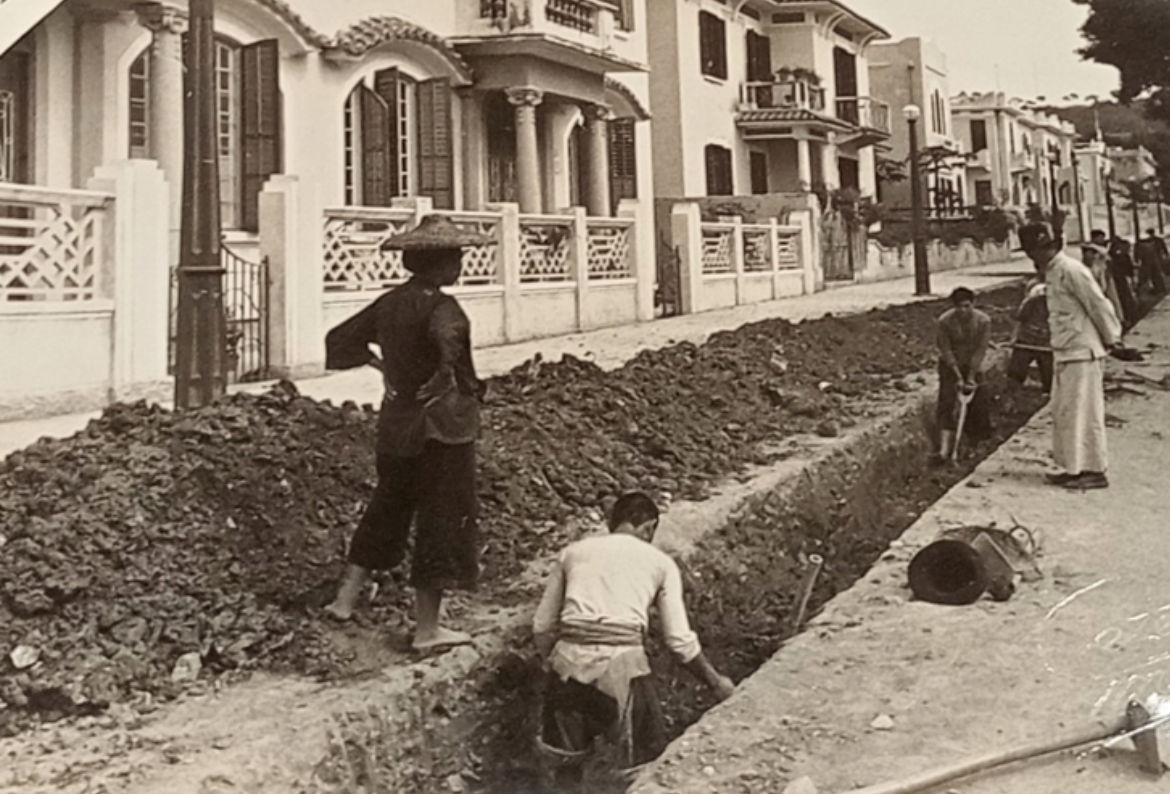
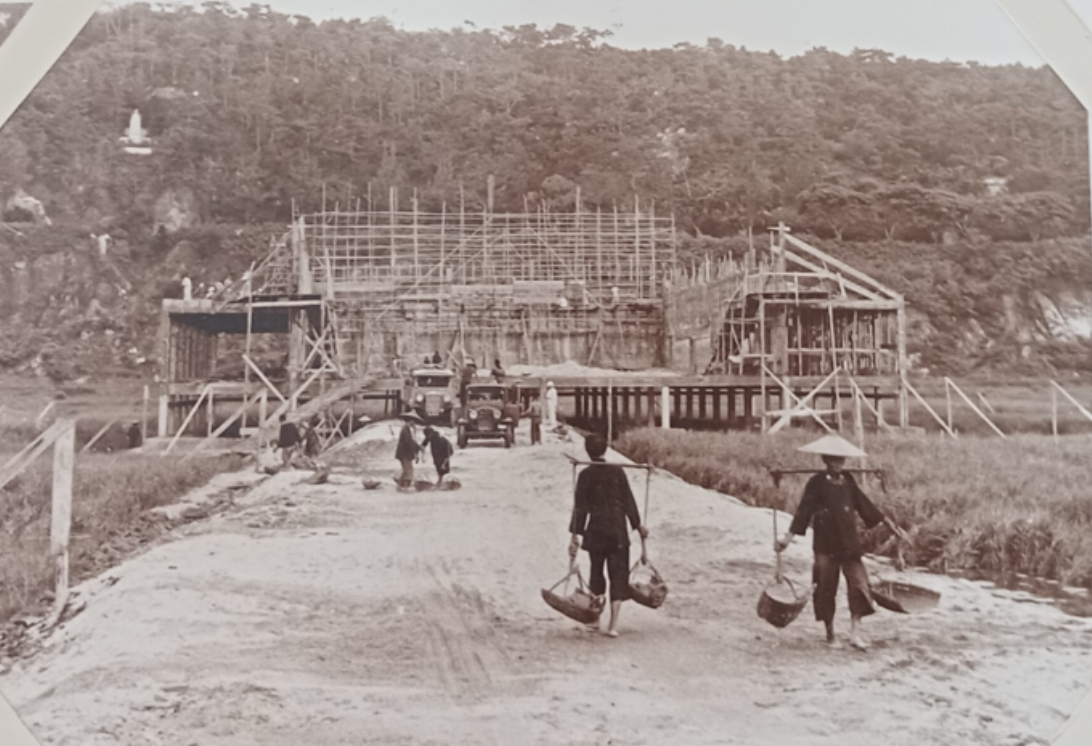
How did the workers who built Macau’s major infrastructure and public buildings under Portuguese rule influence the design and construction processes? What was the relationship between central institutions based in Portugal and the Macanese Public Works Office, which was also heavily influenced by technicians from China and Hong Kong?
This presentation attempts to answer these questions by analysing two sets of photographs contained in two administrative reports separated by about four decades. While one of them anticipated the Second World War, corresponding to the full implementation of the Colonial Act (1930); the other was contemporary with the end of Portuguese colonialism in Africa, coinciding with a sequence of public works that would ultimately Portuguese governance until the 1999 handover, such as the Macau-Taipa Bridge.
The first report was written in 1938 by engineer José Rodrigues Moutinho, who headed the Technical Department of Public Works in Macau. The second report reproduces the architect Pedro Quirino da Fonseca’s fieldtrip to Macau around 1973. This report serves this research by demonstrating how the architect’s gaze was often “sidetracked” to surveying the buildings rather than the construction process.
Research on colonial public works in Macau, especially in the 20th century, is still scarce, and little is known about their management and labour. In response, this paper will assess the impact of the work reproduced in these images to investigate the role of these (still) invisible workers.
[Eixo temático: 5. Património, lugar e memória.]
Read the article here.