

Journal Article
Villages as Construction Sites. Recording Compulsory Settlement in the Zambezi Valley Through Aerial Photographs, Mozambique (1970–1974)
Journal: Ædificare, Revue internationale d’histoire de la construction, 2025 – 2, n. 18 [Construction Site Photography]
Authors: Ana Vaz Milheiro
Editors: Laurence Heindryckx, Tom Broes, Simon De Nys-Ketels, and Robby Fivez
Publication: Garnier Classics, 2026
Summary
The forced resettlement in the Zambezi Valley in the province of Tete brought together military and economic interests to serve the extension of Portuguese colonialism in Mozambique. It was set up during the Colonial War (1964-1974) as a means of halting the progress of the Mozambique Liberation Movement (FRELIMO), but also because of the launch of the Cabora Bassa dam’s construction.
Although this construction produced one of the most complex construction sites in Portuguese colonial history, the focus of this analysis is on the colossal resettlement operation associated with its completion, as a double consequence of the reservoir and the war. The dynamics of territorial reordering, which began in 1968, transformed a region of around 100,724 square kilometers into a huge construction site of fluctuating intensity. Building systems that had been practiced in the region for centuries coexisted with new technologies resulting from the influx of industrial materials, creating a “creolized” rural landscape.
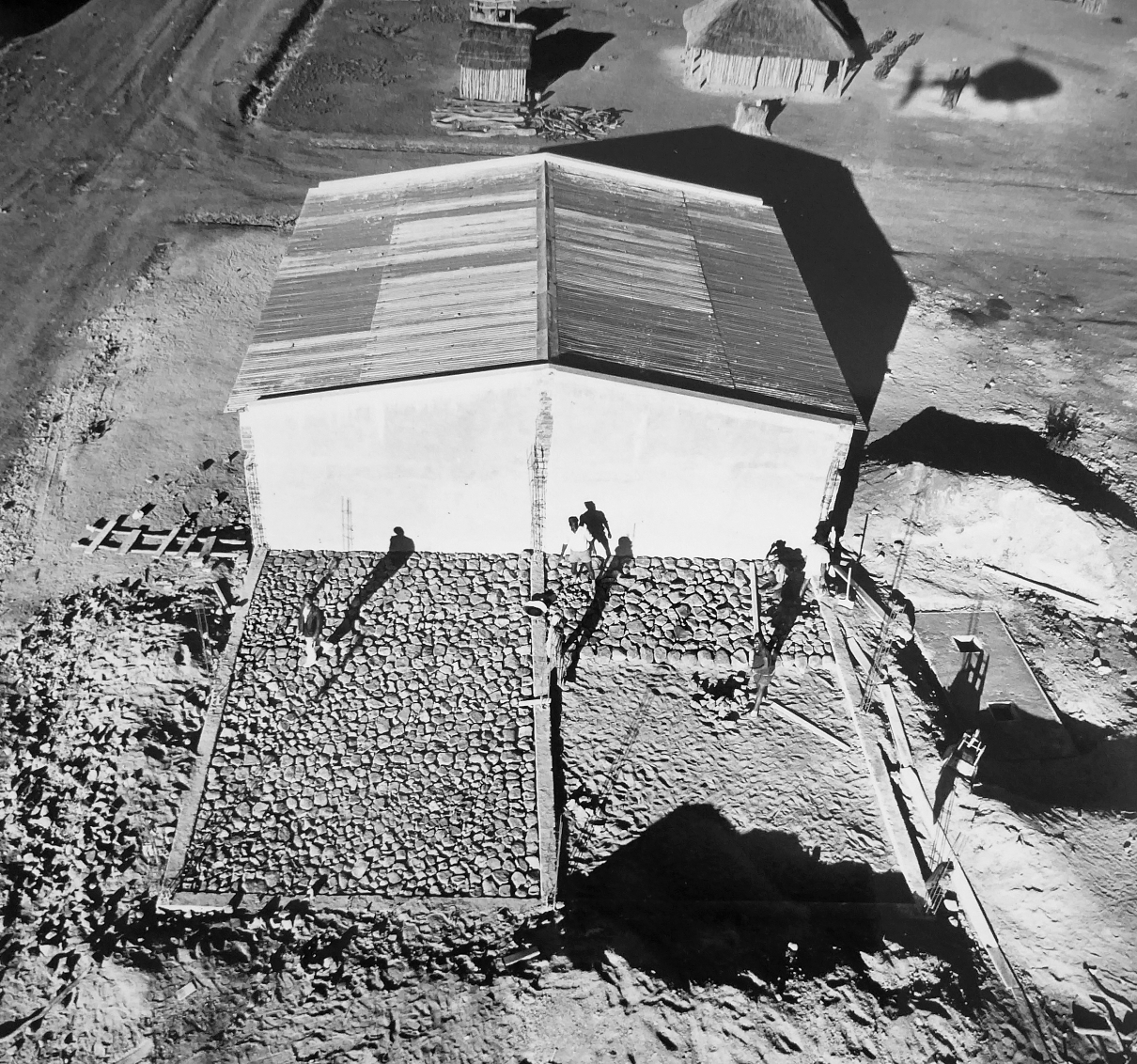
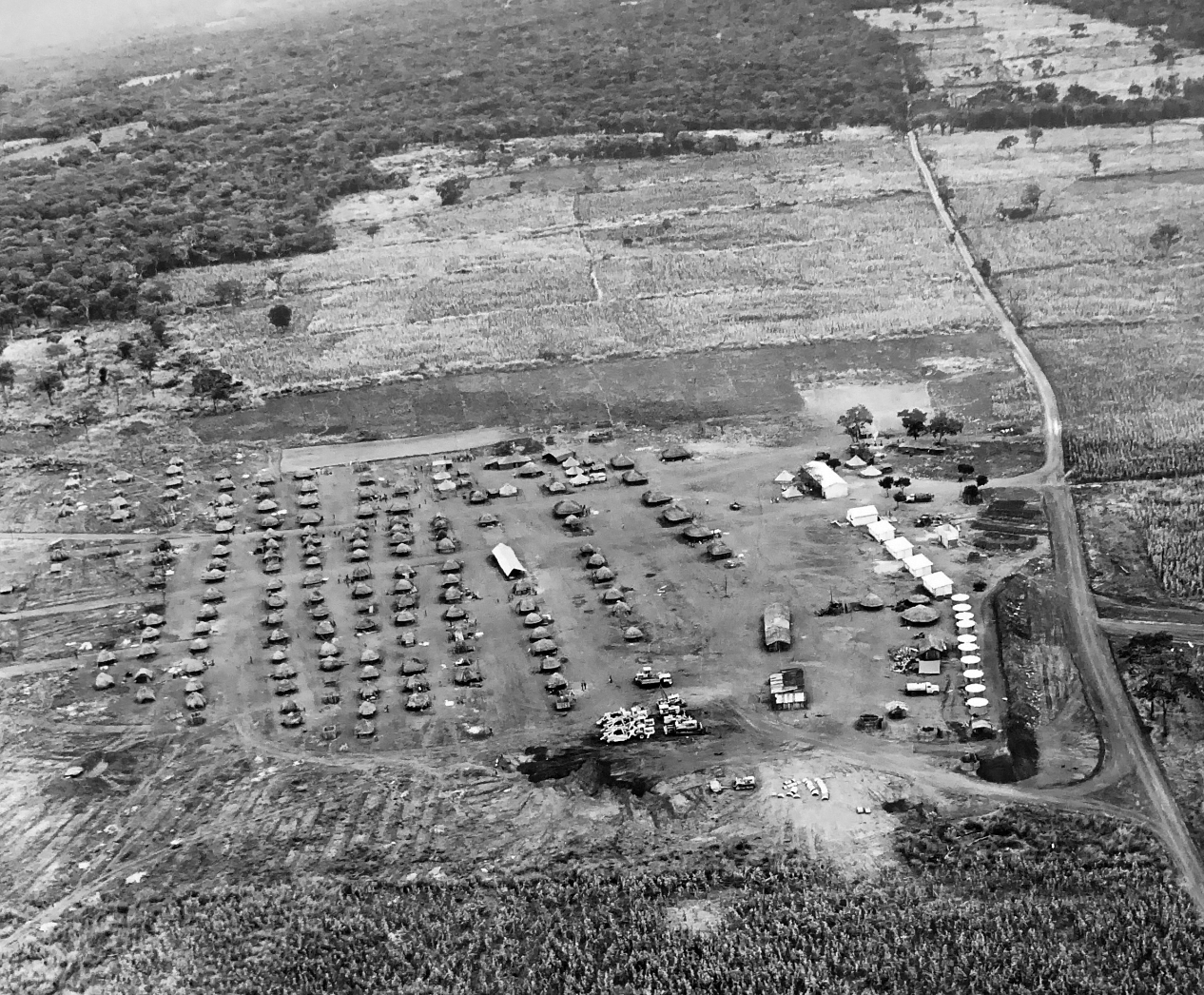
To document the process, around 400 photographs were taken, many of them from helicopters or planes, reinforcing a view of a subalternized reality through a uniform and orthogonal layout that contrasted with the pre-colonial segmented landscape. The five photographs that make up this essay are part of this group of aerial photographs and have been titled in sequence: Foundation; Surveillance; Polyphony; Order; Skilled. Taken as an “bird’s-eye view”, they not only allowed to follow the perspective of the colonial authorities, avoiding direct contact with the population, but also to grasp the simultaneity of tasks in the construction of a village.
One wonders about absence (Foliard, 2023): at no point did the camera stray into explicit violence. Contrary to the written documentation that also listed these operations, figurative evidence was denied for events such as the destruction of ancestral settlements or the frequent resistance to being an “aldeado”.
Read the full article here.