


SÃO JANUÁRIO HOSPITAL (1872-1958)
The unique historical context of Macao, situated within Chinese territory and subject to a distinctive bilateral relationship between the Chinese and Portuguese authorities, has fostered significant architectural and cultural exchanges over time. The São Januário Hospital, located on the Monte de S. Jerónimo, is a prime example of this phenomenon, presenting two remarkably distinct historical phases. Initially, the facility operated from 1874 to 1919 as a military hospital, and subsequently, from 1919 onwards, it functioned as a central hospital. This hospital’s historical evolution enabled the building to span from its original late 19th-century design to a modern and clean aesthetic.
How to cite
LabourMap-Macao: Mass labour impact on Public Works in Macau under Portuguese administration (1849-1999) (P.I. Ana Vaz Milheiro, FCT/2023.14980.PEX). São Januário Hospital (1872-1958). Accessed on 10th March 2026. Available at: https://archlabour.iscte-iul.pt/sao-januario-hospital/
01
Plan & Construction
The floor plan was the inaugural element to be designed, a task undertaken by Captain Henrique Augusto Dias de Carvalho (1872-1873). The elevations were delineated by the architect António Melo (1873-1874), with the collaboration of the draughtsman João Souza Brito. The structure was inaugurated on 6 January 1874 and remained in operation until 8 November 1952, the date of its demolition. The second project for the Hospital was initiated in August 1951 by the radiologist Abel de Simões de Carvalho Júnior, in cooperation with José dos Santos Baptista, who was head of the PW Technical Department at the time.
02
Labour
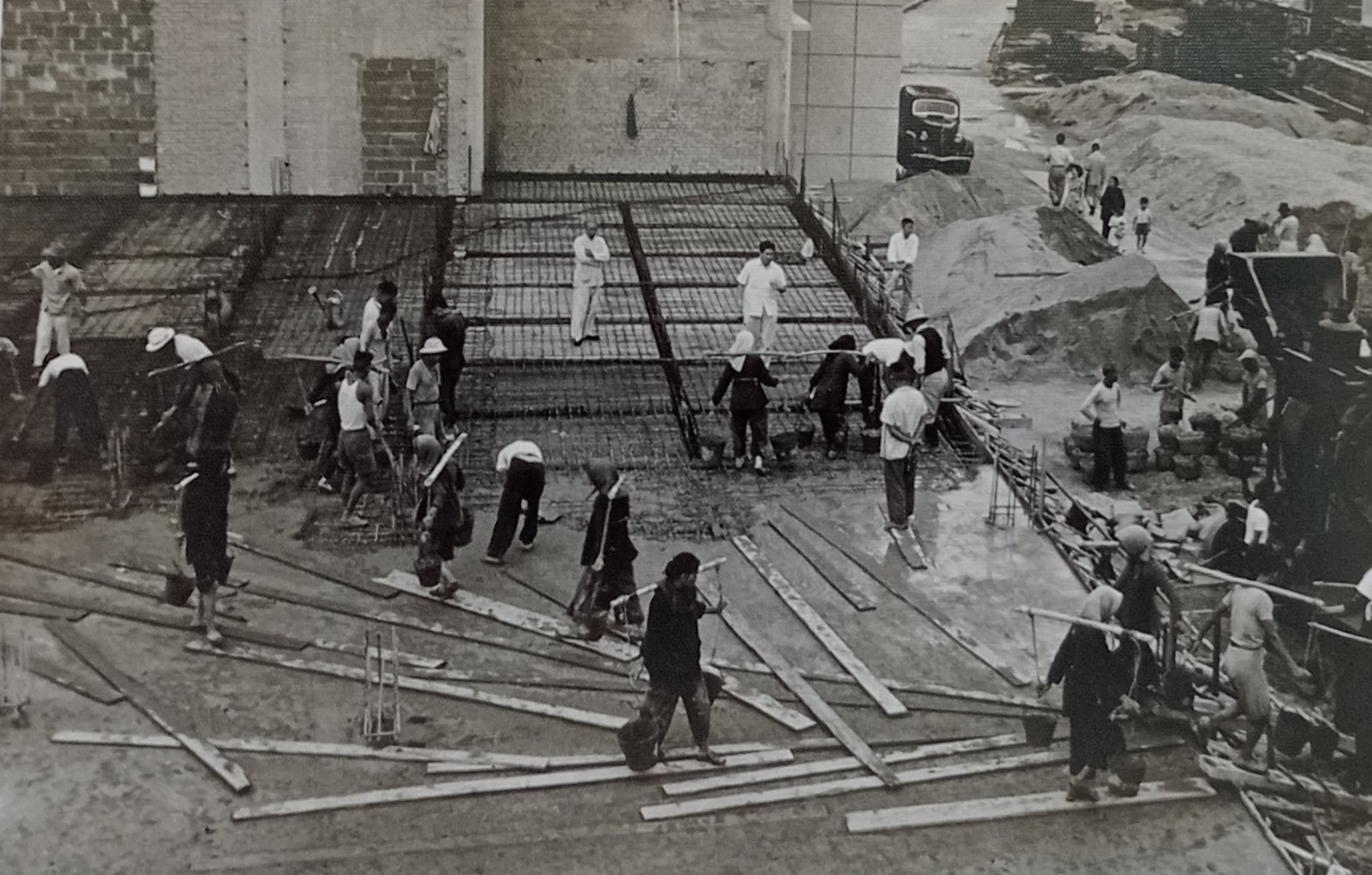
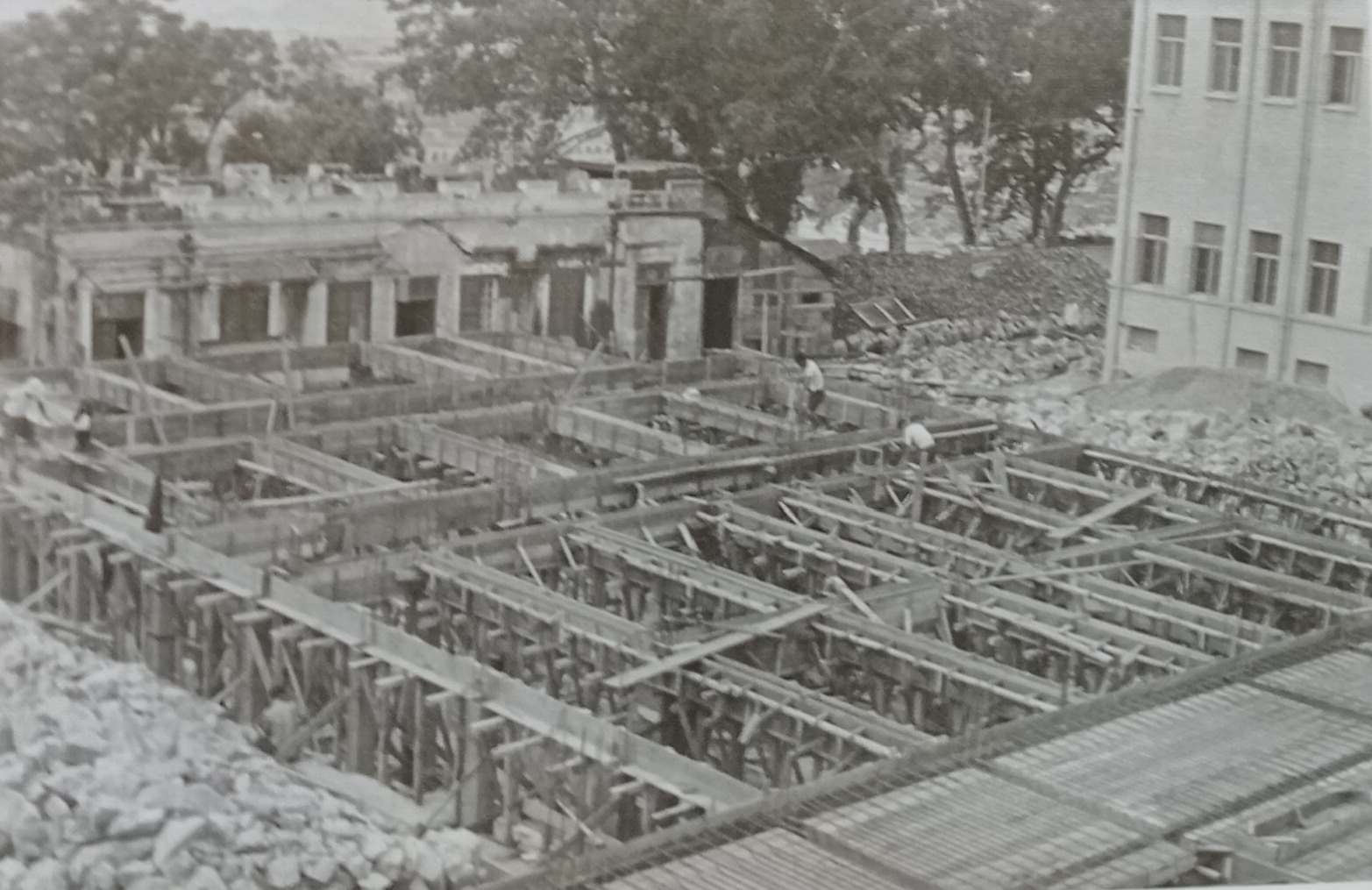
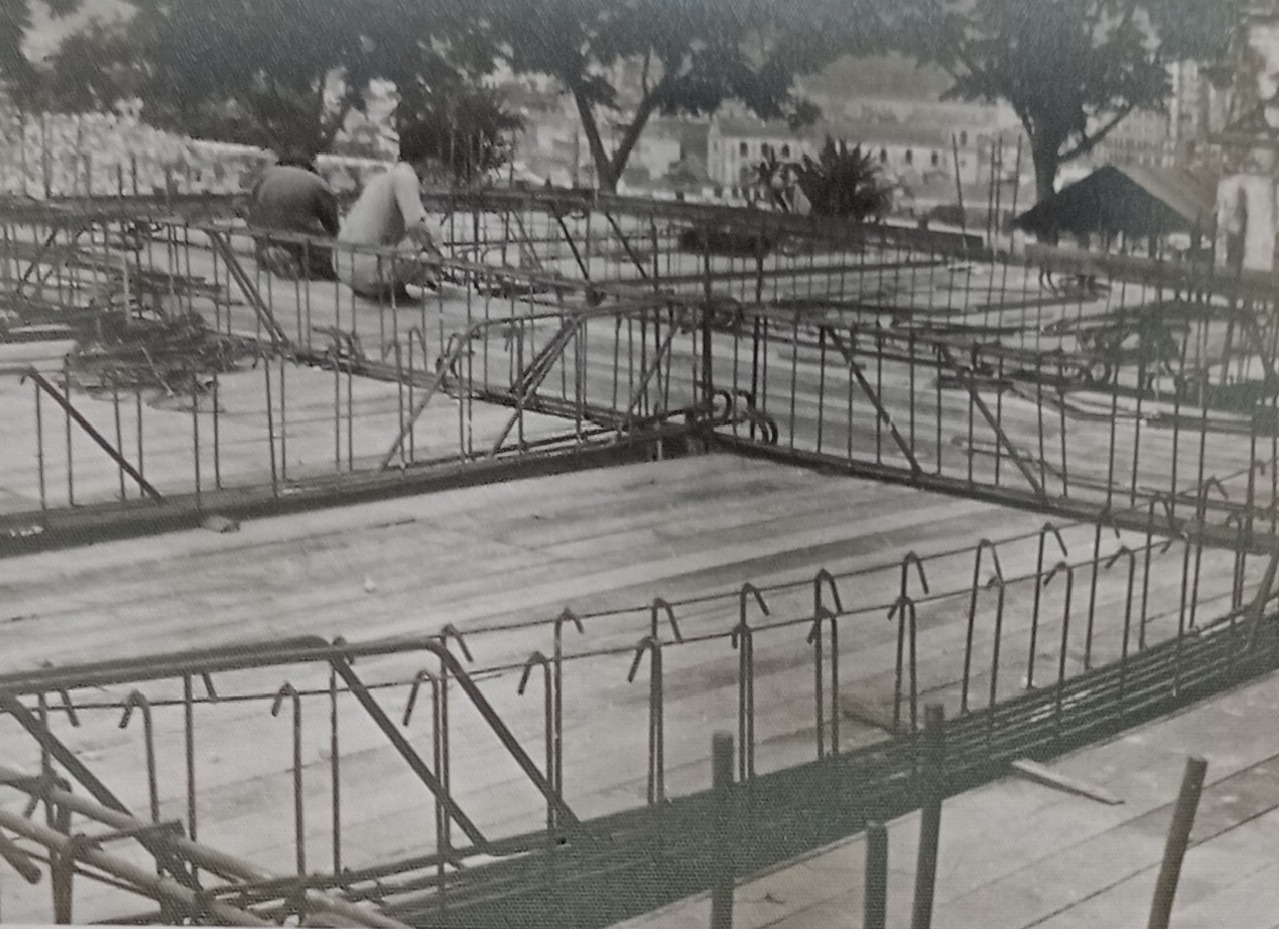
The Hospital’s second project was divided into three construction phases. In 1955, the Public Buildings and Monuments Section of the PWs Department was composed of a 2nd Class PWs Overseer in a leadership role, a 1st Class PWs Clerk, an Inspector, and a Mason, the last two salaried employees. The labour required for the construction of this facility was outsourced by a private enterprise. However, photographic evidence from construction sites indicates that the workforce involved in the building’s construction comprised a significant number of labourers, in addition to the PW staff, thereby suggesting the presence of women among the participants.
03
Skills & Technologies
The first building’s design displayed five pavilions separated by small courtyards and railings. It had a two-storey central body and side turrets. Whilst the second presented an E-shaped building with a main body perpendicularly connected to three other bodies, therefore three construction phases. The Hospital’s first block was inaugurated on 10 June 1953, with works carried out by the Company Lei Chü (carpentry, masonry, locksmiths, and finishes), supported by Wha Tung (electrical installation), Agência Técnica Comercial (plumbing and toilets), and H. Nolasco (lifts) companies. From 1955 to 1958, the 2nd and 3rd construction phases were completed.
Location
Page currently under construction




LabourMap-Macao is an Exploratory Project funded by the Portuguese Foundation for Science and Technology (2023.14980.PEX).
Beta trial disclaimer
The LabourMap-Macao team is responsible for the maintenance of this website, which is intended to facilitate public access to information about the group’s initiatives. Although this is still a beta trial, the intention is to release the information in a timely and accurate manner. Should any errors be brought to the attention of the team, they will be corrected.