


RUINS OF ST. PAUL’S (1)
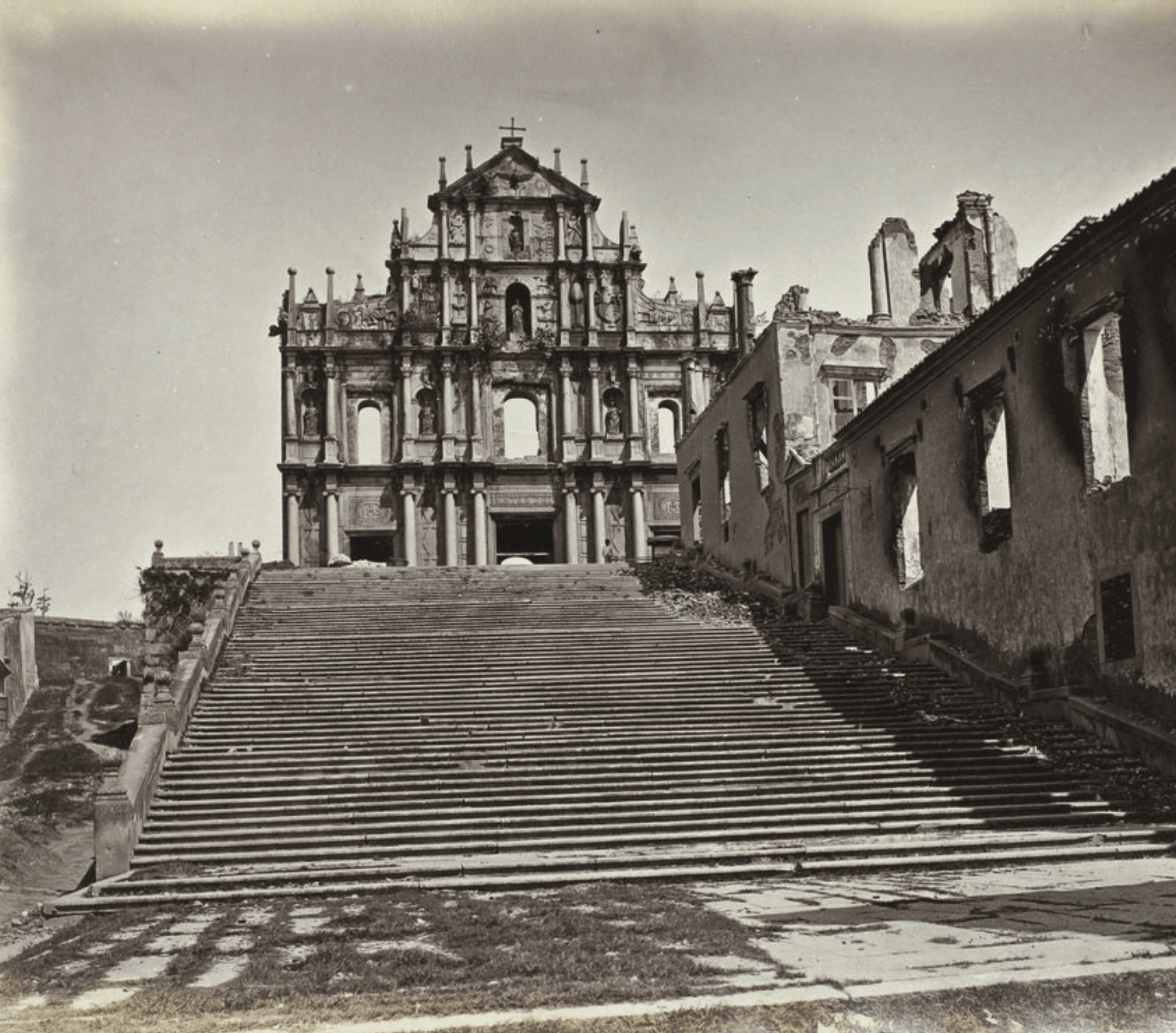
The Ruins of St. Paul’s in Macau stand as a powerful symbol of cultural fusion and historical resilience. Designed by Italian Jesuit Carlo Spinola, the structure showcased a unique blend of European and Asian architectural styles. Originally constructed in the early 17th century, the site was part of a grand Jesuit complex that included the Church of Mater Dei and St. Paul’s College. In 1835, a fire destroyed most of the church and college buildings, leaving only the stone façade and a few foundations. Restoration efforts were undertaken in 1995 to preserve the façade and archaeological remains, led by the Macau Cultural Bureau.
Poster Author
Kezia Jane Ann Allen
Melanie Andreia Lima Melício
Scent Vashti
How to cite
LabourMap-Macao: Mass labour impact on Public Works in Macau under Portuguese administration (1849-1999) (P.I. Ana Vaz Milheiro, FCT/2023.14980.PEX).
Ruins of St. Paul’s. Accessed on 10th March 2026. Available at: https://archlabour.iscte-iul.pt/ruins-of-st-pauls/
01
Materials & Systems
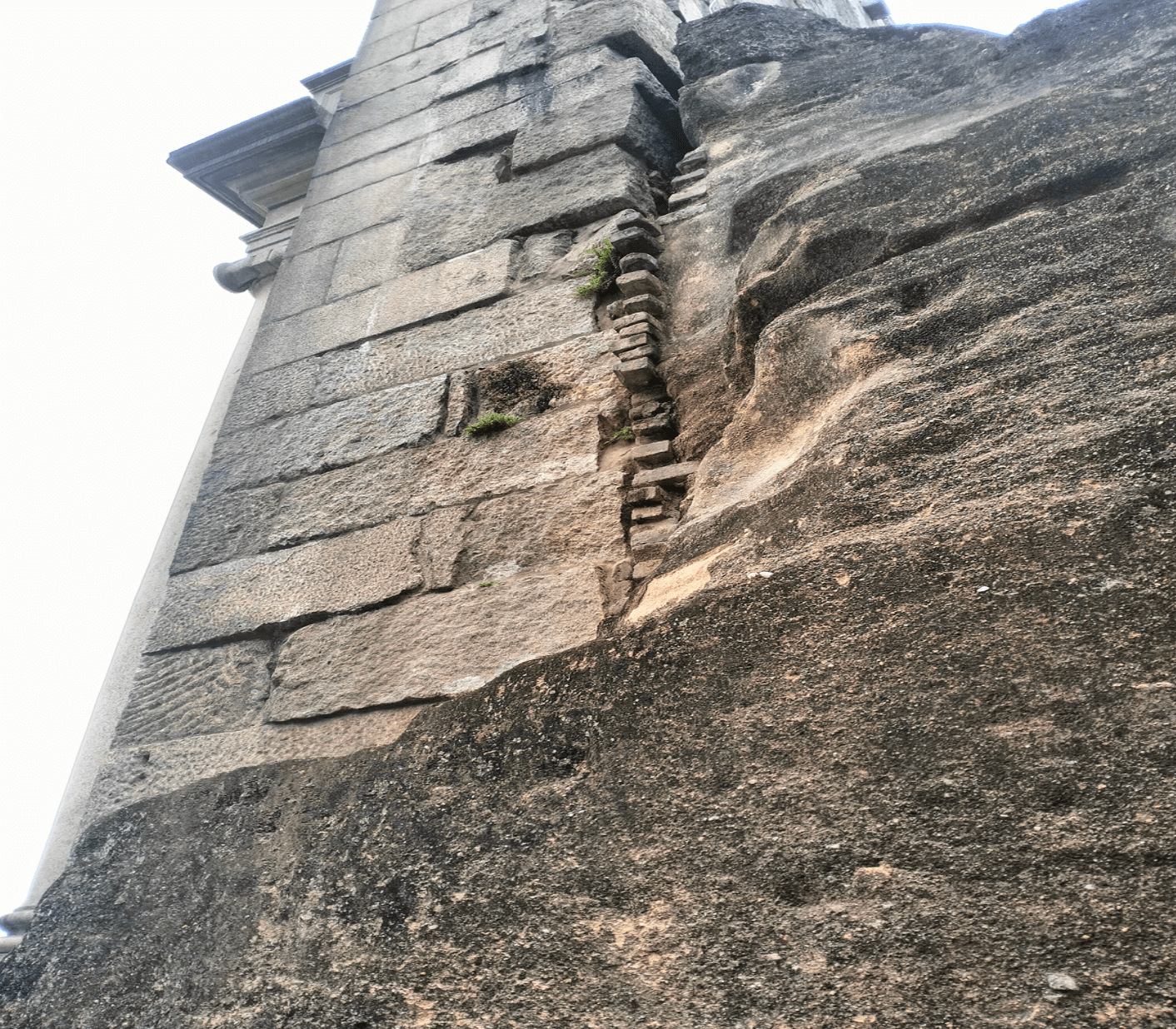
The Jesuits brought European construction methods, including stone carving and vaulting techniques, while local artisans and laborers contributed significantly, blending European design with Chinese building practices. The grand façade was built from granite blocks, chosen for durability and visual impact. Lime mortar was used as a binding agent in masonry, typical of European construction at the time. Decorative elements and interior finishes may have included lime-based plaster. Gold leaf and paint were used for religious iconography and embellishments, especially within the church. The five-level façade was built to resemble a retablo (a decorative altar screen), with niches for statues and symbolic carvings.
02
Workers & Skills
A cross-cultural coordination of designers, supervisors, and symbolic planners with Baroque architecture skills and religious iconography. Notable figures are Carlo Spinola (architect), and Alessandro Valignano (founder and strategist). Jesuits acted as project managers, combining European architectural vision with local execution. They recruited skilled workers through missionary networks and local Christian converts, while training local artisans in European techniques while adapting to local materials and styles. Teams were often multilingual and multi-ethnic. Laborers and porters provided construction support by transporting granite blocks, mixing mortar, and site preparations. There were also Japanese Christian Artisans, some of whom refugees from Japan’s anti-Christian persecutions.




LabourMap-Macao is an Exploratory Project funded by the Portuguese Foundation for Science and Technology (2023.14980.PEX).
Beta trial disclaimer
The LabourMap-Macao team is responsible for the maintenance of this website, which is intended to facilitate public access to information about the group’s initiatives. Although this is still a beta trial, the intention is to release the information in a timely and accurate manner. Should any errors be brought to the attention of the team, they will be corrected.