

PEDRO NOLASCO COMMERCIAL SCHOOL(1963-1968)
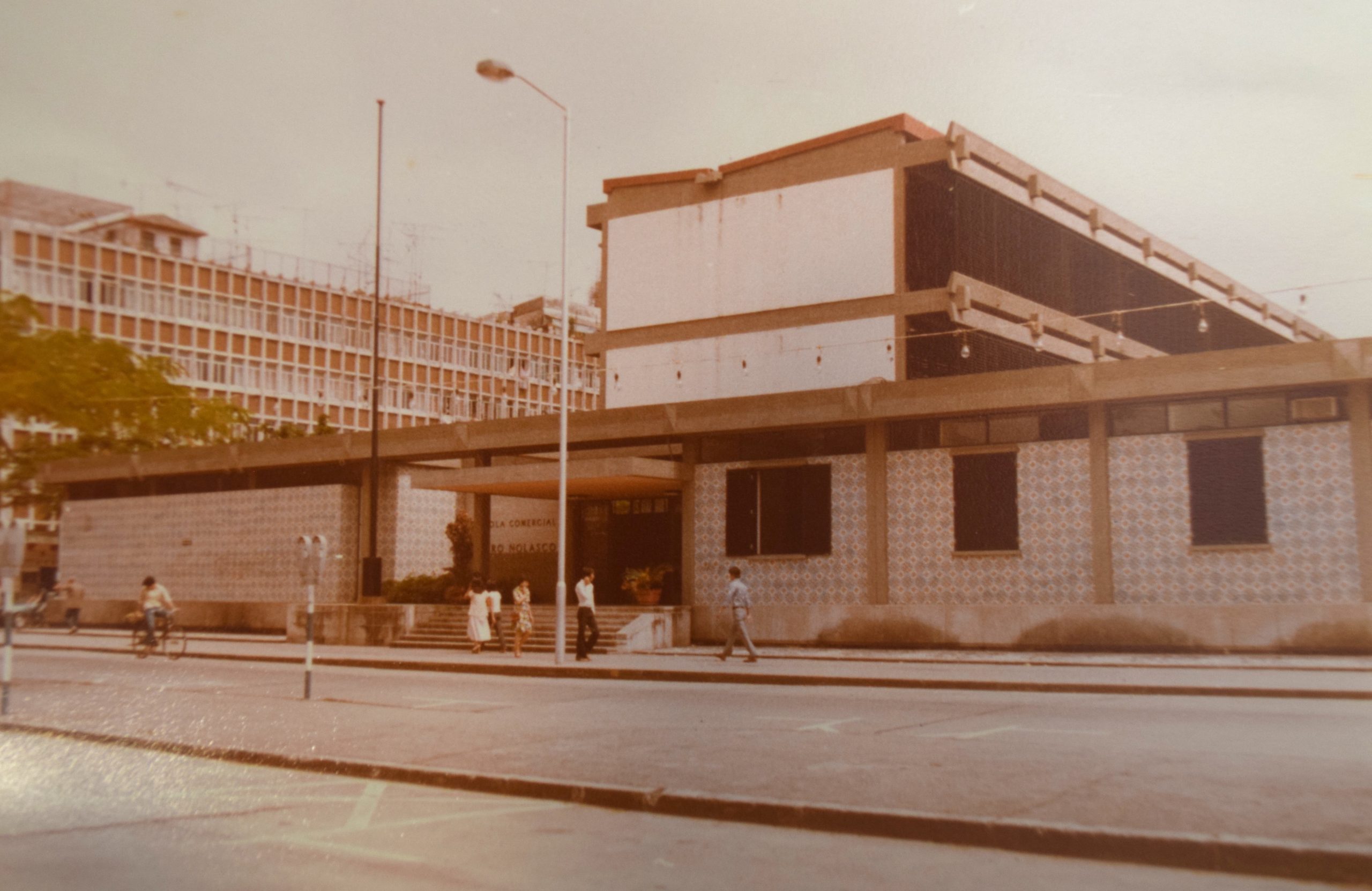
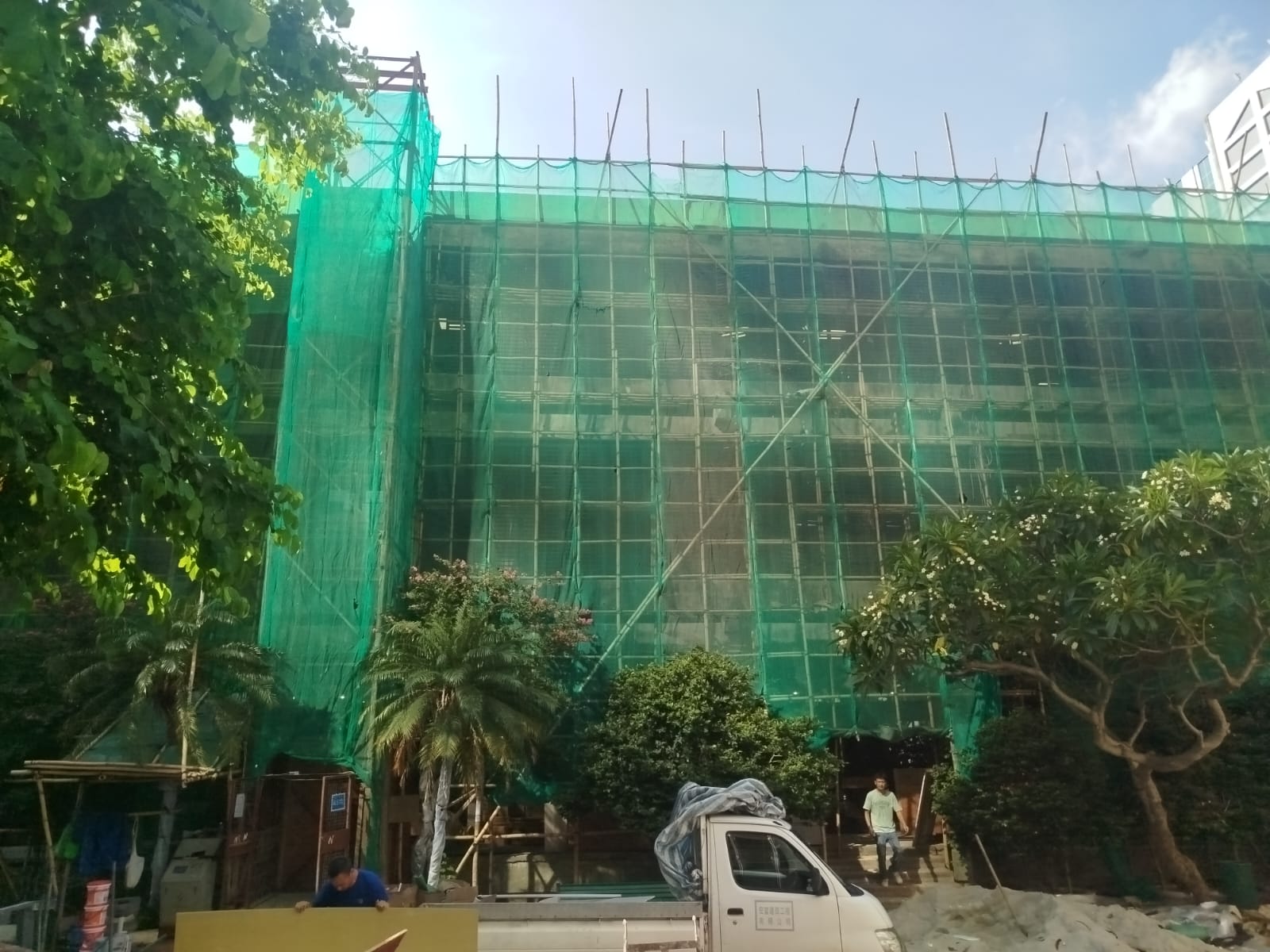
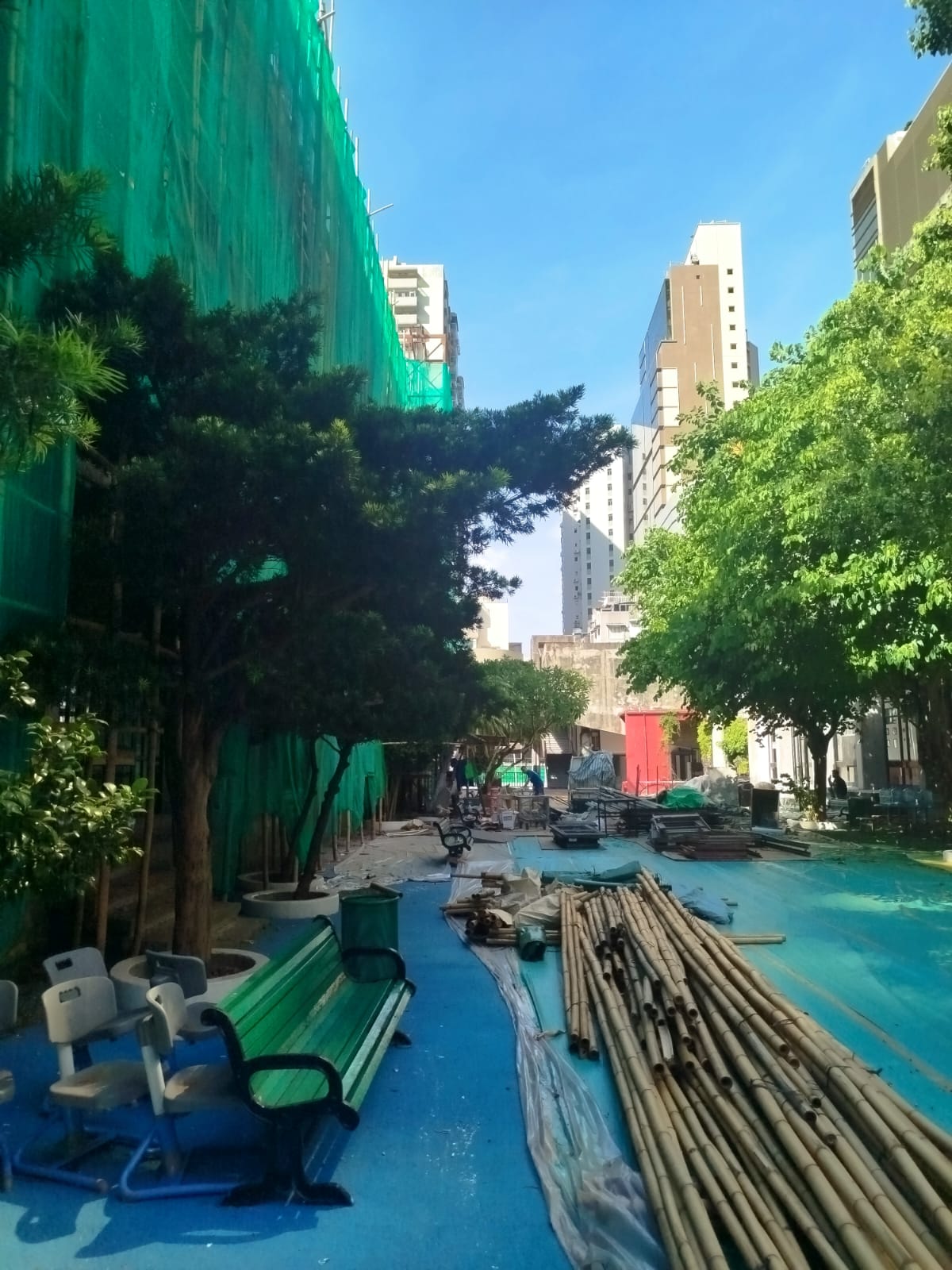
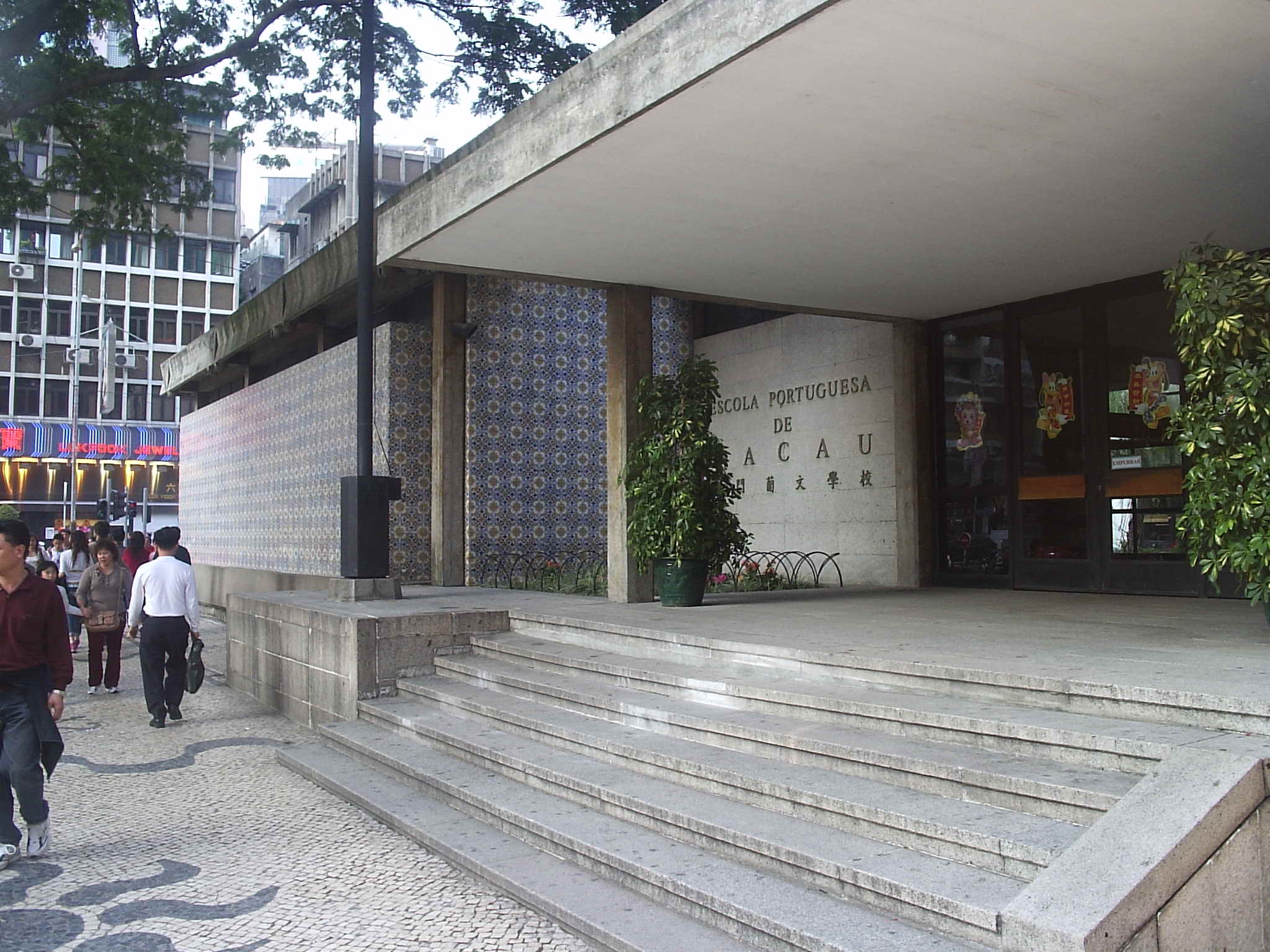
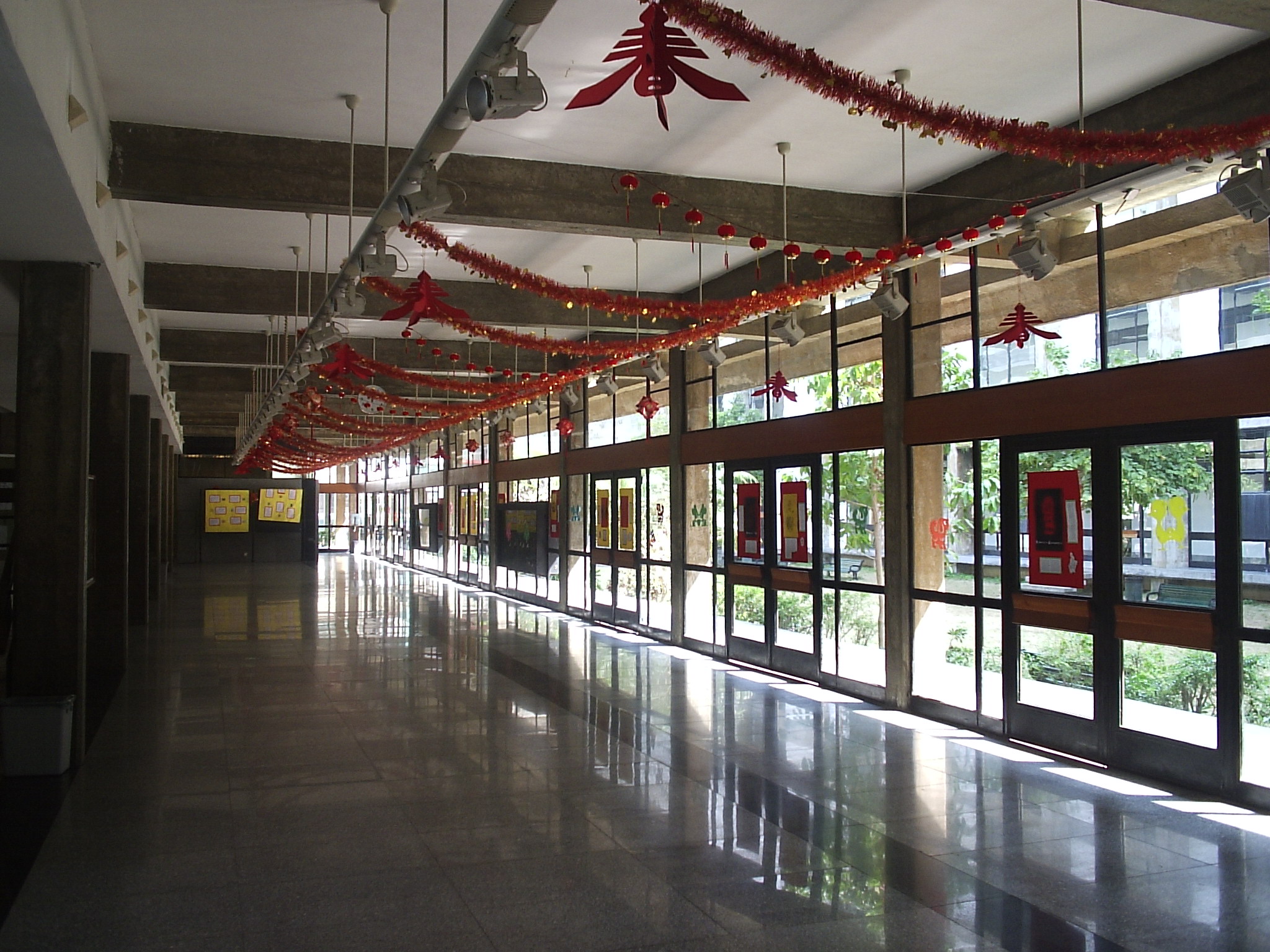
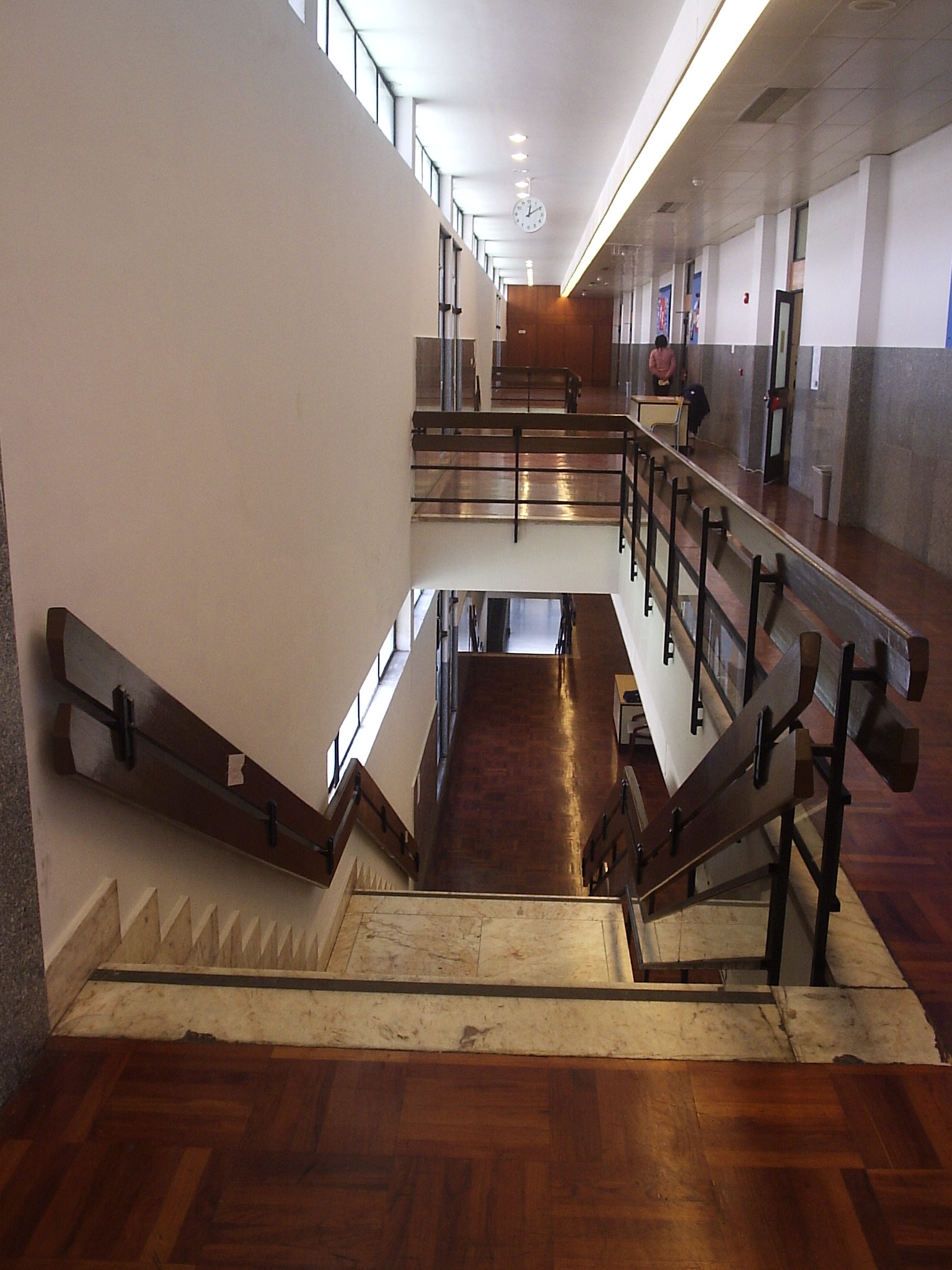
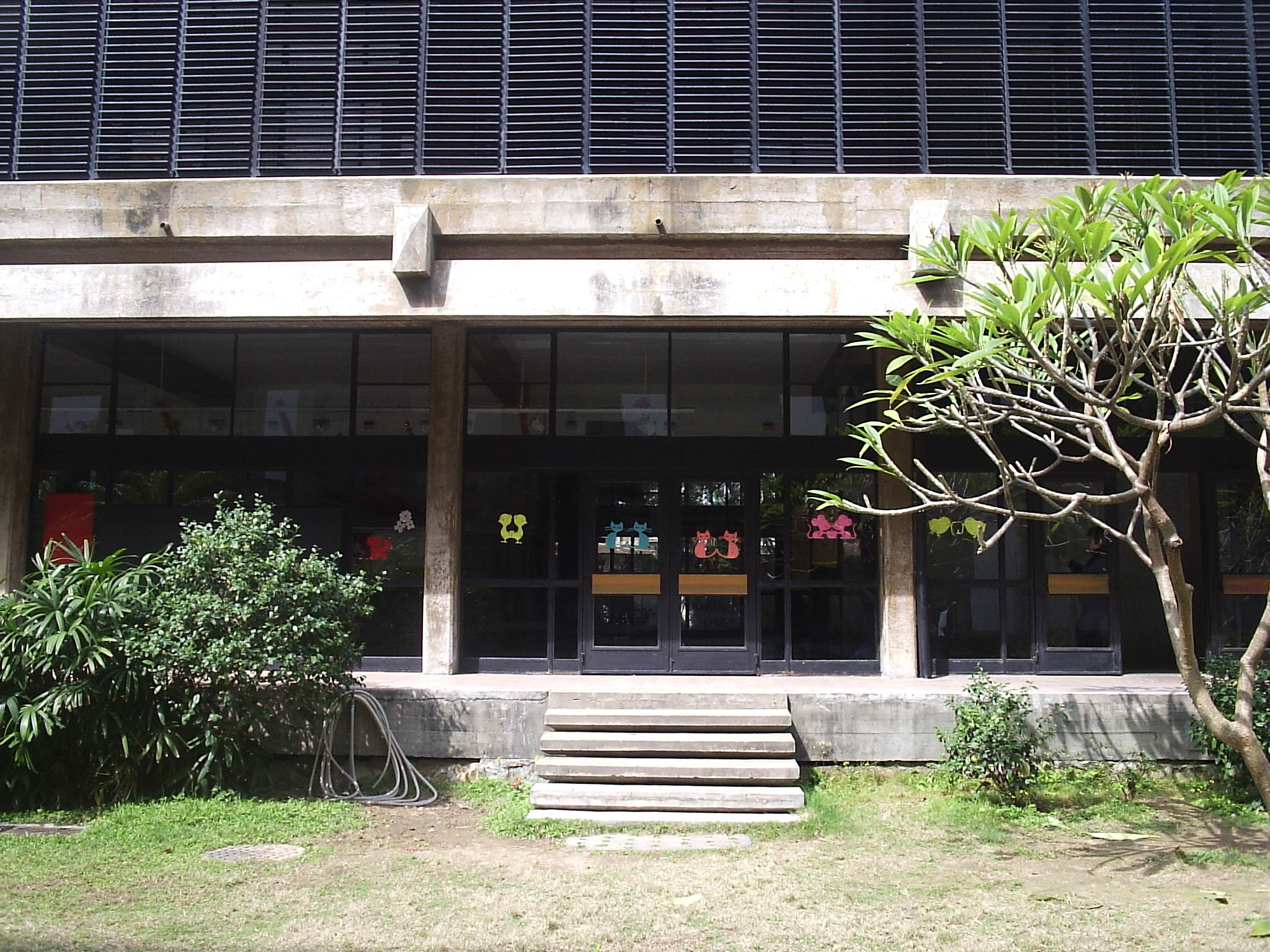
In the early 1960s, the Association for the Promotion of Macanese Education (APIM) commissioned the Portuguese architect Chorão Ramalho to design a new building for the Pedro Nolasco Commercial School (now Escola Portuguesa de Macau). The school replaced the Collegio Commercial, and was inaugurated in 1966. The construction was awarded to Oseo Acconci, an Italian contractor based in Macao. In 1998 and 1999, architects Carlos Marreiros and Eduardo Flores renovated the building. In 2008, Rui Leão and Carlotta Bruni (LBA) designed the new ‘Reading Room’, which won the Asia Pacific Cultural Heritage Conservation Award. They are also the architects of the ongoing renovation.
How to cite
LabourMap-Macao: Mass labour impact on Public Works in Macau under Portuguese administration (1849-1999) (P.I. Ana Vaz Milheiro, FCT/2023.14980.PEX). Pedro Nolasco Commercial School. Accessed on 10th March 2026. Available at: https://archlabour.iscte-iul.pt/pedro-nolasco-commercial-school/
01
Plan & Construction
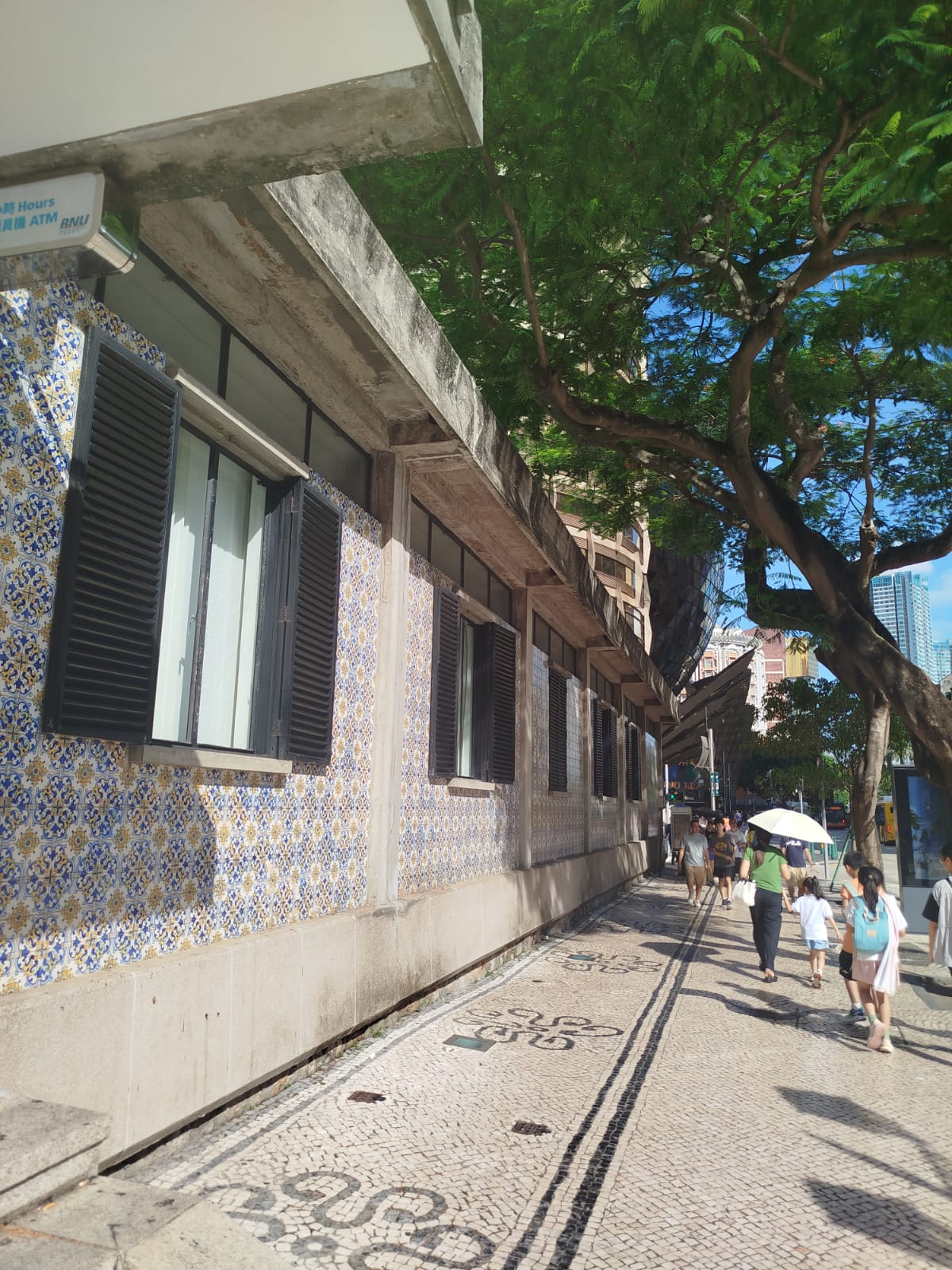
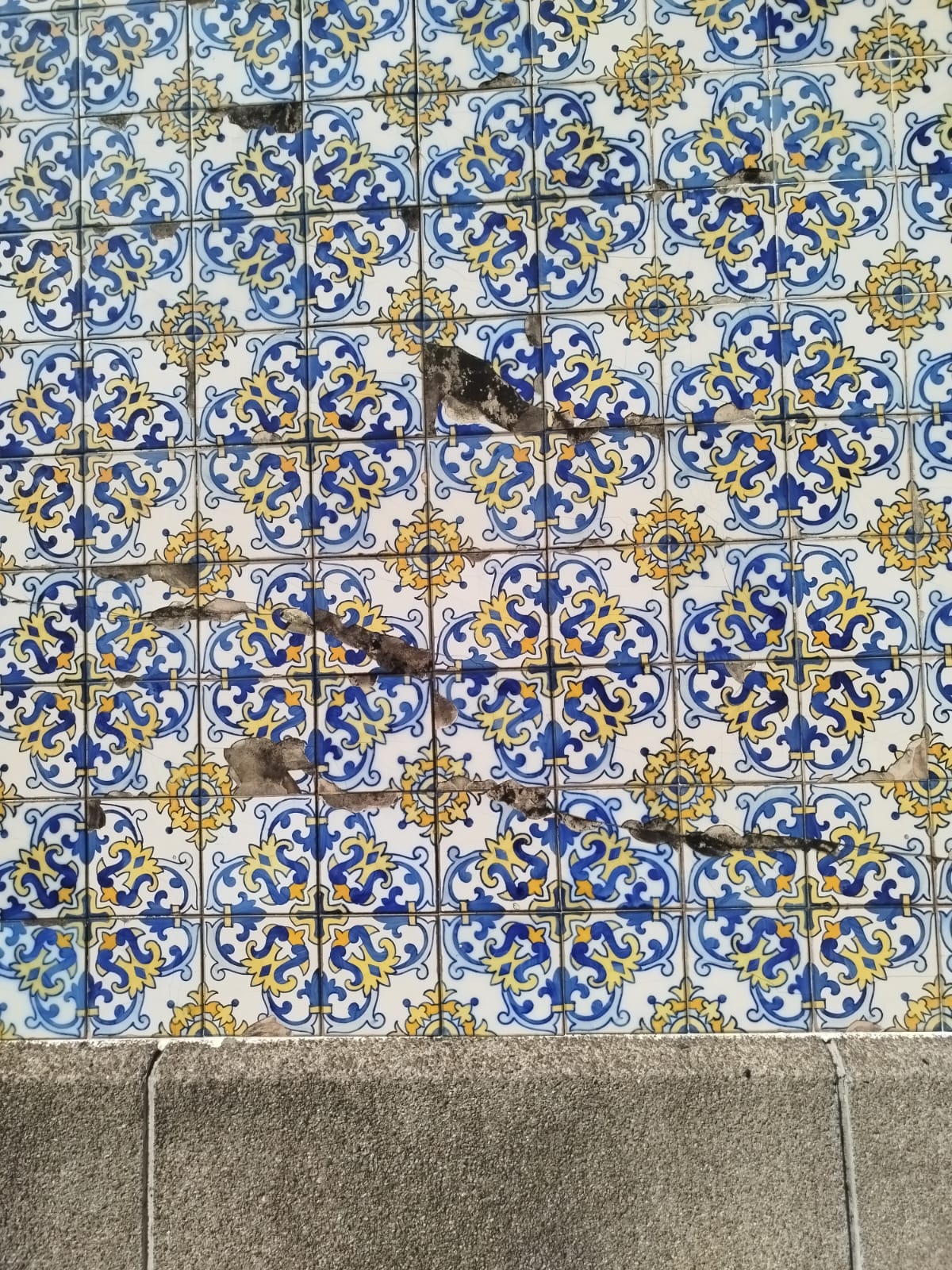
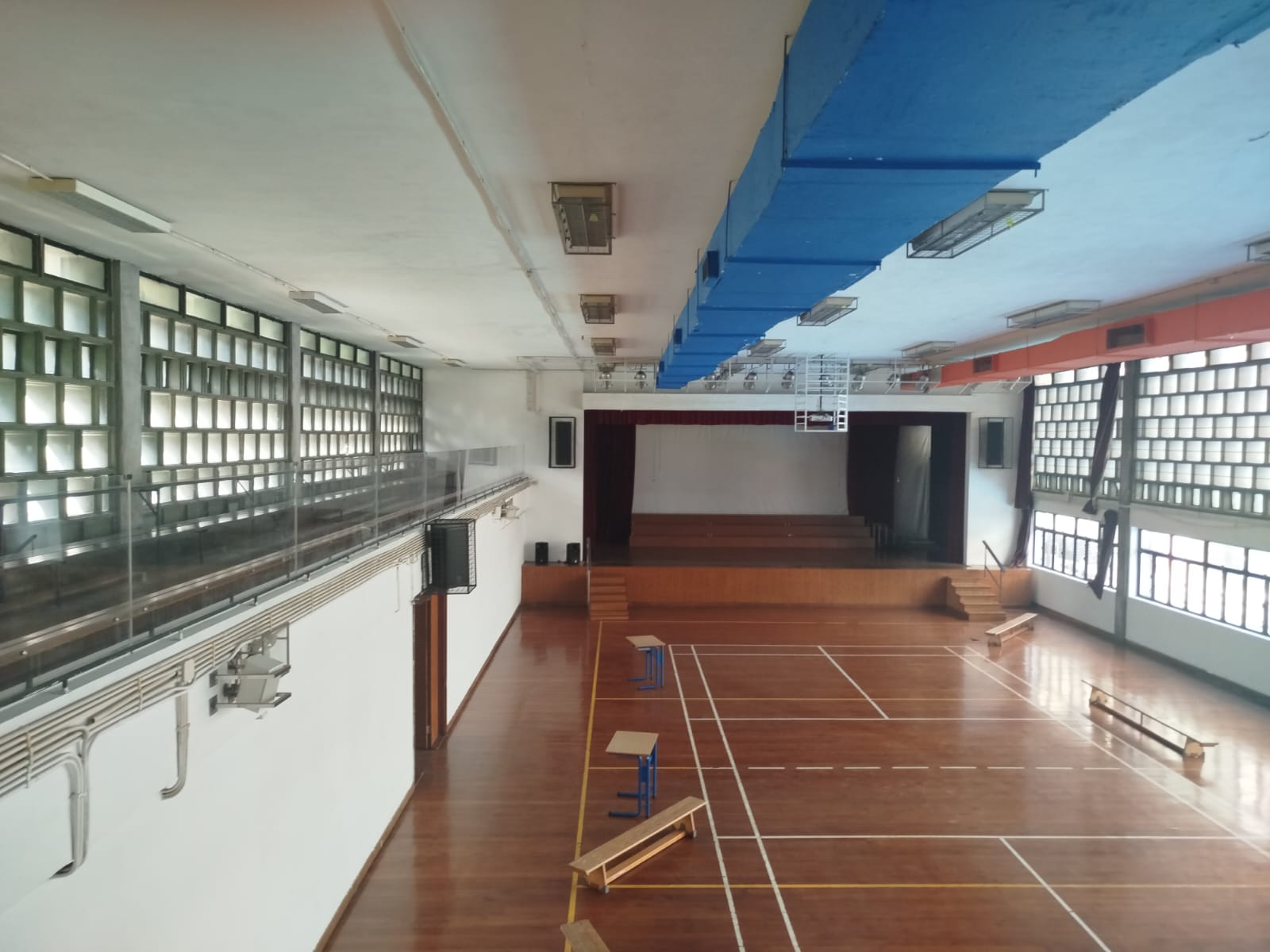
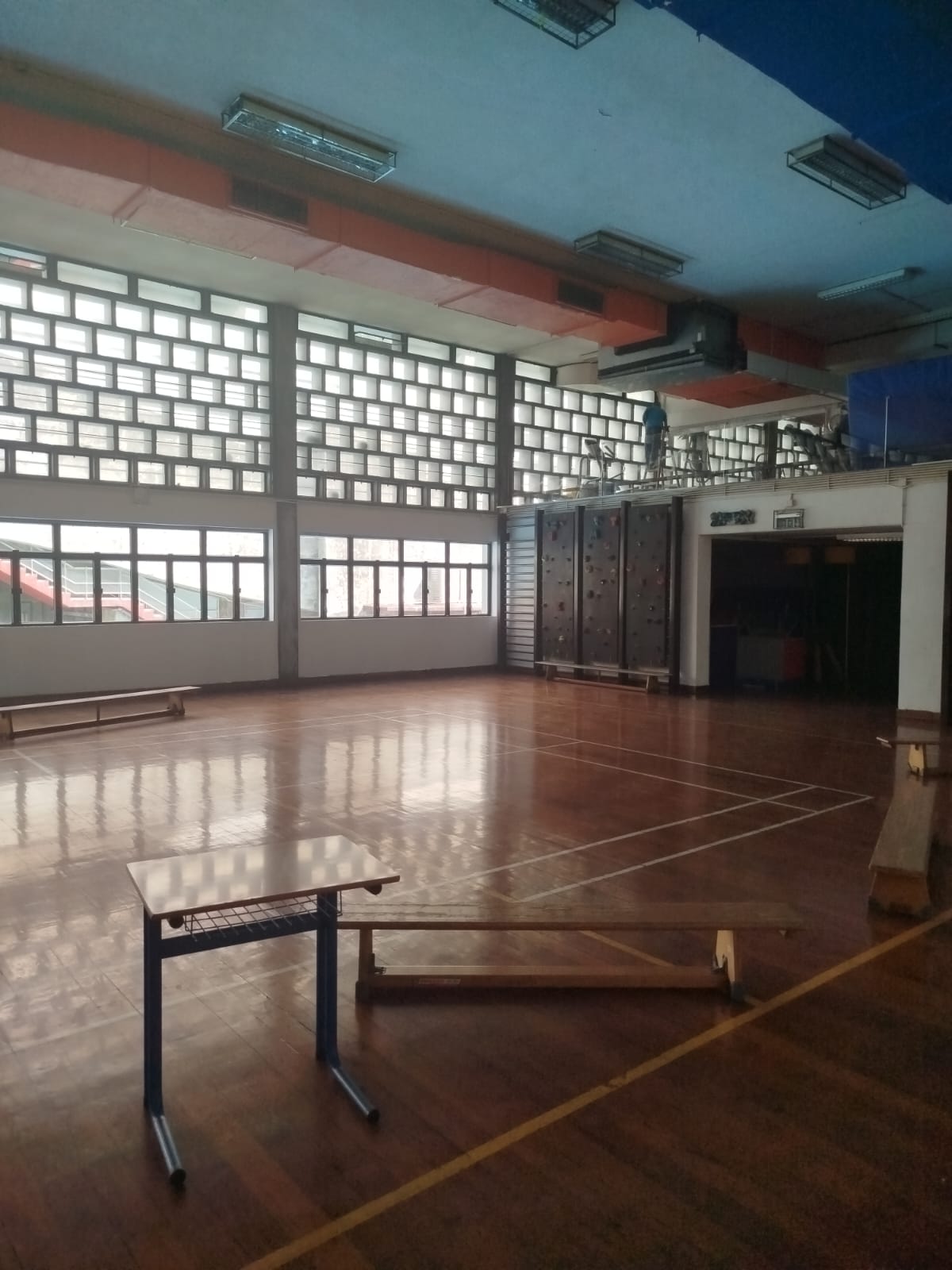
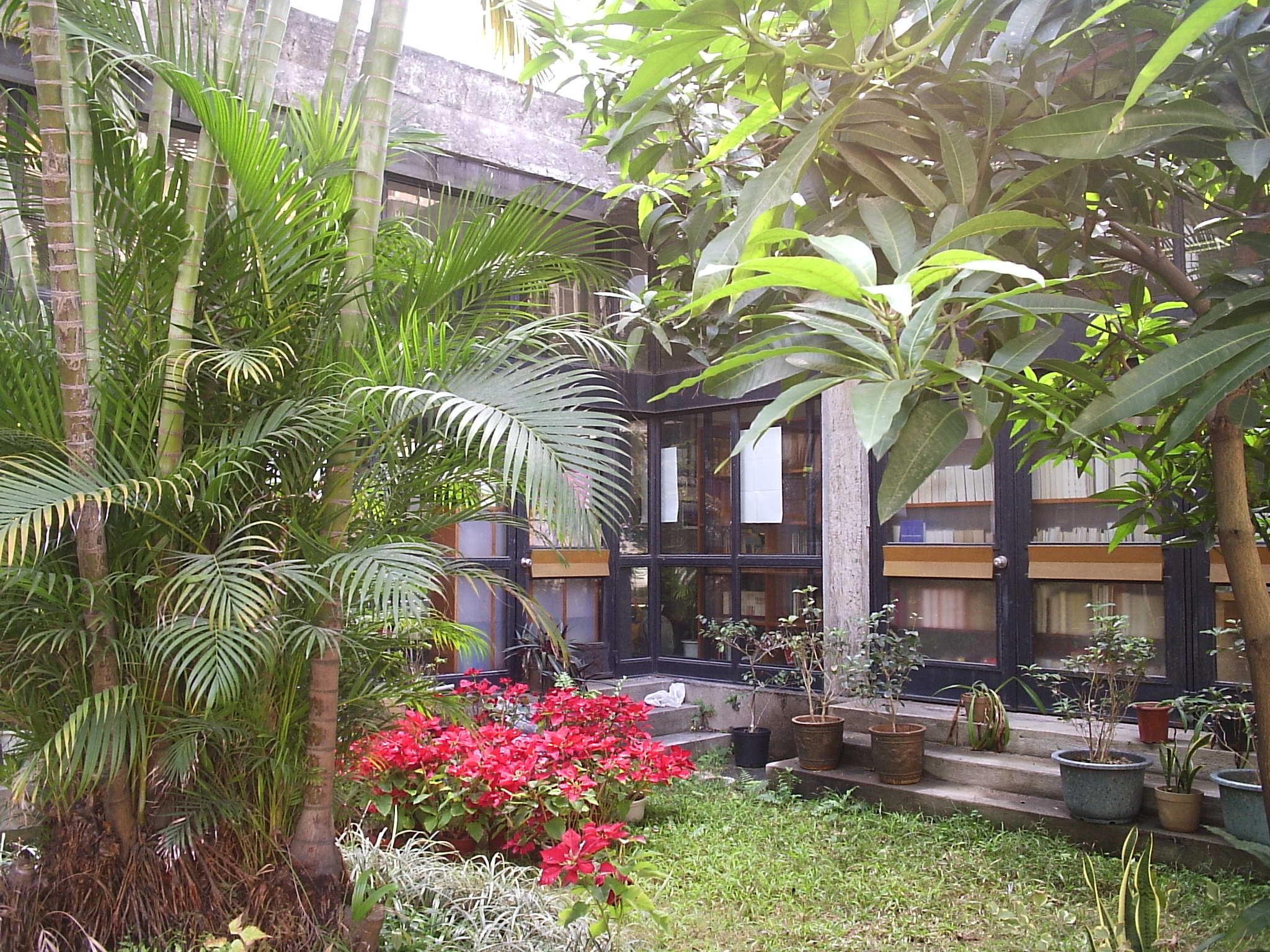
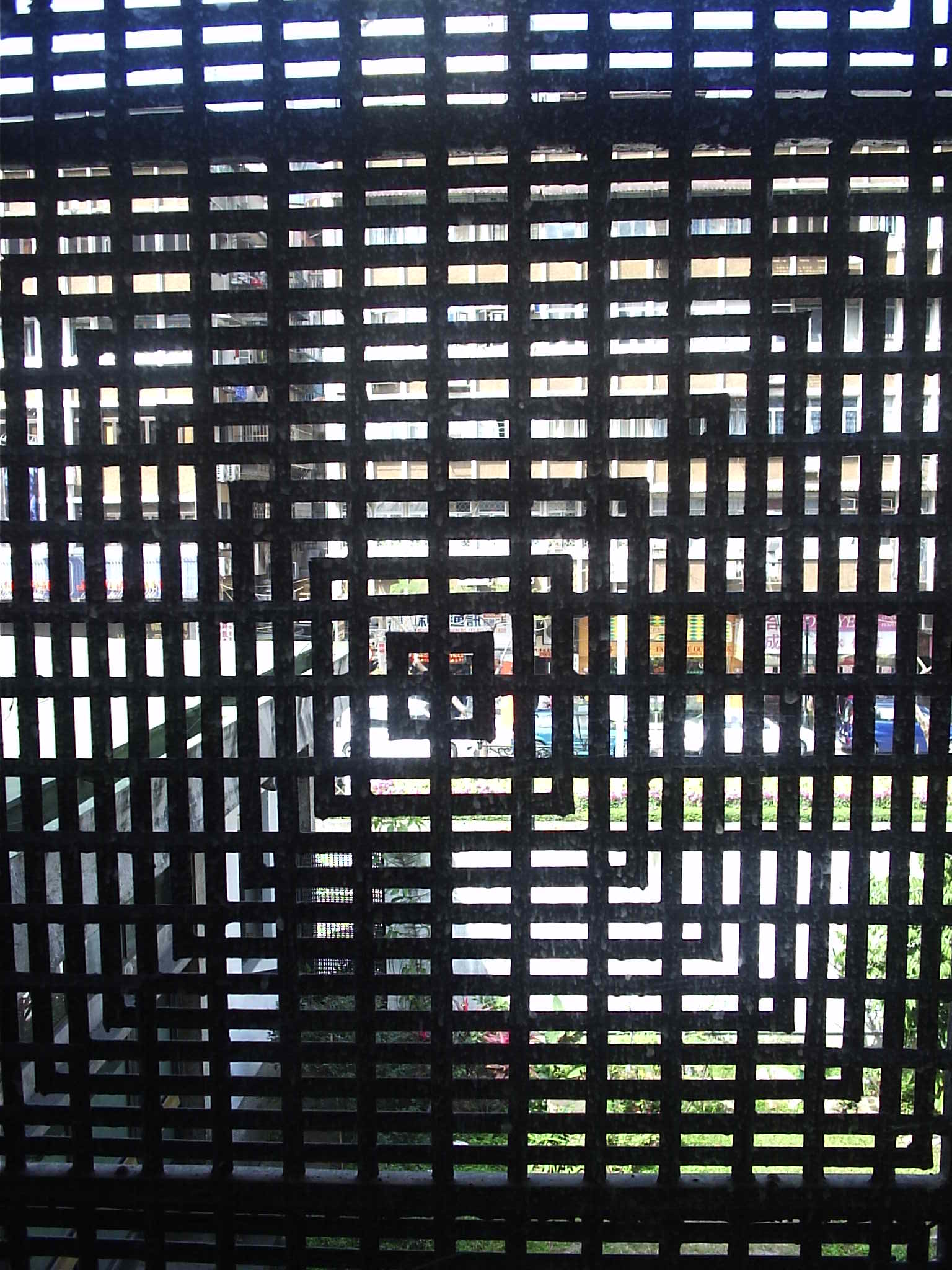
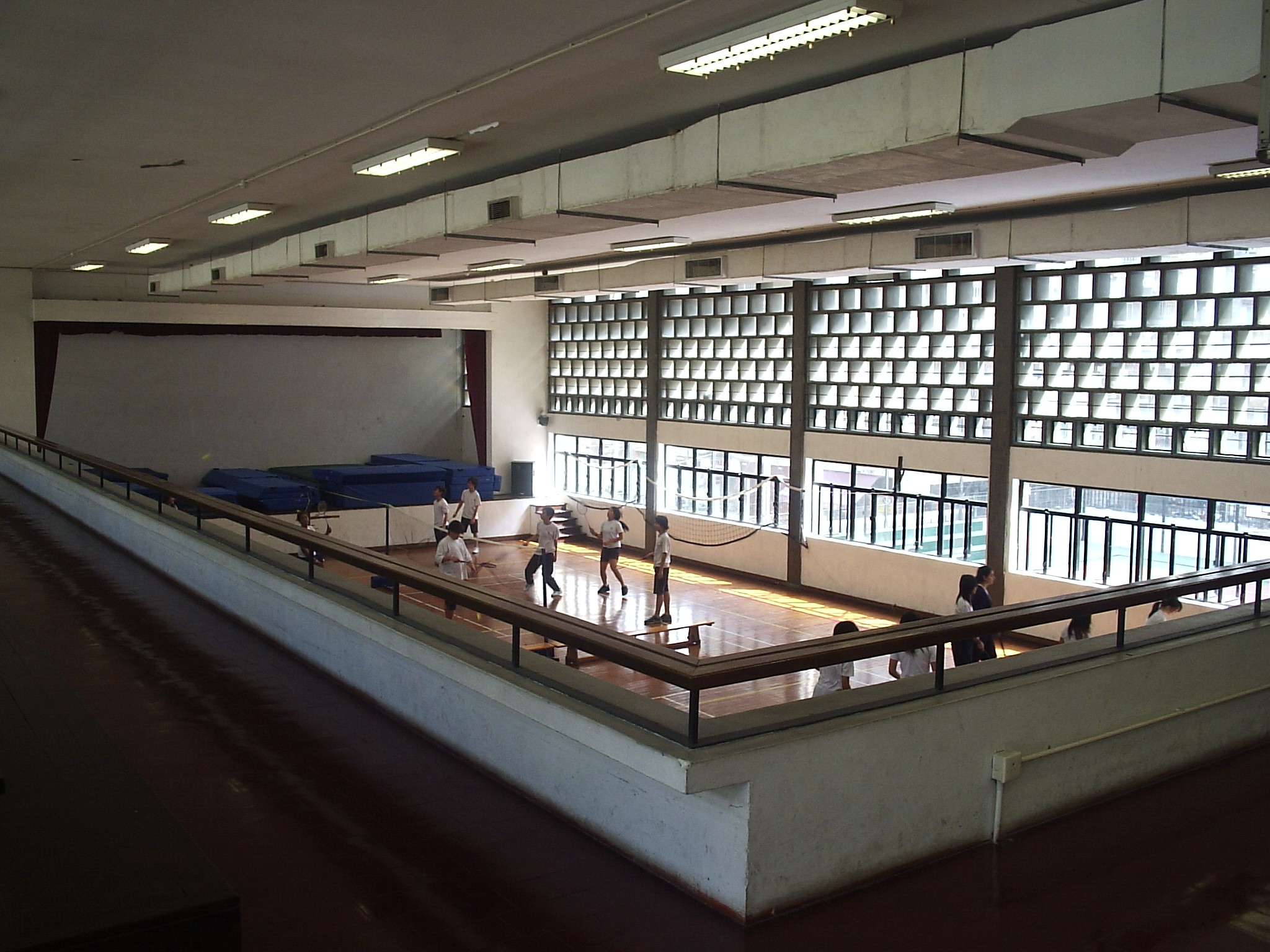
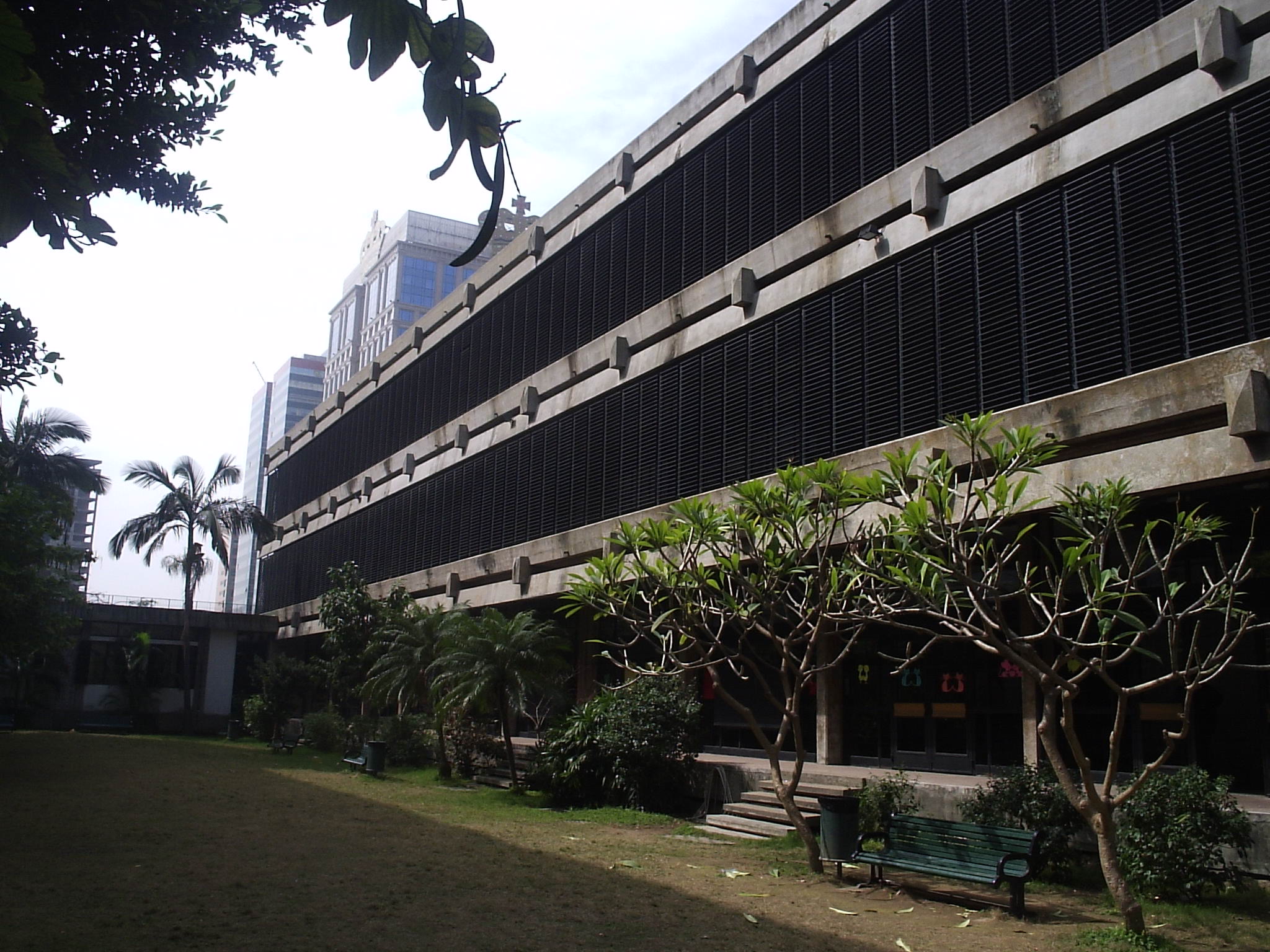
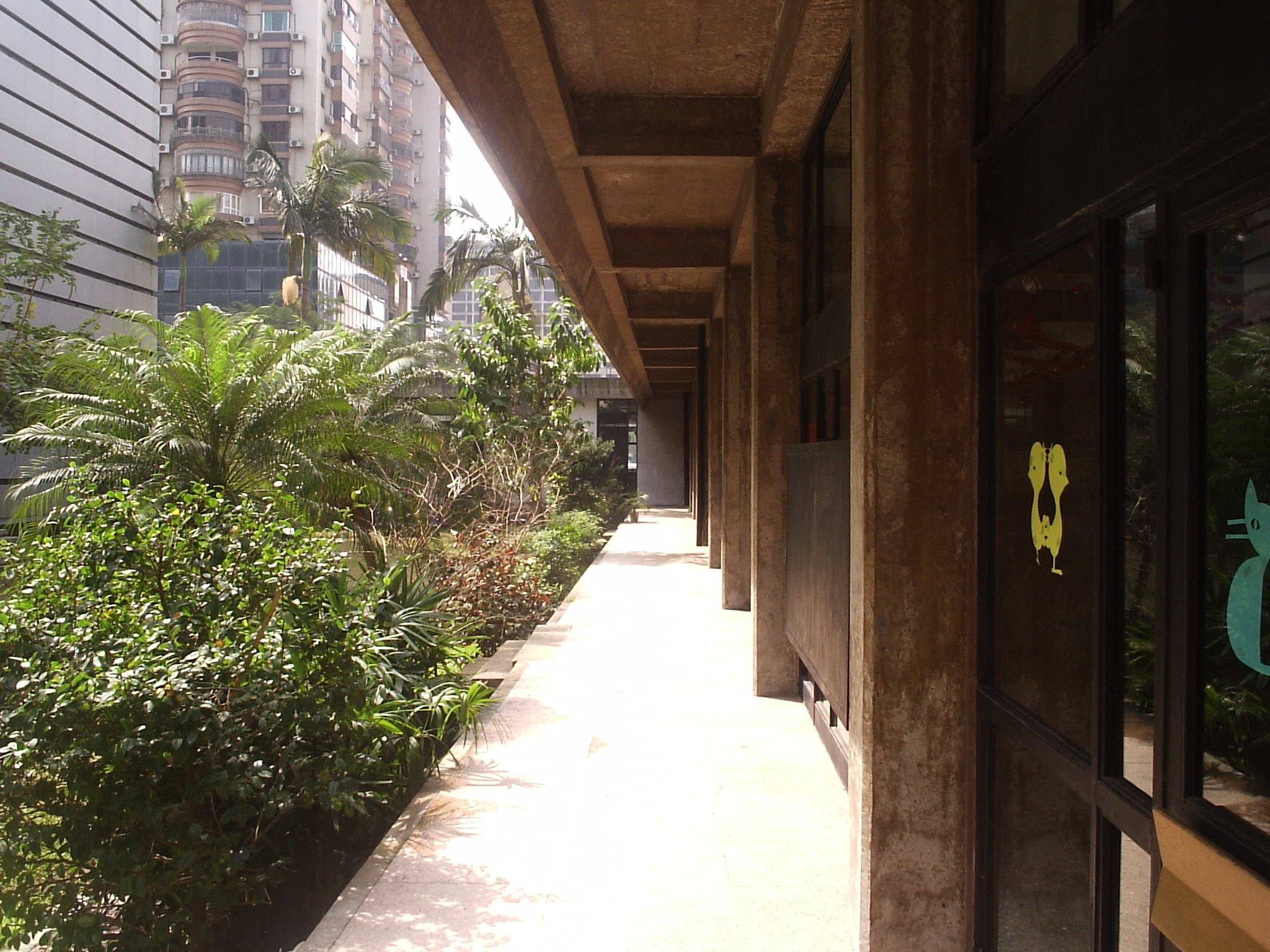
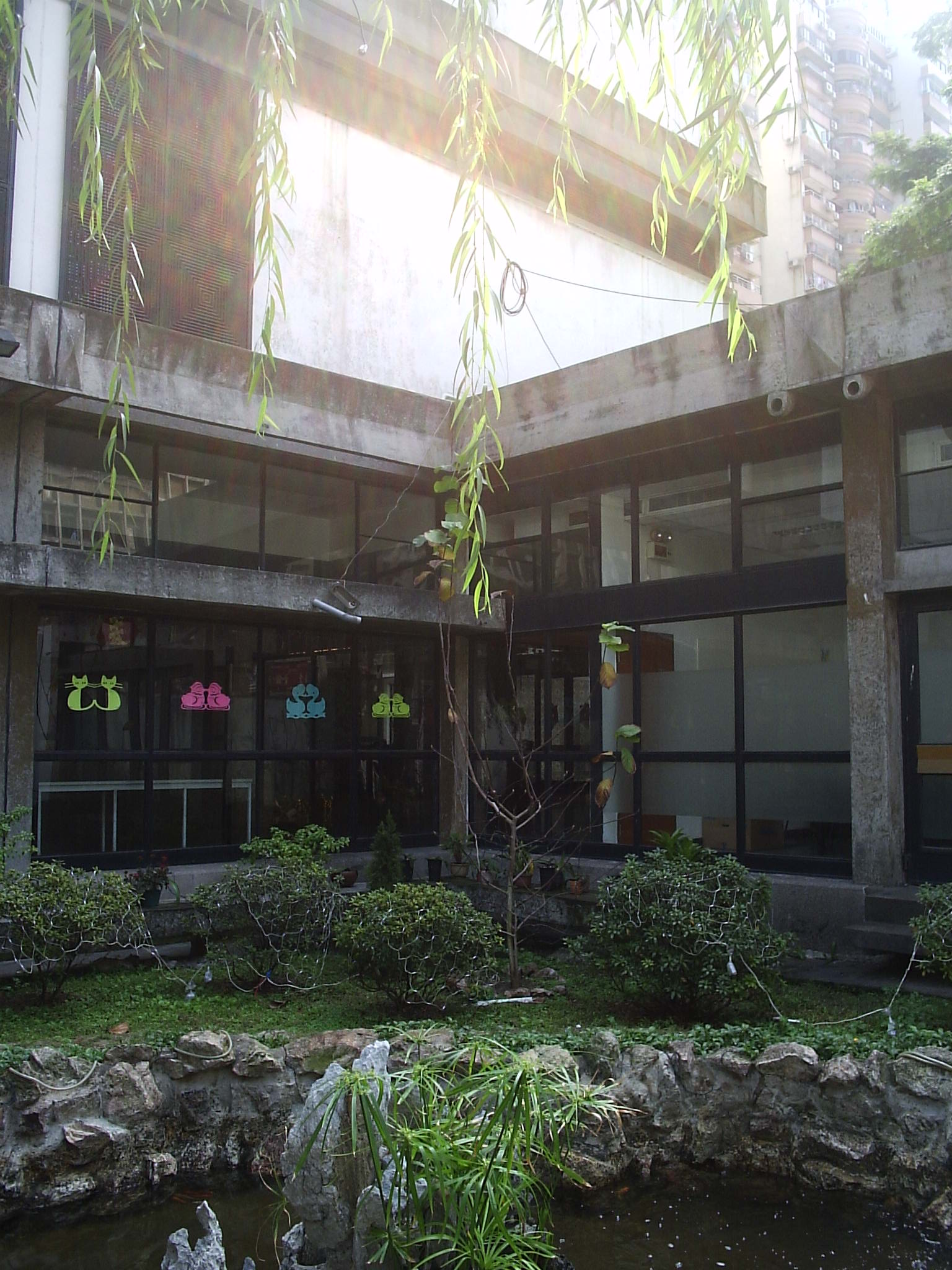
Chorão Ramalho designed two L-shaped buildings arranged in a rectangular composition around a courtyard, with two covered, gallery-style recreation areas on either side and an octagonal canteen building at the centre. The project also included a gym and sports fields. One of the most distinctive features of the design was the three interior courtyards, which provided the laboratories, auditoriums and library with light and thermal control. The emphasis was placed on enhancing transitional spaces and controlling light and ventilation. The main classrooms were located on the upper floors. The building featured tiles, concrete grilles, iron ‘gelosias’ and wooden shutters. Gabriela (Gaby) Maria de Senna Fernandes, originally from Macao, was the engineer in charge of the construction project, and architects Manuel Vicente and José Maneiras monitored the work.
02
Labour
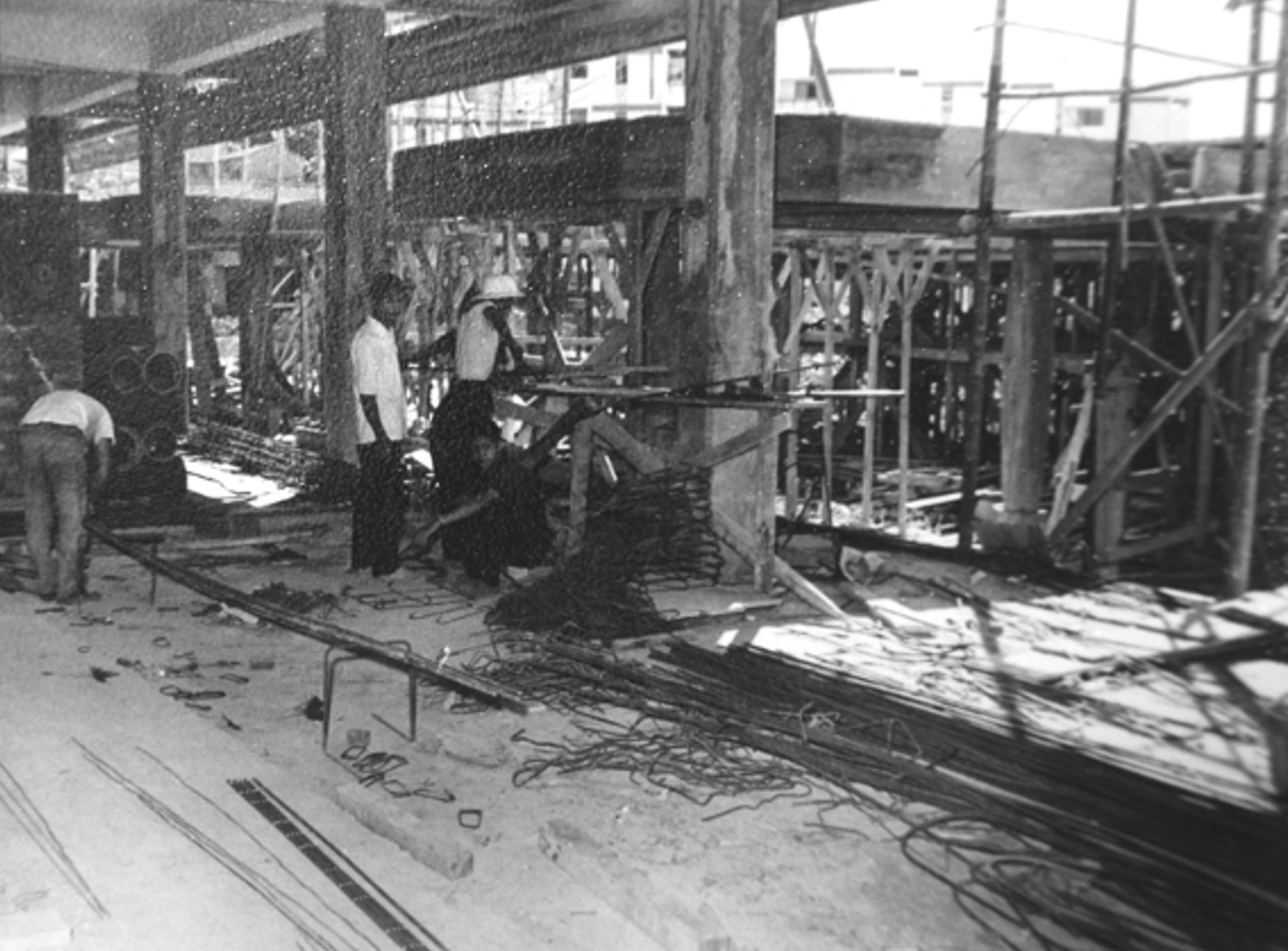
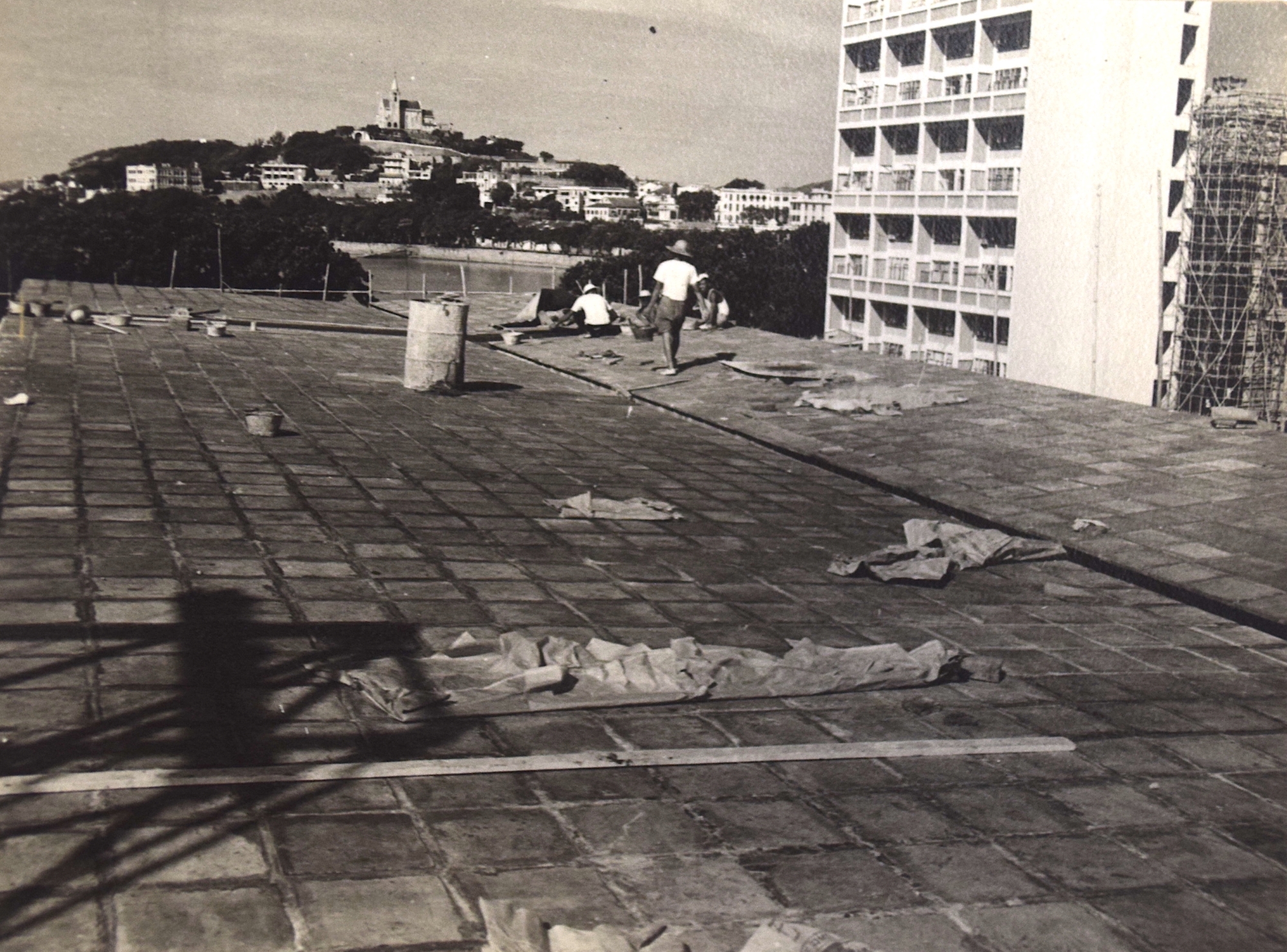
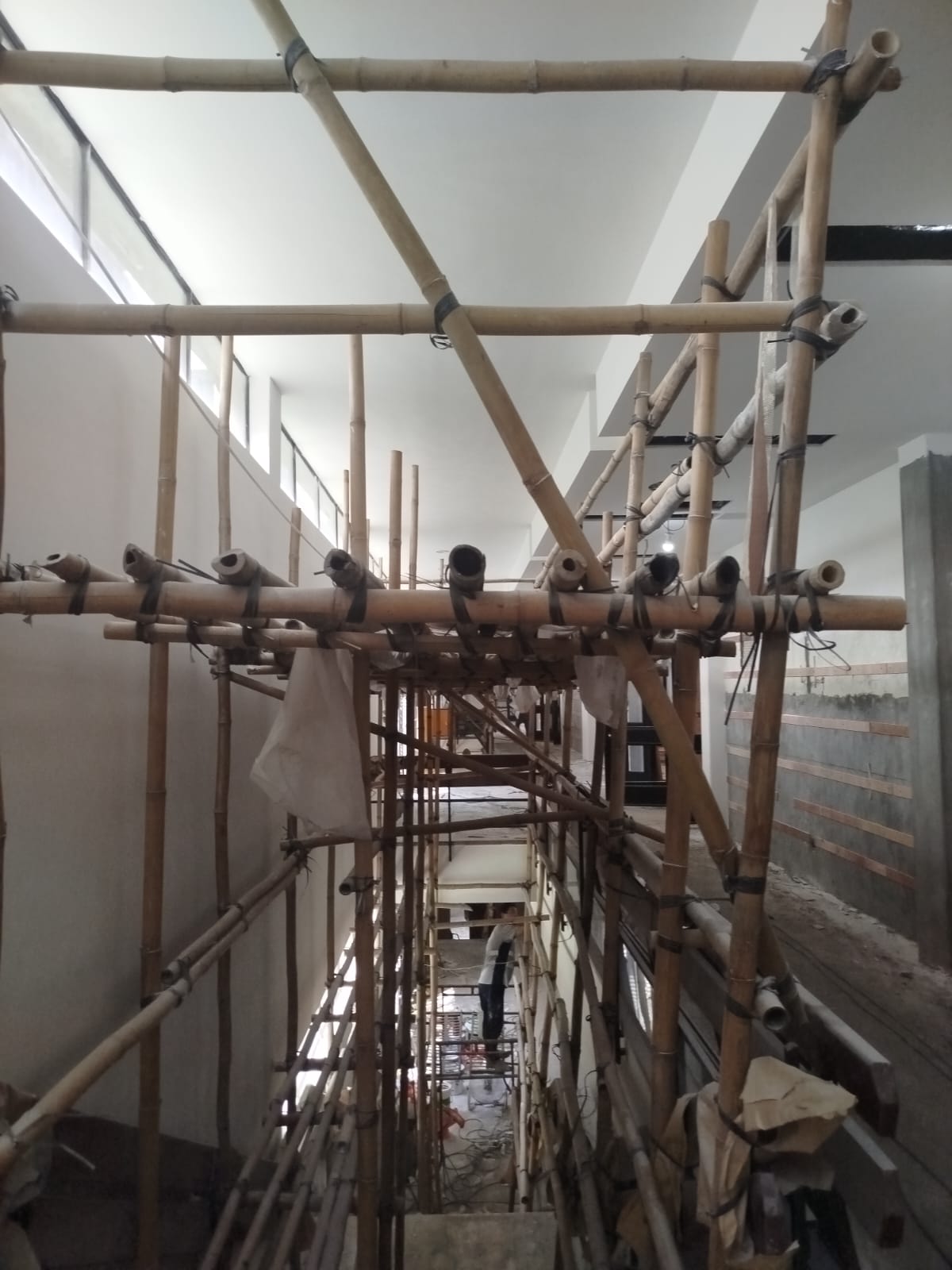
Given the scarce data available on Macau’s building industry at the time, the photographs documenting the school’s construction site trace a initial narrative of the construction process. The records show men carrying out various tasks, such as laying ceramic materials and producing iron reinforcement for reinforced concrete structures. It is likely that most of these men belonged to local labour organisations. Since the mid-19th century, Macau’s construction industry had been organised into specialised groups. Civil construction, known as shangjia, encompassed “three crafts”: carpentry, scaffolding, and masonry. These included the Plasterers Guild and the Carpenters Guild, which trained and employed Chinese workers.
03
Skills & Technologies
The Pedro Nolasco School’s architectural design embodies the linguistic concept of ‘patuá’, a local creole language. It combines Portuguese elements with global influences in the brutalist style of the time, alongside materials from local Chinese and Macanese traditions. These results did not come about through the direct transfer of construction knowledge, but rather through the original outcome of local adaptations and experiences involving various workers and their know-how and construction skills.
Location
Fieldwork

Related Outputs
“Creolizar” para resistir: A escola de Chorão Ramalho em Macau


LabourMap-Macao is an Exploratory Project funded by the Portuguese Foundation for Science and Technology (2023.14980.PEX).
Beta trial disclaimer
The LabourMap-Macao team is responsible for the maintenance of this website, which is intended to facilitate public access to information about the group’s initiatives. Although this is still a beta trial, the intention is to release the information in a timely and accurate manner. Should any errors be brought to the attention of the team, they will be corrected.