

BRIDGE MACAU – TAIPA (1970-1974)
The Macau-Taipa Bridge (1969–1974) was the first bridge to connect Macau with the Taipa and Coloane islands. Renamed Governador Nobre de Carvalho by the local authorities in Macau in 1973, the bridge became a symbol of progress and connectivity, with its structure representing the late period of Portuguese colonial modernity. At 3.4 kilometres long with two lanes and sidewalks, it was considered the world’s longest continuous prestressed reinforced concrete bridge at the time
How to cite
LabourMap-Macao: Mass labour impact on Public Works in Macau under Portuguese administration (1849-1999) (P.I. Ana Vaz Milheiro, FCT/2023.14980.PEX). Bridge Macau – Taipa (1970-1974). Accessed on 13th September 2026. Available at: https://archlabour.iscte-iul.pt/bridge-macau-taipa/
01
Plan & Construction
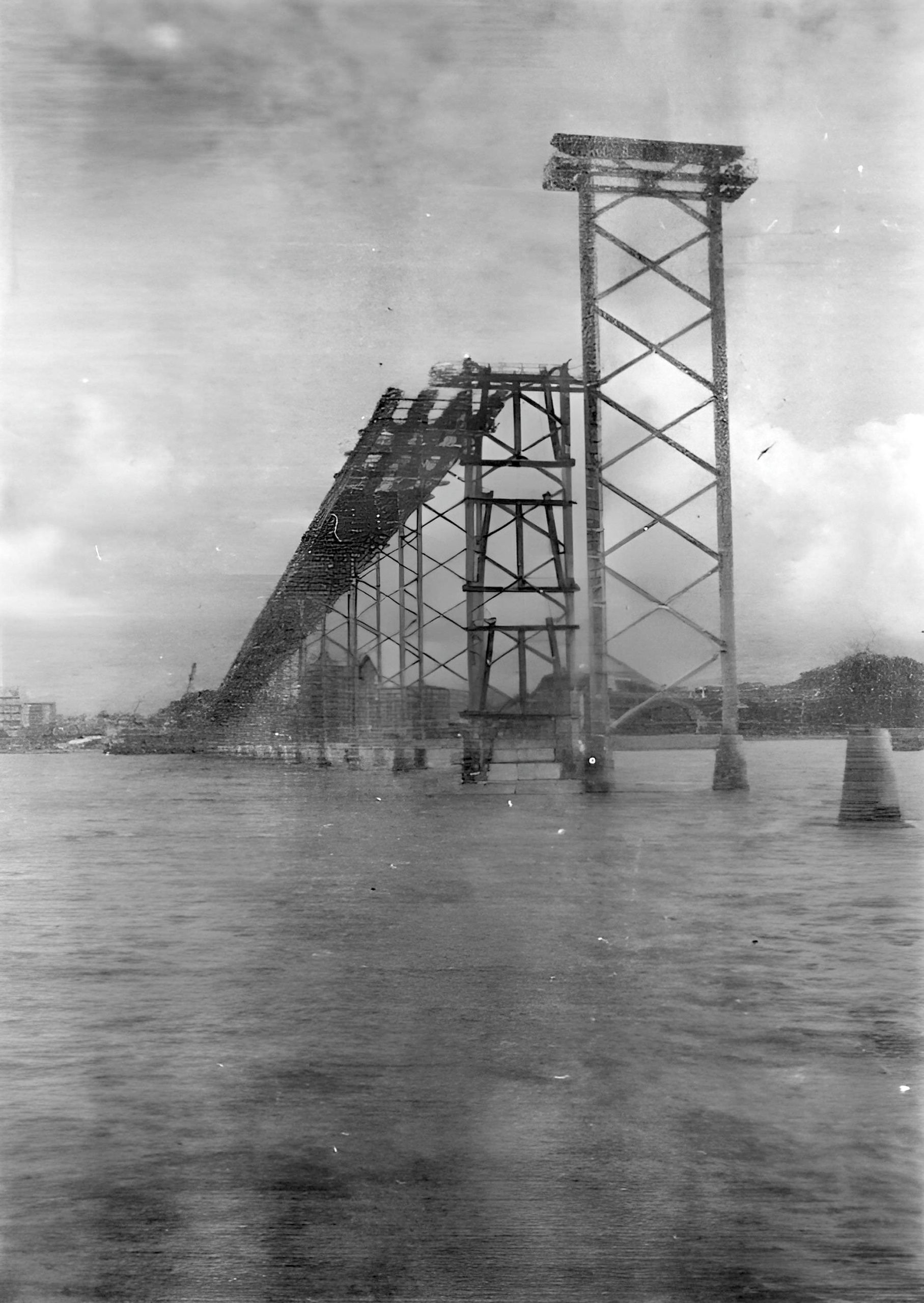
Designed by the Portuguese engineer Edgar Cardoso (1913–2000), the bridge was inaugurated in October 1974. Its dragon-like curvature became iconic, symbolising both technological prowess and colonial authority. The initial completion deadline of 1972 was postponed to 1974–76 due to difficulties in finding skilled labour, adverse weather conditions, and the need for additional works. Construction was carried out by international companies specialising in concrete, steel, and other materials, with the support of local firms such as Ho Yn and the Macau Engineering Company.
02
Labour
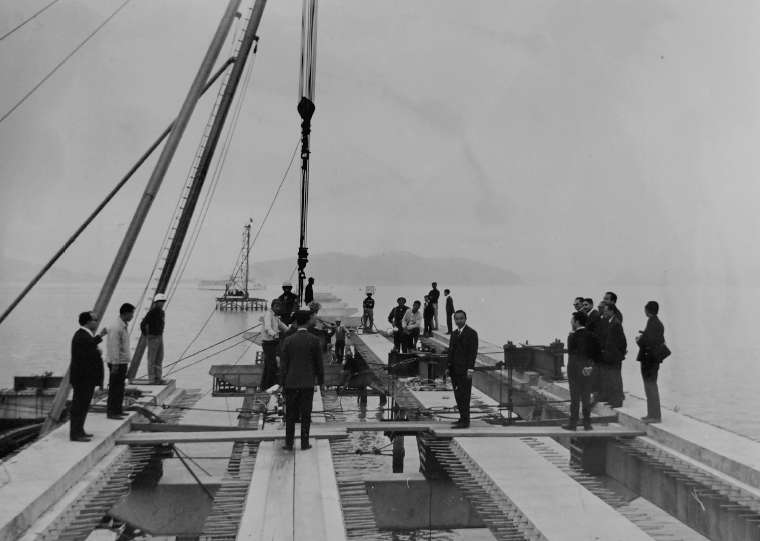
The Macau-Taipa Bridge Construction Contract Inspection Brigade recruited a team of experts from Portugal, including Álvaro Simões Cavalheiro, Manuel das Dores, and auxiliary technicians such as Mário de Mesquita Cardoso. Technical reports also mention Macanese engineers such as Wong Chook Keong and Ng Fok.
03
Skills & Technologies
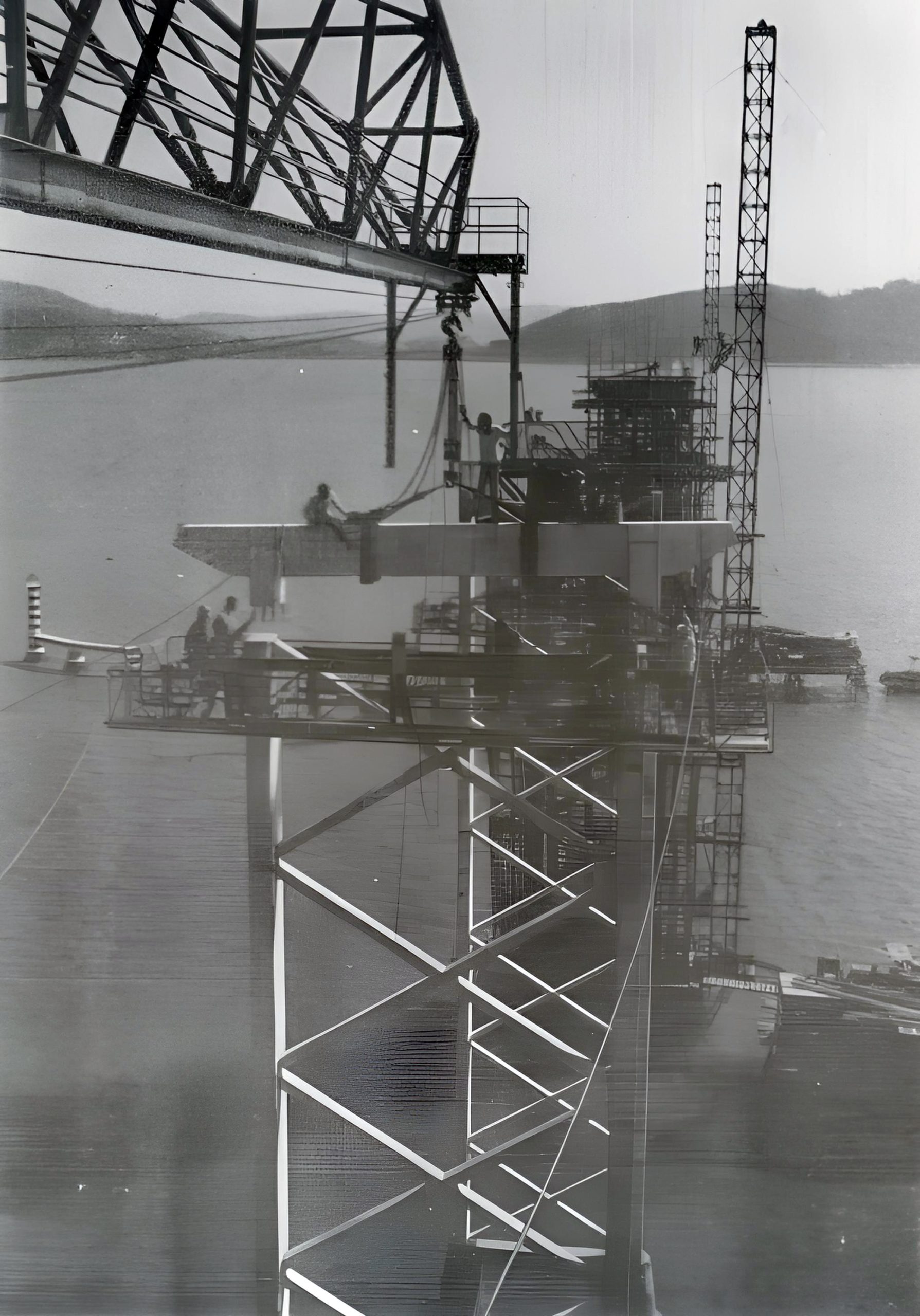
At the time, the project represented a huge technical challenge due to the poor quality of the foundation soils, height limitations, building method restrictions and compatibility with navigation equipment. However, all difficulties were overcome through innovative techniques, such as prefabrication and bonding of prefabricated reinforced concrete, prestressed reinforced concrete, and steel elements with epoxy resins. Another innovative aspect was the installation of a continuous reinforced concrete superstructure with its “extraordinary lightness,” largely prefabricated, “as if it were Lego”. Photographs of the construction site showcase the grandeur of the work, contrasting it with the invisibility of the manual workers. However, these men performed numerous tasks, from preparing the work at the construction site to placing the main elements, such as pillars and beams.
Location
Related Outputs
Framing labour through the colonial lens: Photography and the (in)visibility of work on the construction of the Macau-Taipa Bridge (1969–1974)
Page currently under construction



LabourMap-Macao is an Exploratory Project funded by the Portuguese Foundation for Science and Technology (2023.14980.PEX).
Beta trial disclaimer
The LabourMap-Macao team is responsible for the maintenance of this website, which is intended to facilitate public access to information about the group’s initiatives. Although this is still a beta trial, the intention is to release the information in a timely and accurate manner. Should any errors be brought to the attention of the team, they will be corrected.