

DIAMANG, ANGOLA
How to cite
ArchLabour: Architecture Colonialism and Labour (P.I. Ana Vaz Milheiro, ERC-funded 10.3030/101096606, 2024-2028). DIAMANG, Angola. Accessed on 13th September 2026. Available at: https://archlabour.iscte-iul.pt/diamang/
01. Plan & Construction
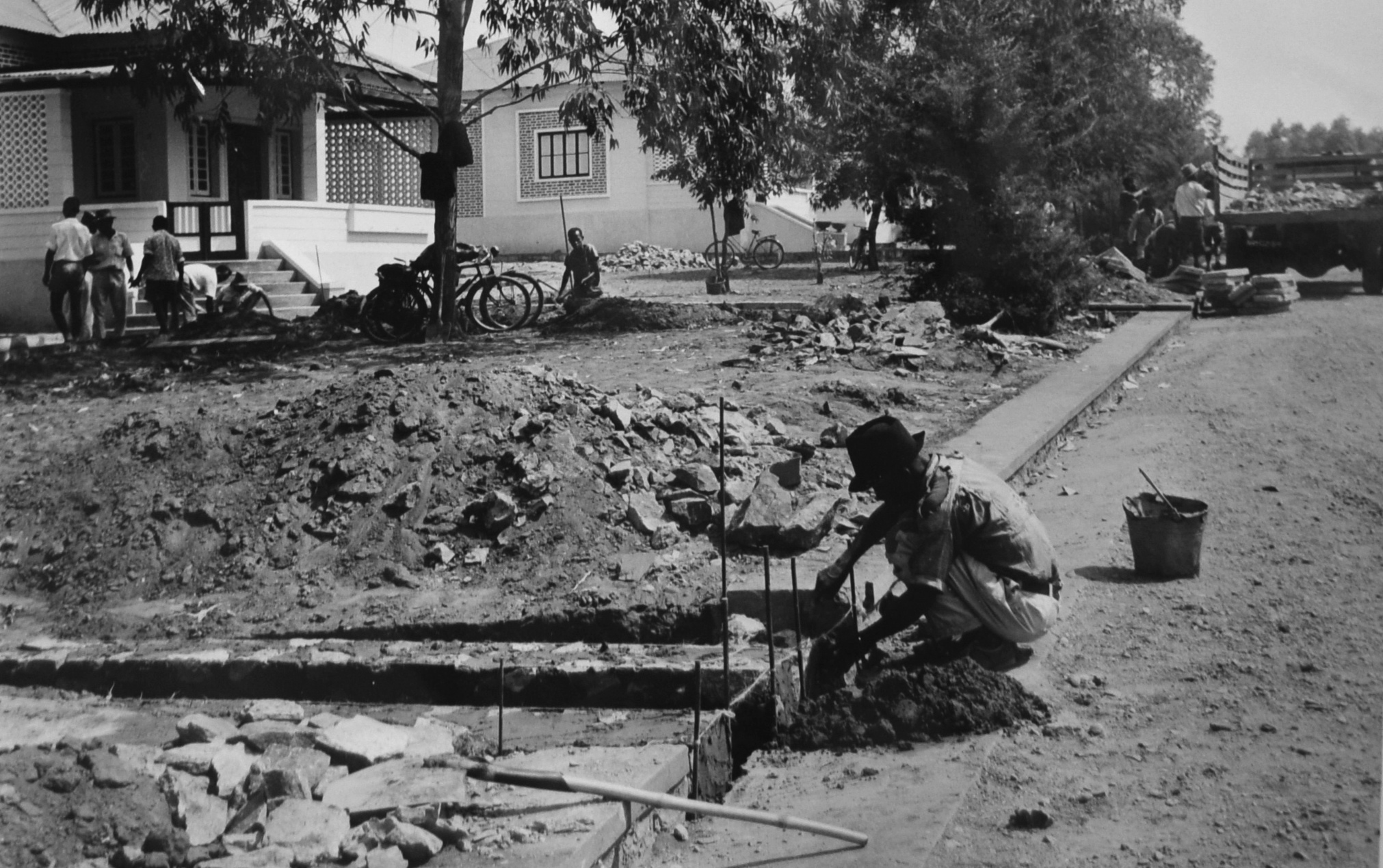
The first designs for Diamang’s settlements and buildings were created by American mining engineers. The Concession Services, founded in 1942, assembled the first teams dedicated to construction work within the mining concession. Around the same time, the mining posts in Lunda were renamed ‘urban centres’, reflecting the company’s commitment to creating high-quality spaces. Thousands of single-family houses with extensive gardens and numerous facilities, including schools, parks, recreation centres, hospitals, museums and laboratories, were built. Over the next few decades, Diamang established several departments dedicated solely to spatial planning and construction. These became increasingly specialised, including the Construction team in 1950 and the Civil Construction Services in 1957, as well as their subsequent branches.
02. Labour
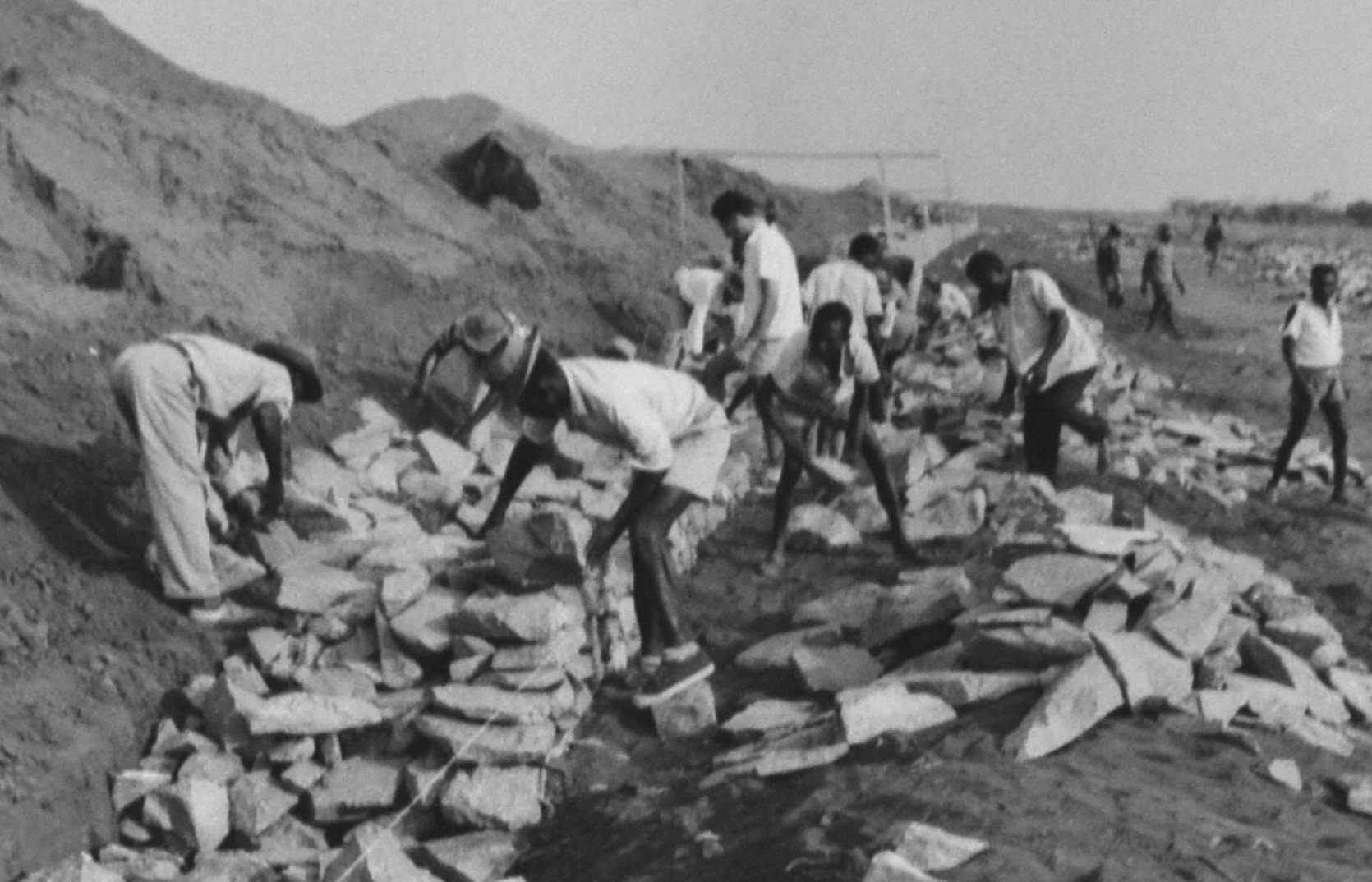
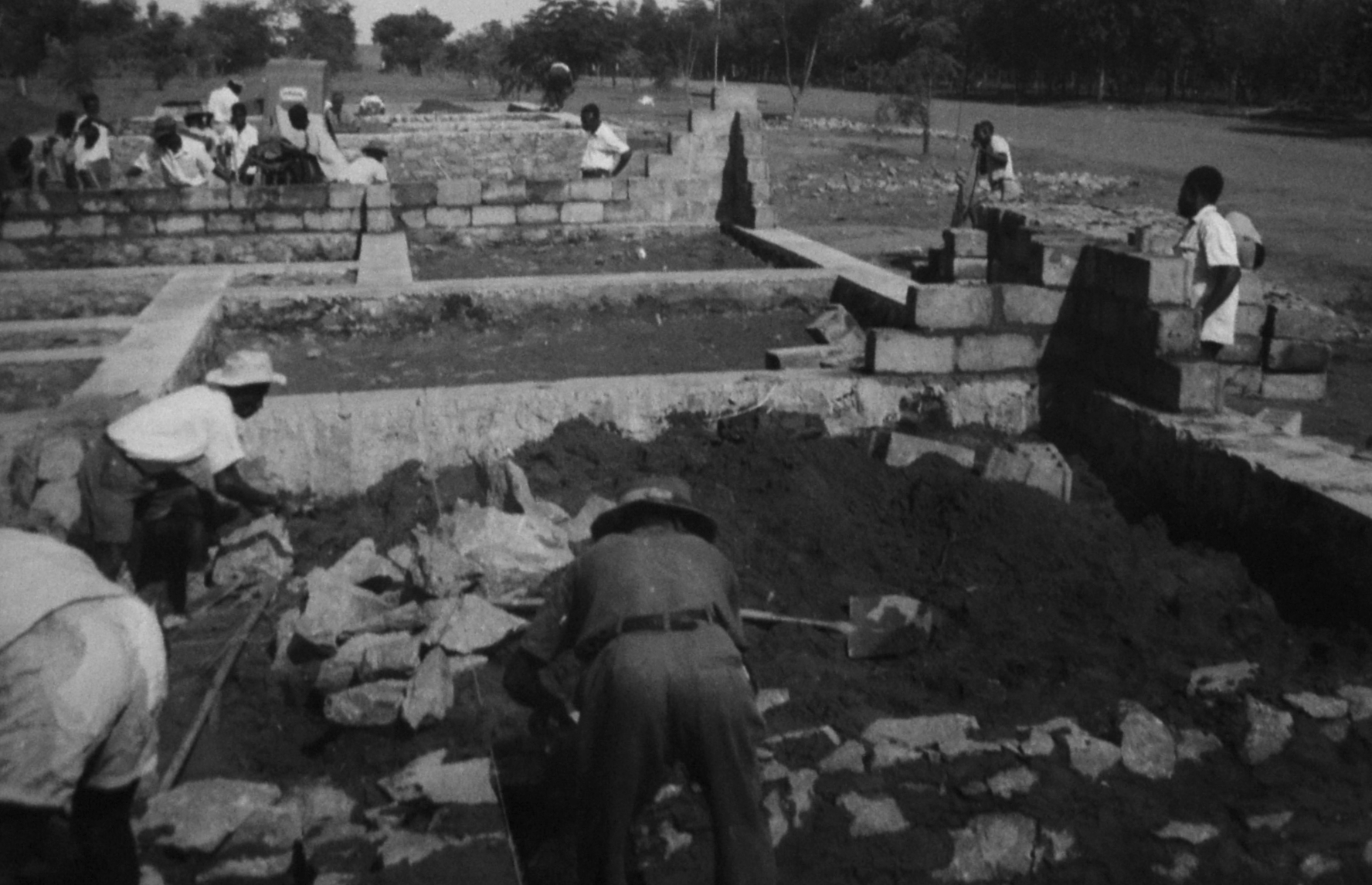
In the 1940s, Diamang employed around a thousand African workers for earthmoving, construction, building repairs, and general maintenance of gardens and parks in the main settlements. Among them were contractors and day labourers. A separate department supervised the construction of villages for African families around mining sites with its own construction teams. Women also participated in these tasks, mainly by obtaining building materials, transporting water and producing clay for bricks. By 1960, around 5,000 workers (20% of the company’s total workforce) were employed in building construction, road construction and urbanisation services.
03. Skills & Technologies
Diamang constantly engaged in experiments with new construction technologies, mostly for economic and reputational reasons. After the Second World War, the company tested various construction systems and materials, including Wallace Neff’s concrete ‘Airform’ houses, wooden ‘Trajinha’ prefabricated houses, and Jean Prouvé’s metal ‘Studal’ demountable houses. These building processes involved organising workshops, training African workers and manufacturing bricks and carpentry locally. Diamang never employed architects and frequently relied on housing projects promoted by other mining companies in Central Africa, particularly Union Minière du Haut Katanga.
Location
Archival Records
Visual Materials Outputs
Fieldwork
Other Related Outputs
Imperial companies and railways between Angola and Belgian Congo, 1910-1930
Mining Labor, Housing and Building Sites in Late Colonialism across Central Africa
Mining Labor, Housing and Building Sites in Late Colonialism across Central Africa (working paper)
“Model” Workers’ villages? Company rule and adobe-brick houses in late colonial Africa